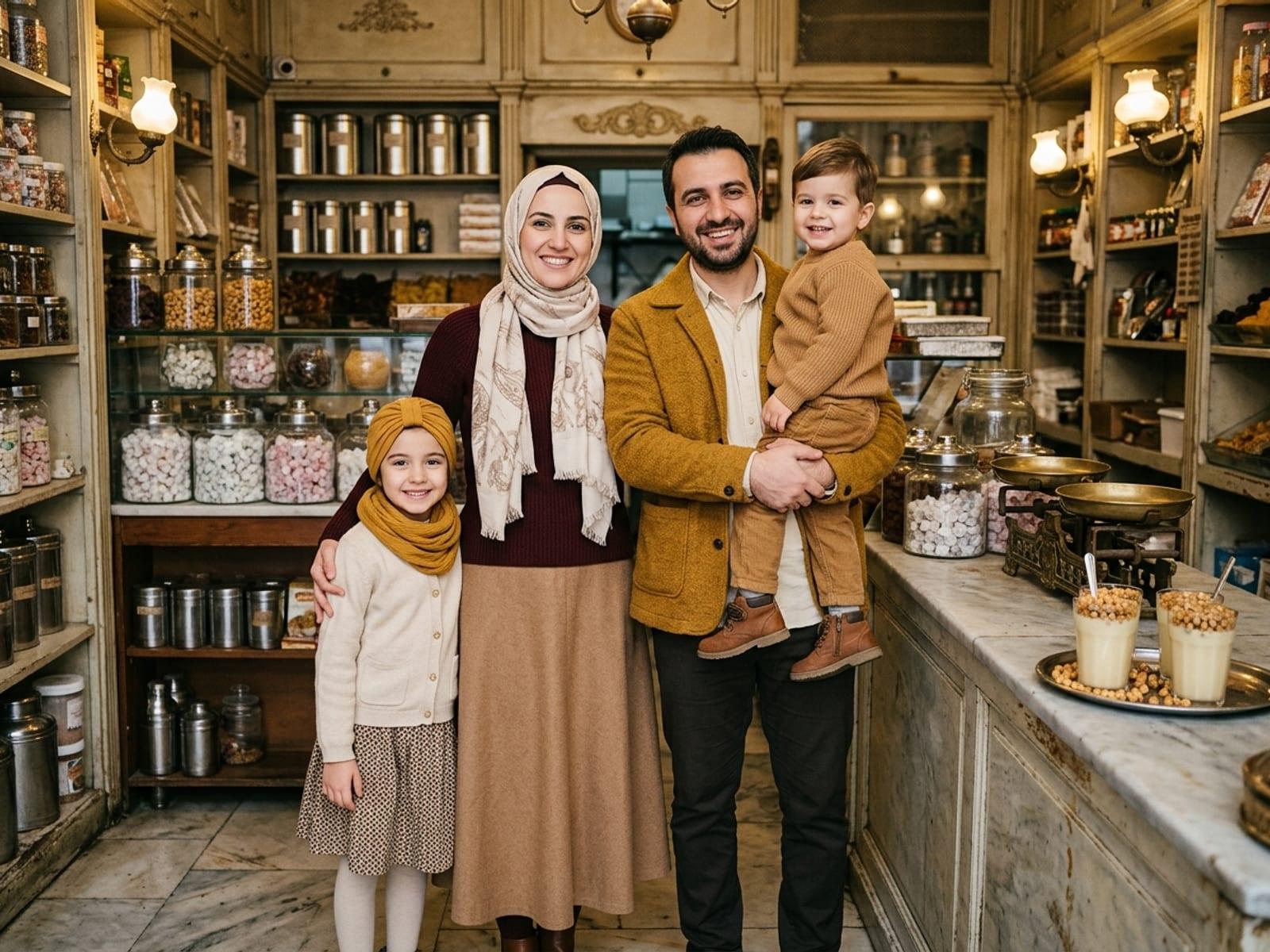
Colorful cubes of lokum (Turkish delight) dusted in powdered sugar, and boza, a thick, pale fermented drink. Istanbul's old city has shops where the same family has sold these traditional sweets for 100 or 200 years. From the Eminönü waterfront, through the Spice Bazaar to a historic lokum shop, then up the hill to the boza house: it's a half-day walk a family can fit between the big sights, and it suits the cold months, when boza tastes best.
A lokum shop since 1777
Lokum is a soft, springy sweet made by cooking starch and sugar together. Traditional flavors include rosewater, mastic, bergamot and lemon, and some are studded with pistachios, hazelnuts, walnuts or dates.
The name that comes up most often for lokum in Istanbul is Hacı Bekir. According to the company's official website, Hacı Bekir Efendi opened his first confectionery shop in 1777 in Bahçekapı, near Eminönü. Three generations of the family served as şekerci başı, chief confectioner to the Ottoman court, and the business has been handed down within the family for five generations. The original 33-square-meter shop grew to 88 square meters when the neighboring herbalist's space was added. The Bahçekapı shop is registered with the heritage conservation board as a historic confectioner's, and the company describes it as a "living museum." Besides lokum, it sells akide şekeri, brightly colored hard candies, as well as halva and ezme, a paste of almonds or other nuts.
You'll often hear that Hacı Bekir invented lokum, but food historians are cautious about that. Recipes for sweets made with starch and sugar were known in Persia centuries earlier, and one theory traces them to Arab apothecaries around the 9th century. Inventor or not, lokum has been sold in the same spot for more than 200 years.
A boza house since 1876
Boza is a drink made by fermenting grains such as millet, wheat (bulgur) or corn. It's thick and tastes sweet and sour. It was banned several times in Ottoman times; when Mehmed IV banned alcoholic drinks in the 17th century, the boza shops were closed too. The traveler Evliya Çelebi wrote that Istanbul had 300 boza shops at around that time.
That history lives on at Vefa Bozacısı in the old city's Vefa district. It opened in 1876, and its founder is usually named as Hacı Sadık (some accounts say he started it with his brother, Hacı İbrahim). It's said to be the only boza shop from that era still in business, and it's now run by the founders' great-great-grandchildren. The traditional way to drink boza is with cinnamon sprinkled on top and yellow roasted chickpeas (leblebi) added. The shop also keeps a glass said to have been used by Atatürk. And the hero of Orhan Pamuk's novel A Strangeness in My Mind is a boza seller.
Boza used to be a winter drink. Without refrigeration it couldn't be stored, so it wasn't sold in the summer heat, and shops switched to grape juice or lemonade instead. Now that refrigeration is common it's made in summer too, but drinking it in the cold months is still the traditional way. In an Istanbul winter you'll also find salep, a hot milk drink thickened with orchid-root flour.
Tasting with children
Lokum is usually a hit with kids, but many kinds contain nuts, so check the contents first if anyone has an allergy. It's thickly coated with powdered sugar and starch, so dark clothes will end up white. Watch small children with hard candies like akide şekeri, which are a choking risk.
Boza is fermented and contains around 1% alcohol. It's a small amount, but whether children drink it is a family decision. Kids can have just as much fun nibbling the chickpeas while the adults drink. The chickpeas, too, are a size small children can choke on.
From the harbor to the bazaar and up the hill
The walk is easiest if you start at the Eminönü waterfront. First comes the Spice Bazaar, next to the New Mosque (Yeni Cami) facing the harbor. In Turkish it's called the Mısır Çarşısı, "Egyptian Bazaar." It was built after the great fire of 1660 as part of the New Mosque complex; the shop rents went to the mosque's upkeep, and the name is said to come from the construction money having come from the Ottoman province of Egypt. Its 85 shops sell spices, sweets like lokum, dried fruit and nuts, jewelry and souvenirs.
Leave the bazaar, choose your lokum at Hacı Bekir in Bahçekapı, then head uphill to Vefa. The Vefa district lies just west of the Süleymaniye Mosque complex and is named after the Muslim saint Şeyh Ebu'l Vefa, who is buried there. Nearby you can see the arches of the Valens Aqueduct, which carried water into the city in Roman and Byzantine times. The district is dotted with restored old buildings, such as the Vefa Kilise Mosque, a converted 10th–11th-century Byzantine church, and the Atıf Efendi Library, built in the 1740s, so even a short walk around the boza house takes you through a thousand years of layered city. The streets are steep, so a baby carrier is easier than a stroller. If you visit the Süleymaniye Mosque, women should cover their hair with a scarf, everyone should dress modestly, and visits should be avoided during prayer times.
At the top of the hill, take a break with a hot glass of boza. If you want that moment as a family photo, pokesta's AI photos can make one ($1 per photo).
Check opening hours before you go
You can tour the old shops in any season, but boza suits the cold months best. The gateway is Istanbul Airport (IST), and the T1 tram is the handiest way to reach Eminönü. Opening hours and closing days differ from shop to shop and can change, so check each shop's official website or a map app for current information before heading out.
At the same Eminönü waterfront you can also try fish sandwiches and other street food. Add Turkish coffee in the old city and the day links up through sweets and drinks. Entry requirements for Turkey vary by nationality, so check your own government's official information before you travel.
References