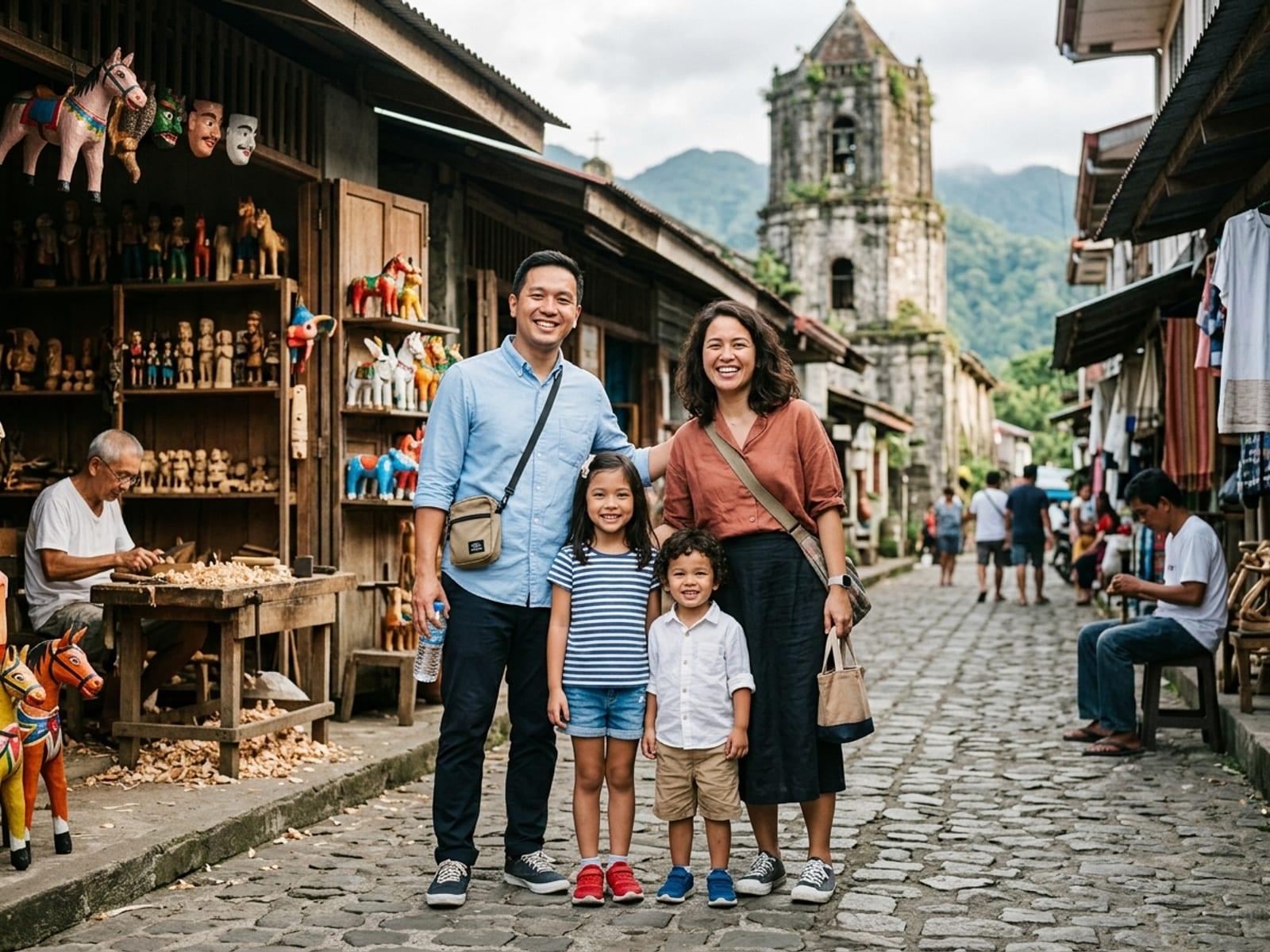
Paete is a craft town on the eastern shore of Laguna Lake, about 100 km from Manila, declared the "Woodcarving Capital of the Philippines" in 2005. Carving church saints is the heart of its work, and its other specialty is taka, papier-mâché toys made by layering paper over a carved wooden mold. You can visit the workshops all year, and light, brightly painted taka make a souvenir children can choose themselves, but the lakeside road can flood in the rainy season, so the drier months are easier to plan around.
A woodcarving town that turns up in a novel
Paete's craftsmen were already well known in the 19th century. José Rizal, the national hero of the Philippines, mentions a Paete woodworking shop in his 1887 novel Noli Me Tángere. In 1882, a statue of Our Lady of Sorrows carved by the Paete sculptor Mariano B. Madriñan won a prestigious award from the King of Spain in Amsterdam. The town still honors Madriñan as a local hero.
Paete carvings are said to be held in churches and museums around the world, including St. Peter's Basilica in Rome and St. Patrick's Cathedral in New York. On March 15, 2005, then-President Gloria Macapagal Arroyo declared Paete the "Woodcarving Capital of the Philippines."
Most of the town's craftsmen carve statues of saints. The skill of carving these religious images, also called poon in the local language, is the core of woodcarving here. From that, Paete also became known for ice sculpture and decorative fruit and vegetable carving, skills that end up on display at cruise ship and hotel buffets. The town lives on selling and exporting carvings, on taka and on tourism, along with poultry raising, farming and fishing in the lake. It's a craft town, but not one polished up for tourists. Go expecting a working town where craftsmen are simply getting on with their day, and you'll keep the right distance as you look around.
Taka, papier-mâché born from carved molds
Taka is a papier-mâché craft unique to Paete. First, a woodcarver carves a horse, an animal or some other figure out of wood. That wooden figure is used as a mold: layer after layer of paper and paste are laid over it, and once it's dry, the mold is taken out. The hollow papier-mâché shell that's left is then painted. It's a craft that exists only because of the woodcarving skills behind it.
Taka is Paete's folk toy. Made of paper and very light, it also travels well as a souvenir. Some carved saints are heavy and bulky, but with taka, a child can choose one with their own pocket money.
Every September, the Ukit-Taka Festival celebrates the town's woodcarving (ukit) and taka industries. Dates vary from year to year, so check the town's announcements.
Walking the workshop town
The town center is small enough to walk around, but many streets have no sidewalk, so hold small children's hands. Paete has woodcarving workshops and shops, and what they sell is mostly religious statues. If you see a craftsman at work in a workshop, ask before taking photos. Don't let children wander into work areas with blades and wood shavings.
Make time for Paete Church, whose patron saint is Saint James (Santiago). The first building went up in 1646, and inside this Spanish-era church are murals by the painter Luciano Dans, designated national cultural treasures. The church's statues of saints have movable arms and legs and are used in processions during Holy Week and other occasions, just what you'd expect in a woodcarving town. The patron saint's feast day is July 25, the day of the town fiesta.
For more carving, visit Museo Ac-Ac, which displays the work of the sculptor Luis Ac-Ac. It's open Tuesday to Sunday, 9 a.m. to noon and 1 to 5 p.m., and closed on Mondays (hours may change, so check before you go).
From Wawa Park by the lake, motorboats head out onto Laguna Lake. When you get hungry, bibingkang hipon, a rice cake with shrimp, is the local taste. A small coffee shop with a terrace overlooking the river is a place to rest while looking at work by local artists.
Let the kids choose their own taka
When choosing taka, have the kids decide first which animal they want and which color they like, so they don't spend forever agonizing at the shop. When looking at the carvings, don't stop at the finished saints; look for the wooden figures used as molds for taka, too. If you see the same animal in both wood and paper side by side, children grasp right away that "the paper horse comes from this wooden horse." In Lumban, an embroidery town in the same province, some artisans embroider piña, the cloth woven from pineapple leaves in Kalibo, Aklan, so Luzon's handcraft extends from wood to fabric.
For the trip home, pack taka in your hand luggage so they don't get crushed, and wrap wooden carvings in a towel or similar. Some countries and regions require inspection or declaration of wooden items and goods made from plants. Check the quarantine rules of the country you're returning to before you buy.
If a workshop lets you take photos inside, a shot of a half-carved wooden figure together with the craftsman's hands, in natural light from a window or doorway, captures the feel of the town well. For a family photo, the colorful taka lined up at a shop front make a bright, lively background.
The town also has the Tatlong Krus, three white crosses modeled on the crosses on the hill of Golgotha. Besides the church fiesta, the feast of Saint Anthony the Abbot is celebrated at a town chapel on January 17, so together with the patron saint's fiesta in July, Paete comes alive with religious celebrations several times a year.
Take care in the lakeside town during the rainy season
Paete sits right by Laguna Lake, and in the rainy season the lake can overflow and close the Manila East Road. Flash floods on the Paete River, which runs through town, are another hazard. If you go during the rainy months, check the weather and road conditions before setting out, and stay away from the riverbanks and low-lying spots.
At fiesta time and during Holy Week, the narrow streets in the center get crowded. Families who want to look around the workshops in peace will find it easier to visit on a weekday, away from festival days.
You can also create a family photo with everyone holding colorful taka using pokesta's AI photos ($1 per photo, and your first one is free).
About 100 km from Manila, an easy day trip
The nearest international airport is Ninoy Aquino International Airport (MNL) in Manila. Paete is about 102 km from Manila, reached via the Manila East Road through Rizal province or via the South Luzon Expressway. By public transport, take a jeepney on the Santa Cruz–Siniloan route marked "Paete Loob," which passes through the town center. Within town, tricycles are handy, especially for getting to the districts up toward the hills.
You can visit the craft town any time of year, but the drier months are easier to plan around than the rainy season, when roads may flood. In May, the Pahiyas Festival in Lucban, Quezon, isn't far, so you can link Laguna and Quezon in one trip that takes in both crafts and a harvest festival. Entry requirements vary by nationality, so check your own government's official information before you travel.
References