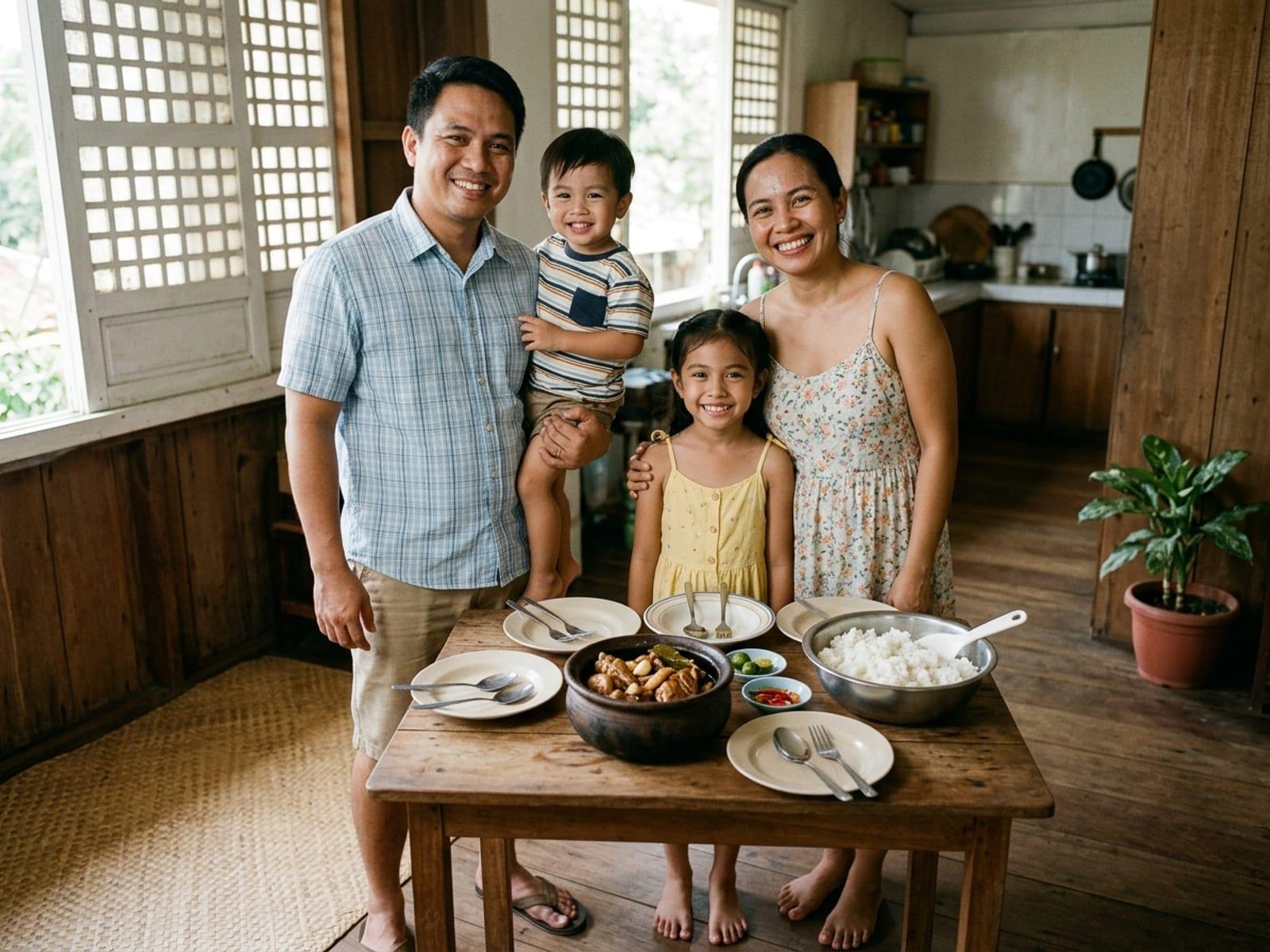
Adobo is the Filipino home-style dish of chicken or pork braised in vinegar, garlic, soy sauce, black pepper and bay leaves, sometimes called the country's unofficial national dish. You can eat it all year in any town, pointing at the pot in a carinderia, the everyday canteen, or ordering it at a mall food court. It has almost no chili heat and a salty-sweet, slightly sour flavor, which makes it an easy first dish to try when you travel with children.
A Spanish name for a much older way of cooking
The word "adobo" comes from the Spanish adobar, meaning to marinate or season. The earliest recorded use is in a Tagalog dictionary compiled in 1613 by the friar Pedro de San Buenaventura, which mentions "adobo de los naturales", the adobo of the local people. In other words, the Spanish already saw this stew as a native dish. Nobody knows what it was called before the Spanish arrived; some writers suggest it may originally have been paksiw, a word for dishes cooked in vinegar. Long before colonization, people across the islands are thought to have cooked meat and fish in vinegar and salt so that it would keep in the hot climate. The Spanish name was attached later to a technique that was already there.
Vinegar slows the growth of bacteria, and adobo is known for keeping without refrigeration, which is why some people pack it for hikes or long journeys. Leftovers rarely go to waste: the meat gets shredded and fried with rice, served alongside breakfast, or tucked into bread.
In 2021, the Bureau of Philippine Standards under the Department of Trade and Industry chose adobo as the first dish in a project to set out "standard" recipes for popular Filipino foods. It was made clear, though, that the standard is not something anyone has to follow. Adobo is a dish where every household's version is different, and that's considered normal.
Black adobo, white adobo, yellow adobo
The version you'll see most often is adobong itim, "black adobo", which gets its dark color from soy sauce. The usual meats are chicken (adobong manok), pork (adobong baboy), or a mix of both. The vinegar is often made from palm sap or sugarcane.
Leave out the soy sauce and season with salt alone, and you have adobong puti, "white adobo". In Batangas and Laguna, cooks make adobong dilaw, "yellow adobo", colored with turmeric. In the Bicol region and Zamboanga, adobo sa gata, with coconut milk added, is common, and in Cavite there is a version thickened with mashed pork liver. In the Batanes Islands at the country's northern tip, the Ivatan people make lunis, pork preserved in salt in jars. The basic idea of keeping meat longer with vinegar and salt has been handed down in slightly different forms from island to island.
It isn't only meat. Adobong pusit is squid cooked in its own ink and comes out jet black, and there is also a vegetable adobo made by braising water spinach (kangkong) with the same seasonings. It's all called adobo, but from one restaurant or region to the next the color and taste can change enough to feel like a different dish.
Point and pick at a carinderia
The easiest place to eat adobo is a carinderia, a cheap neighborhood eatery. They are said to have started in the early 19th century as food stalls that doubled as rest stops for travelers. Their other name, turo-turo ("point-point"), says it all: pots and trays of dishes are lined up at the front, and you point at what you want. The menu depends on what the cook could get that day. Alongside adobo you might find sinigang, a soup soured with tamarind; tinola, a chicken and ginger soup; and kare-kare, a stew in peanut sauce.
Rice is ordered with your dishes as a matter of course. At a Filipino table you eat with a spoon and fork rather than a knife, using the edge of the spoon to cut the meat. The best way to eat adobo is to pour some of the sauce over your rice and scoop it up with the spoon. Sharing platters, eating kamayan-style by hand and the rest of the table customs are covered in Filipino dining etiquette and service charges.
What to order alongside it
If adobo alone feels like too little, add a soup and you have a proper Filipino meal. Sinigang is the classic match: a sour soup full of vegetables, flavored with tamarind or similar fruit, and so well loved that people argue over whether the national dish should be adobo or sinigang. Rich adobo with a sharp, clean sinigang gives the family two very different flavors to share, and the kids can pick the one they like.
Tinola, chicken simmered with ginger, is mild and gentle enough for small children. If you want vegetables, add the kangkong adobo or another vegetable dish. Rice in the middle, with a little meat, soup and vegetables around it, is close to how a Filipino family eats at home.
Food courts in shopping malls and restaurants serving Filipino food almost always have adobo on the menu too. When the heat has worn the children out, eating in an air-conditioned mall is a good fallback.
Eating adobo with children
Adobo itself is barely spicy. The things to watch are bones, sourness and the dipping sauces that come with it. It's often made with chicken wings or bone-in pork, so take the meat off the bone before passing it to a young child. If the vinegar is too sharp for your child, use less sauce and mix it into the rice, which softens the taste.
Tables often have dipping sauces (sawsawan) such as vinegar with onion and chili, or soy sauce with calamansi, a small citrus, squeezed in. Keep the chili sauces well away from your child's plate.
If anyone has food allergies, check the ingredients before ordering. Kare-kare contains peanuts, and many other dishes use fermented shrimp paste (bagoong) or fish sauce (patis). English is widely spoken in the Philippines, so a card listing the ingredients you need to avoid, such as "peanuts" and "shrimp", in English makes it easy to explain to staff.
Year-round, in every town
Adobo has no season and you can find it anywhere in the country. If your trip starts in Manila, the gateway is Ninoy Aquino International Airport (MNL). Fly into Cebu (CEB) or any other airport and you'll still come across it in local eateries and malls. Entry requirements for the Philippines vary by nationality, so check your own government's official information before you travel.
You can see how a photo of your family around a Filipino table might look with pokesta's AI photos ($1 per photo, and your first one is free). For a celebration dish there's Cebu lechon, the whole roast pig, and for breakfast silog, garlic rice with meat and a fried egg, both easy to share as a family. If you're not sure where to start, order one plate of chicken adobo with rice. From there, branching out into the regional versions comes easily.
References