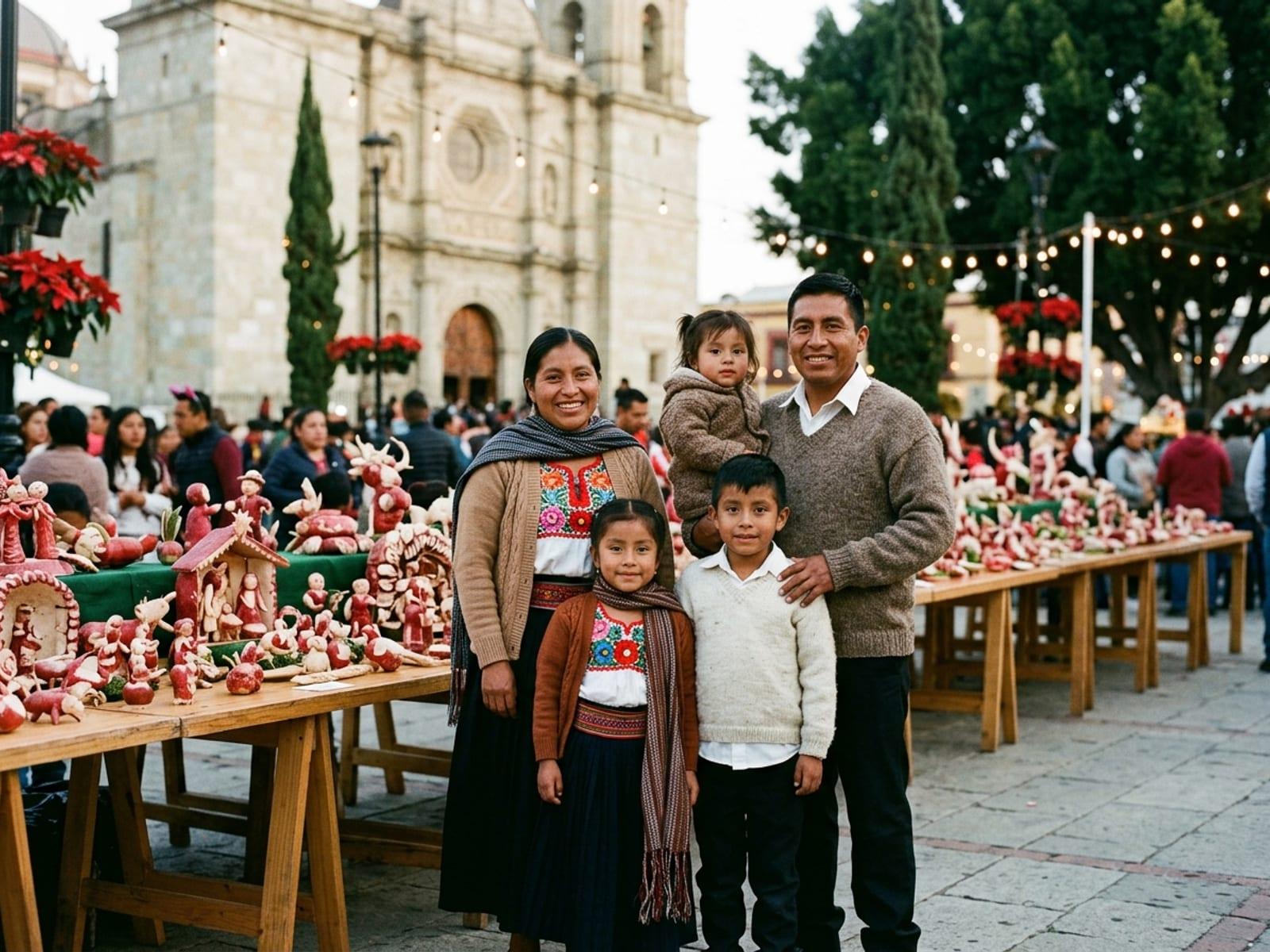
On December 23, two days before Christmas, the main square of Oaxaca city, the Zócalo, fills with tiny people, animals, churches and procession scenes, all carved from red radishes. The Noche de Rábanos, or Night of the Radishes, is a contest that has been held since 1897. The pieces are on show for only a few hours from late afternoon, and they are cleared away by the next morning. If you plan to go, come ready for long lines and a cold night.
A market sales trick that became a contest
Radishes were brought to Mexico by the Spanish. In colonial Oaxaca, a pre-Christmas market was held on the square on December 23, and farmers are said to have carved their radishes to catch shoppers' eyes. One legend says it all started in the mid-18th century, when two friars brought radishes to market that had been left unharvested and grown into strange shapes.
The man who made it an official contest was Francisco Vasconcelos, the mayor, in 1897. His goal was to encourage flower and vegetable growing. The event was originally held in the fields, but as the city grew and farmland shrank, the farmers gradually went from growing radishes to carving them. Today the city sets aside land, grows the radishes and gives them free to registered participants.
Radishes 50 cm long and 3 kg heavy
The radishes used for the sculptures look nothing like the ones in a grocery store. They are left in the ground well past harvest time, so they twist and branch as they grow, and some reach about 50 cm long and 3 kg in weight. Participants receive their radishes around December 18, and over the next few days they carve figures, animals and buildings, using the odd shapes to their advantage. A large, pure-white variety called criollo, which didn't rot easily, was used in the past, but today's sculptures are carved from other radishes. Deciding which part of each root will become what is where the craft begins, before the knife ever touches the radish.
These radishes are grown large for display with fertilizers and chemicals, and they are not meant for eating. If your child asks, "Can you eat these?", now you know the answer.
There are adult categories for traditional and freestyle work, a category for first-timers, and a children's category for ages 6 to 17. There are also categories for pieces made from dried corn husks (totomoxtle) and from a dried flower called flor inmortal, the "immortal flower," so you'll see detailed work in other materials too.
The subjects come straight from Oaxacan life and its celebrations: the Nativity, the feast of the Virgin of Solitude, Guelaguetza dances, the Day of the Dead. Hunting for the children's entries and seeing what kids your own children's age made is a good way to look at the display together.
Plenty of people take part. In 2014, 94 adults, 61 young people and 50 children entered, and the city's fields produced 12 tonnes of radishes that same year. The top prize in the traditional category was 15,000 pesos, and children's winners received bicycles and school supplies. The state governor sometimes visits; it is an event the whole city turns out for.
Only a few hours, from late afternoon
The display tables go up on the morning of the day, and viewing starts in the late afternoon. Viewing is often said to open around 5 p.m., but the times given vary by year and by source. Judging takes place around 9 p.m., and because radishes wilt quickly, the pieces are taken down soon afterward.
The viewing line is long; waits of four to five hours have been reported. To handle the crowds, the line has at times been split in two, with one line routed along a raised platform. The radish pieces are small and delicate, and you can't make out the detail from a distance. The usual way to see them is to join the line and walk slowly past the tables.
With kids, go early and dress warmly
Standing in a line of four hours or more with a small child isn't realistic. One approach is to stop by the square in the early afternoon while the setup is going on, then line up early so you're in place when the display opens. It helps to assume that the closer it gets to judging time, the bigger the crowd.
In December, the gap between day and night temperatures in Oaxaca becomes noticeable once the sun goes down. Bring a warm jacket or a shawl like a rebozo, and hats and gloves for the kids. The square gets packed, and losing track of a child is a real risk. Agree on a meeting spot in advance, and slip a note with a parent's contact details into your child's pocket. Use the bathroom before you join the line.
How the evening goes depends a lot on where you're staying. From a hotel within walking distance of the Zócalo, you can rest before lining up and eat an early dinner first, perhaps Oaxacan mole with hot chocolate at a market food stall. If the kids get tired, it's also easier to leave the line and head back. If you're driving in from a hotel outside the center, the old-town streets get congested, so leave plenty of time for the trip back.
At night, the square's lighting alone often leaves children's faces dark in photos. Stopping in front of a piece to take pictures holds up the line behind you, so shoot the sculptures as you walk and save the family photos for after you leave the line, under the square's lights.
Don't touch the pieces. Every radish on those tables is a one-of-a-kind work that someone spent days finishing. Promise the kids beforehand that it's "looking only."
Wear an embroidered blouse with a warm layer
There's no dress code for visitors. An embroidered blouse or dress from one of Oaxaca's markets, layered with a cardigan or a rebozo, keeps you warm and still looks right for Oaxaca. Adding a red or green accessory fits the Christmas season.
Red poinsettias and strings of lights decorate the square, and photos taken from dusk into the evening glow with that warm light, very much a picture of Oaxaca in winter. You can see what a photo of your family on this square might look like with pokesta's AI-generated photos ($1 per photo, and your first one is free).
Dates and getting there
The date is fixed: December 23 every year, whatever day of the week it falls on, which makes planning fairly easy. The opening time and layout of the display do change from year to year, so check the latest information from the city or state tourism offices.
The gateway airport is Oaxaca International Airport (OAX). The end of the year is a busy holiday travel season, so book flights and hotels early. Oaxaca is also known for the Guelaguetza in July and Día de Muertos in autumn. Entry requirements for Mexico vary by nationality, so check your own government's official information before you travel.
References