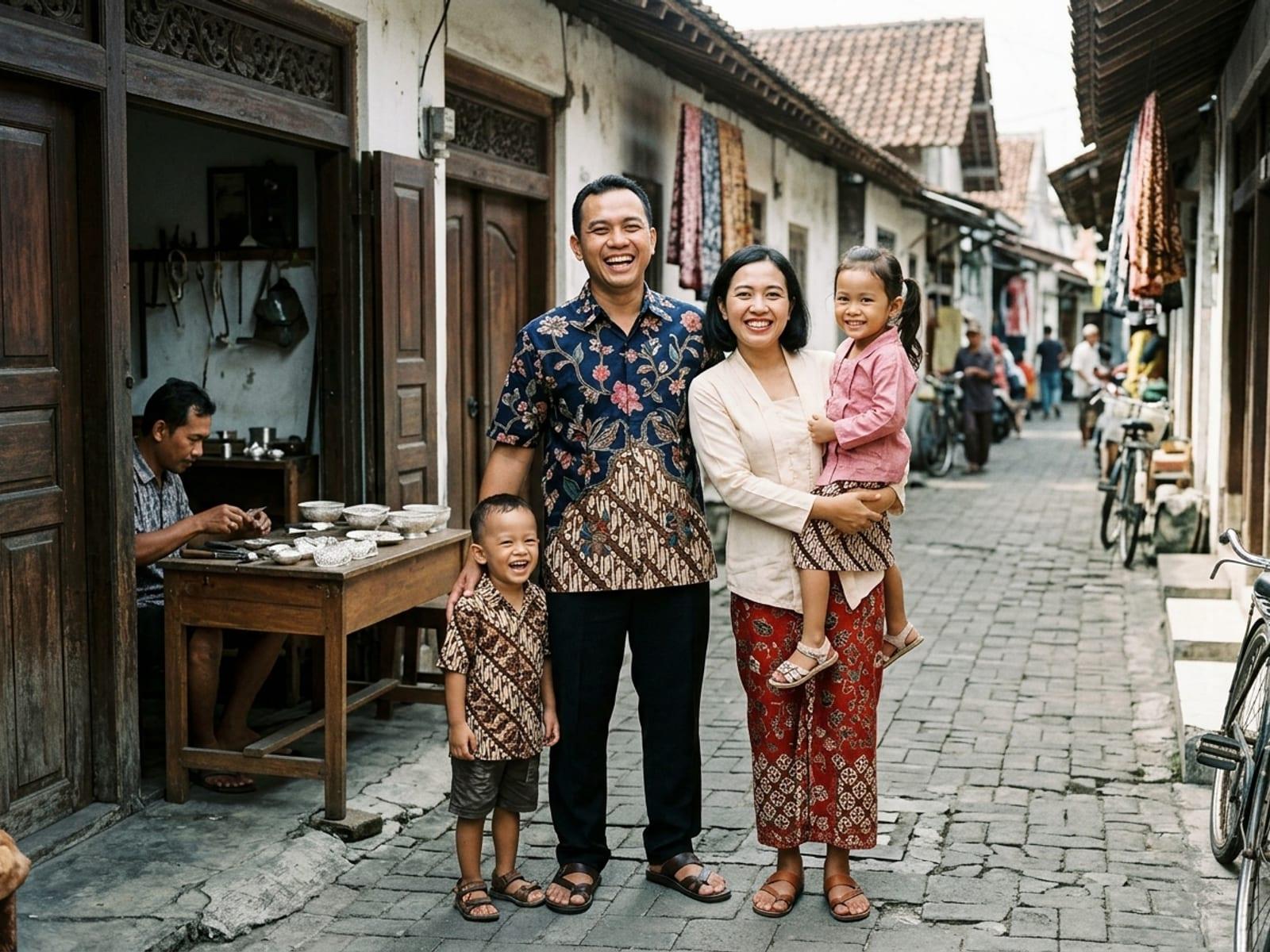
Southeast of Yogyakarta, the old royal city of Java, lies the historic town of Kotagede. In the 16th century it was where the Mataram kingdom set up its first capital, and the royal graves and a large mosque still stand. What has made the town known beyond Indonesia, though, is silver. Along Jalan Kemasan, the street that leads into town from the north, workshops and shops selling silver bowls and jewelry stand side by side. It's a small town you can cover on foot, so even with children, half a day is enough to get a feel for it.
A craft that grew with the royal capital
Kotagede's story begins when Ki Ageng Pemanahan, regarded as the founder of the Mataram kingdom, was granted a forest here. His adopted son, Danang Sutawijaya, later known as Panembahan Senopati, made it the Mataram capital in the late 16th century. The capital was protected by walls and a moat, and laid out around a combination of mosque, palace, market and square. Later the capital moved elsewhere, and Kotagede became mainly a place of pilgrimage. When the kingdom split in two in 1755, the old capital was divided as well, between the Yogyakarta and Surakarta sides. After independence, the Surakarta enclave was folded into Bantul Regency. That's why the old town of Kotagede is still split between two local governments, the city of Yogyakarta and Bantul Regency. Walking around, you come across palace foundation stones, remains of the inner wall known as the cepuri and traces of the old moat.
Silversmiths are said to have multiplied from the time Kotagede became the capital. Silverwork boomed in the 1930s, during the colonial period, and the Dutch colonial government even set up a foundation to protect Kotagede's silverwork. Filigree, in which fine silver wire is worked into patterns, arrived around 1950 and is attributed to the influence of craftsmen from Kendari, on Sulawesi.
Kotagede silver is known for floral motifs rooted in Hindu tradition, such as leaves and lotus flowers. Over time a pattern took shape: the workshops clustered around the mosque, and the shops lined Jalan Kemasan. When tourism took off in Indonesia in the 1970s, parts of old houses were turned into craft shops and restaurants.
Watching the silversmiths at work on Jalan Kemasan
Shops on Jalan Kemasan sell hammered bowls and small boxes, filigree ornaments made of twisted wire and jewelry in modern designs. Some combine workshop and shop, and if you glance toward the back from the street, you may see a silversmith bent over a workbench.
With children, ask before you go in, "Which pattern do you like best?" Then hunt for flower, leaf and lotus motifs as you walk, and they'll stay interested. Filigree is astonishingly delicate, so when a shop lets you handle a piece, have an adult take it and show it to the child on the counter. Ask the staff before looking into a workroom or taking photos. Fire and tools are in use, so make sure little hands don't reach out.
When buying, ask the shop about the material, the silver purity, and whether the price is set by weight or includes a charge for the craftsmanship. Small pieces like rings or pendants make good keepsakes for a child. Silver gradually tarnishes once it's exposed to air, so ask at the shop how to clean and store it after you get home.
Walk on to the mosque, the royal graves and the market
The Kotagede district within Yogyakarta city covers about 3 square kilometers and had a population of around 34,000 in 2019. It's surprisingly small for a former royal capital, which also means the sights are all within walking distance.
After the workshops, take a walk through the old streets. The Great Mosque of Kotagede (Masjid Gede) is the largest of the buildings associated with the Mataram kingdom and is built in traditional Javanese style. In front of the prayer hall is a front pavilion called a serambi, surrounded by a shallow moat that people dip their feet in before going up. Avoid prayer times, wear clothes that cover shoulders and knees, and look around quietly.
The old town also holds the royal graves, known in Javanese as Pasareyan Hasta Kitha Ageng. Their caretakers serve both royal courts, Yogyakarta and Surakarta, so the two royal houses still look after the site together.
The town market is known for Pasar Legi, the market held on legi days in the Javanese calendar. Java has its own five-day week, and legi is one of its days. The custom is said to be unlike anything else in Yogyakarta. In and around the market you can find kipo, Kotagede's signature little sweets, as well as yangko and other treats.
The old streets still have joglo, traditional Javanese wooden houses, and kalang houses, which combine Javanese and Dutch styles. Merchants who made their fortunes in silver and other trades brought Dutch-style details, considered a luxury at the time, into their own homes. The 2006 Yogyakarta earthquake damaged many buildings, and efforts to restore the townscape have continued since. If you're visiting as a family, pairing the old town with Gembira Loka Zoo, which is also in the Kotagede district, gives children one more thing to look forward to.
For a half-day plan, have a gudeg breakfast near the palace before you set out, see the workshops and shops on Jalan Kemasan in the cool of the morning, then head to the Great Mosque and royal graves before noon. After lunch, look for kipo around the market, and spend the hot afternoon in the shade at the zoo or resting at your accommodation.
What to wear and when to go
There's no dress code for walking around a silver town, but since you'll be near a mosque and royal graves, clothes that cover shoulders and knees are the safe choice. For photos with a Javanese feel, put boys in batik shirts and girls in a light kebaya or a batik skirt; they blend well with the old wooden doors and tiled roofs. The sun is strong, so bring hats and drinks as you walk.
You can see Kotagede silver all year. The gateway is Yogyakarta International Airport (YIA), about 45 km from the city, and the airport rail link reaches Yogyakarta station in just under 40 minutes. International flights come from Kuala Lumpur and Singapore, and there are domestic flights from Jakarta and Bali. Kotagede is at the southeastern edge of the city, and the easiest way there from the center is by car. Entry requirements for Indonesia depend on your nationality, so check your own government's official information.
You can see how a family photo in batik against the old streets might turn out with pokesta's AI photos ($1 per photo, first one free). With Yogyakarta as your base, you can also plan a trip around Vesak at Borobudur in May or June, or take the train to try jamu in Solo.
References