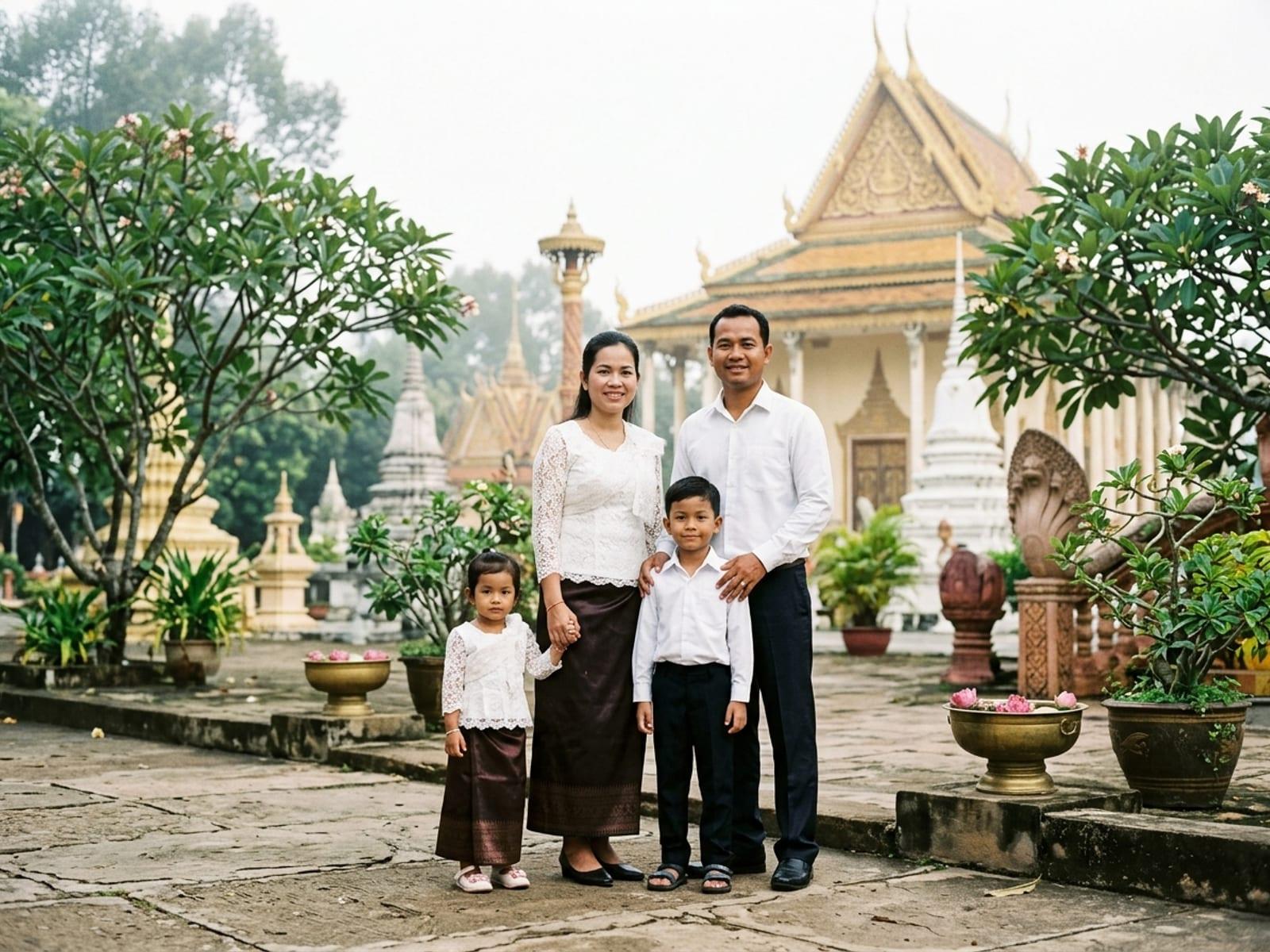
Pchum Ben, also called Ancestors' Day, is one of the most important religious occasions of the year for Cambodian Buddhists. Over 15 days, usually in September or October, people carry food to the pagoda and make offerings for family members who have died, going back as far as seven generations. The last three days are a national holiday: October 10 to 12 in 2026, and September 29 to October 1 in 2027, according to the holiday list the Cambodian government has already set. It isn't a party, but visitors can quietly watch families gathering at the temple. If you plan to go, it helps to know beforehand how to behave and what to wear.
"Gathering" and "rice balls": what the name means
In Khmer, pchum means to gather and ben means balls of rice. The custom of shaping rice into balls as offerings for the ancestors survives in the name itself. Cambodians have long believed that at this time of year the spirits of the dead return to this world and are especially active. Offerings can relieve spirits that are suffering, and the merit also reaches relatives who are already in heaven. Because the gates of hell are said to open during this period, some pagodas have monks chanting Pali scriptures through the night.
Broadly, there are two ways of thinking about how the offerings work. One is that by giving food to living monks you make merit, which is then passed on to deceased relatives. The other is that you try to feed the spirits directly, by throwing rice balls into the air or scattering rice over the fields. The anthropologist Satoru Kobayashi, who studied rural Cambodia, recorded how these two approaches coexist, and sometimes compete, from one pagoda to the next. Either way, the core is the same: families cook, carry the food to the pagoda and put their hands together while thinking of the people they've lost. Among the sweets offered at pagodas at this time are num ansom and num kom, sticky rice wrapped in banana leaves.
Rituals for transferring merit to the dead also exist in Sri Lanka, and the ideas of the gates of hell opening and the king of hell releasing the spirits have been compared to Taiwan's Ghost Festival. Even so, honoring ancestors back seven generations over 15 days is considered distinctly Cambodian. When you explain it to your children, try counting back on your fingers, parents, grandparents, great-grandparents and on through seven generations, to show just how many people are being remembered. You could also look through your own family photos together and talk about how people in a faraway country think about their families in the same way.
How the 15 days run and how the dates are set
Pchum Ben begins the day after the full moon (the first day of the waning moon) in Photrobot, the tenth month of the Khmer calendar, and ends on the new moon. The first 14 days are called Kan Ben. The 15th day is Pchum Ben itself, and the days around it are public holidays.
Because the dates follow the moon, they shift every year. The first day of the holiday was September 16 in 2020, October 5 in 2021, September 24 in 2022, October 13 in 2023, October 1 in 2024 and October 10 in 2026. For 2027, a sub-decree signed by Prime Minister Hun Manet on September 16, 2026 sets the holiday from September 29 to October 1, eleven days earlier than in 2026, as reported by the Cambodian outlet Cambodianess. For 2028 and later, check the list of public holidays the Cambodian government publishes the year before.
Pagodas are busiest on the main day and the days either side of it. The heart of the occasion is local families at prayer, so visitors do best to come at a different time and watch from the edge of the grounds.
White tops, with shoulders and knees covered
When visiting a pagoda, cover your shoulders and knees. In Cambodia, a white blouse or shirt with a dark sampot (wrap skirt) or long trousers is the classic outfit for going to the temple. If you follow suit, with a white or pale top and long trousers or an ankle-length skirt, you won't look out of place. You take your shoes off to enter the prayer hall, so wear shoes that slip on and off easily.
The same goes for children: no sleeveless tops or shorts. It's hot, so thin cotton or linen long sleeves are a good choice. Inside the hall, you shouldn't point the soles of your feet at Buddha images or monks. Practice sitting with your legs folded to one side before you go, so your kids aren't caught off guard.
Watching respectfully, and traveling in the rainy season
Pchum Ben is a time for remembering family members who have died. Always ask before taking a photo, and don't step in front of people who are praying or of monks to point a camera at them. Hold your children's hands so they don't pick up or step on rice balls or offerings that have been thrown. Keep a little distance from the monks and take care not to brush against them.
Take off your hat when you enter the grounds, and agree with your kids beforehand that you'll keep your voices down. If they get bored and want to run, there's no need to stay long. Just a few minutes watching families carrying offerings back and forth while the chanting goes on is enough to feel what this occasion is about.
If you want a family photo after watching the temple rituals, take it outside the grounds or by the gate, where no one will mind. You can also try out, before you leave, what your family might look like lined up in white with pokesta's AI photos ($1 per photo, and the first one is free).
September and October are the end of the rainy season, and Phnom Penh gets more than 170 mm of rain in each of those months, compared with about 12 mm in dry-season February. Bring umbrellas and rain gear, and leave slack in your schedule so you can wait indoors through heavy downpours. Unpaved temple grounds can turn muddy, so choose children's shoes that can get wet.
Pagodas everywhere, and an October full of holidays
Pchum Ben is observed at pagodas all over the country, so there's no single venue. If you base yourself in Phnom Penh, your gateway is Techo International Airport (KTI), which opened in September 2025, and airport buses run into the city from 5:30 am to 11:30 pm. Visa requirements depend on your nationality, so check your own government's official information and the Cambodian government's e-Visa site.
October is full of public holidays. In 2026, besides Pchum Ben, October 15 is the commemoration day for the late King Sihanouk and October 29 is the anniversary of the current king's coronation. Some shops close over holidays and transport gets busy, so book long journeys early and confirm opening days for places like museums and the Royal Palace and Silver Pagoda just before you go. Around November comes the Water Festival (Bon Om Touk), which celebrates the river changing direction. It's hard to see both on one trip, so if you need to choose, ask yourself whether you'd rather experience the quiet atmosphere of the pagodas. You can also make a Pchum Ben family photo designed for the occasion.
References