
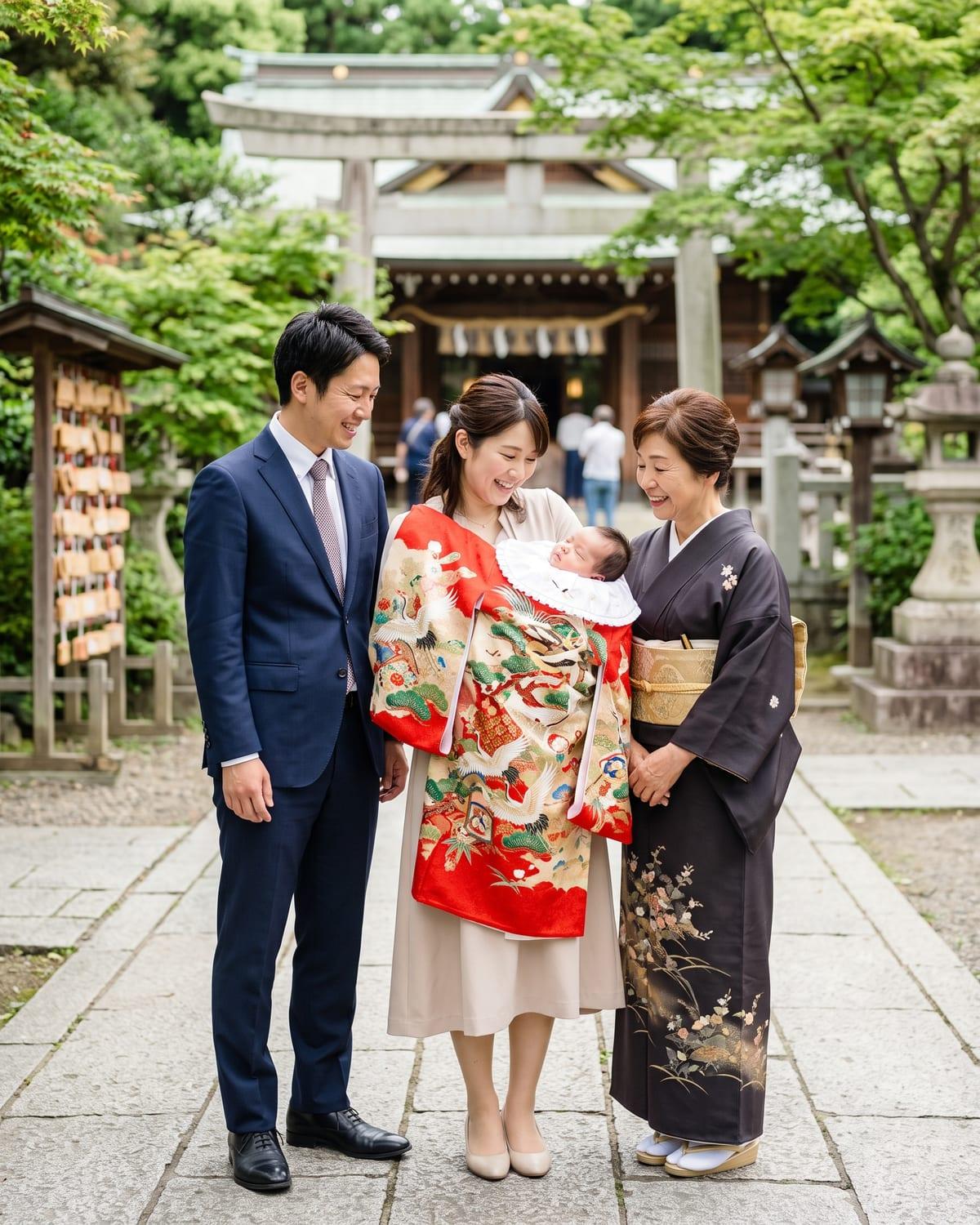
Omiyamairi is a newborn's first visit to a Shinto shrine, made around a month after birth to pray for the child's health and future. When everyone picks an outfit separately, one person often ends up sticking out in the photos. Let the baby set the standard: an iwaigi calls for formal adults, a baby dress alone for smart semi-formal ones. Two things change that picture. The iwaigi is draped over whoever holds the baby, so that person dresses differently, and mom's health, a month after giving birth, comes before any dress code.
Whether the baby wears an iwaigi sets everyone's dress code
The traditional outfit is a white silk kimono called shiro-habutae with an iwaigi over it. An iwaigi is a brightly decorated ceremonial kimono made for this occasion, also called ubugi, kakegi or noshime. Most families now put the baby in a baby dress instead of shiro-habutae and drape the iwaigi over that, and some go in the dress alone. Our guide to Omiyamairi in a baby dress covers that route.
The choice matters for everyone else. An iwaigi puts the baby in formal Japanese dress, and the adults have to rise to meet it; with a dress alone, Western semi-formal clothes are plenty. Whether to rent or buy the iwaigi comes down to budget and how many times you expect to use it.
An iwaigi's background color and motifs also give you a starting point for the family's colors. According to the photo studio chain Studio Alice, most families pick black or navy for boys, while red and pink are the classics for girls, with white also popular. Each motif carries a wish. For boys, a samurai helmet (kabuto) wards off misfortune, a hawk stands for foresight and a dragon for rising in the world. For girls, temari balls wish for a good match and healthy growth, peonies for dignified beauty, and the ornate ox-drawn carriage called goshoguruma for marrying into a prosperous family. Pine, bamboo and plum, or bundled noshi ribbons, appear on iwaigi for both.
Beside a black or navy iwaigi, a family dressed all in black makes the photo look heavy. Put adults in red next to a red iwaigi and the pattern gets lost. Keep the adults in navy, gray or beige that won't fight the iwaigi's background, and let mom or grandma add one lighter color.
The iwaigi is worn by the person holding the baby
The baby never puts their arms through the iwaigi's sleeves. You thread the collar cords through each sleeve, drape the iwaigi over the holder's shoulders so it wraps around the baby, and tie the cords behind the holder's back. The kimono shop Haregi no Marusho recommends a bow around the shoulder blades rather than at the back of the neck, which strains the neck and creases the fabric. The steps are in our guide to draping an iwaigi and tying the cords.
So whoever wears the iwaigi carries its cords and weight on top of their own clothes. Big collars, corsages and long necklaces tangle with the cords and end up hidden behind the iwaigi in photos anyway. Choose a clean neckline, and slip a thin handkerchief under the cords where they rest on the neck and shoulders to stay comfortable through the blessing.
By custom, that person was the paternal grandmother. Childbirth, with its bleeding, was once regarded as ritually impure, and a mother so soon after giving birth wasn't supposed to carry the baby to the shrine. The role went to the father's side because a married woman's child was considered part of her husband's family. Japanese Wikipedia adds that in the past a wet nurse or female relative carried the baby with a celebratory garment called a miyamairi-gi laid over it, and mentions a custom of the parents and the paternal grandmother going along.
Today it's actually more common for mom to hold the baby, and the maternal grandmother is fine too. Some families take turns, with grandma holding the baby for the blessing and mom for the photos. Decide in advance who wears the iwaigi for which part of the day, and that person can plan their neckline. There's more on making the call in who holds the baby at Omiyamairi.