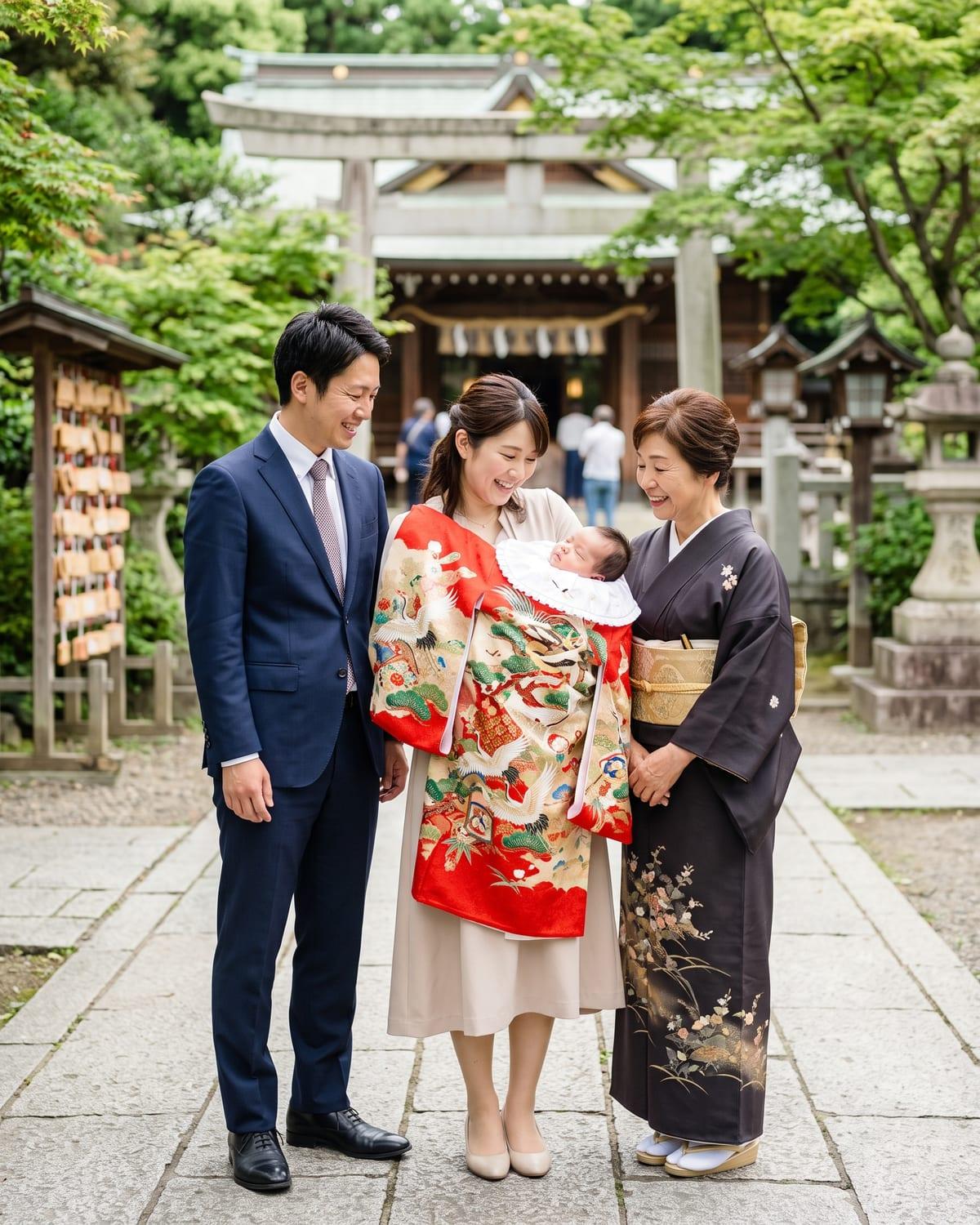
There are three main ways to get photos of Omiyamairi (a newborn's first visit to a Shinto shrine, usually about a month after birth): go to a photo studio, hire a photographer to shoot at the shrine, or take them yourselves. Which suits you depends on the picture you most want to keep. For a polished portrait with a clean backdrop, choose a studio. To capture the family at the shrine itself, hire an on-location photographer. To keep costs down and catch everyday expressions, do it yourselves. Add in how much each option asks of the baby and mom, and the right choice usually becomes clear.
The difference is where, and who's behind the camera
Put simply, the three differ in location and photographer. A studio shoots indoors with controlled lighting and backdrops, with staff used to photographing children. On-location shoots happen outdoors, at the shrine or near home, with a professional photographer. If you do it yourselves, the shrine or home both work, and a family member takes the photos.
A Studio Alice column also notes that besides taking photos at the shrine on the day, families can go to a studio after the visit or on another day, and that many choose an on-location photographer for photos on the shrine grounds. It points out that doing it yourself keeps costs down, but the baby may fuss and the photos may not turn out as hoped.
Compare cost by how the pricing works
Knowing how each option charges makes quotes easier to read before you compare totals.
Studios often charge a session fee plus products. On Studio Alice's official site, for example, the Omiyamairi session fee is 5,500 yen (tax included) per family, with no extra charge for more poses. Booking an Omiyamairi shoot includes a free iwaigi rental (the celebratory kimono draped over the baby), due back by noon the day after the shoot. The total, however, also includes whatever prints, albums or digital files you choose. That can vary widely, so don't compare on the session fee alone.
On-location shoots usually charge by time, with digital files included. The on-location photo service fotowa lists a base fee of 24,200 yen on weekdays and 29,700 yen on weekends and holidays (both tax included), for about 60 minutes including setup and packing up, with 75 or more photos delivered as files. Some photographers charge an extra 3,000 yen travel fee for distant locations, and retouching and printing aren't included.
If you shoot yourselves, the only cost is equipment such as a tripod and a remote.
All of these prices can change, so check the latest figures on the official sites before booking (the amounts here were confirmed on each official site in October 2026).
Compare the finished photos
A studio's strength is consistency. With controlled lighting, weather and time of day don't matter, and the baby's skin tone and the iwaigi's pattern come out beautifully. If you want mounted prints for the grandparents or a large print to hang at home, a studio is the surest bet. On the other hand, the backdrop is a set, so the photos won't record that you were at that shrine on that day.
On-location shoots give you the family against the torii gate, the shrine buildings and the green of the approach. A photographer can also capture the flow of the event, like hands passing over the hatsuhoryo (the offering for the blessing) at reception, or the family stepping out after the blessing. Being outdoors, though, the mood of the photos changes with the weather and light.
Photos you take yourselves won't be as polished as a professional's, but they hold expressions only the family ever sees. The photographer missing from the shots can be fixed with a tripod and remote.
Compare the strain on baby and mom
For a baby of around one month and a mother just after giving birth, the strain comes from travel, outfit changes and how long the day runs.
With a studio on the same day as the shrine visit, there's an extra trip between shrine and studio. Multiple costume changes can tire the baby. Splitting the visit and the shoot across two days lightens each day, but means two outings.
On-location shoots cover the visit and the photos in one trip. The trade-off is time spent outdoors, exposed to summer heat or winter cold.
When you shoot yourselves, you can stop whenever the baby has had enough, and pause for a feed and try again.
Also compare what happens if plans change. A one-month-old can run a fever the night before, and mom's health can dip suddenly. Studio Alice asks families to contact the studio about changes or cancellations on the day due to a child's sudden illness, and says there's no cancellation fee in that case. fotowa doesn't charge for changing the date, including for sudden illness or bad weather, and offers an option (1,980 yen) that waives cancellation fees from three days before the shoot through the day itself. Since on-location shoots depend on the weather too, it's wise to have two candidate dates ready. Doing it yourself, rescheduling costs nothing.
Shrine rules may make the choice for you
If you're considering an on-location photographer, check the shrine's rules too. Kawagoe Hachimangu in Saitama, for example, allows photographers to accompany families during the blessing only for customers of the photo studio on its grounds. Some shrines require permission for any outside photographer to come onto the grounds at all. If you want the blessing itself on record at a shrine like that, its own studio is the surer route. On the other hand, Kawagoe Hachimangu lets families take photos freely on their own phones as long as they don't bother other visitors, so even where outside photographers are restricted, doing it yourselves can still be an option. What to ask the shrine, and how, is covered in booking an on-location Omiyamairi photographer.
Work back from the one photo you want
If you're stuck, agree as a family on the single photo you most want to keep. A polished portrait to display: studio. The family at the shrine: on-location photographer. Everyday expressions: yourselves. You can also combine them, shooting yourselves on the day and visiting a studio later. For a plan when you're taking the photos, see taking Omiyamairi photos yourselves. If the whole family couldn't be there, you can use pokesta to create an Omiyamairi photo of everyone from each person's photos ($1 per photo, with the first one free).
References