
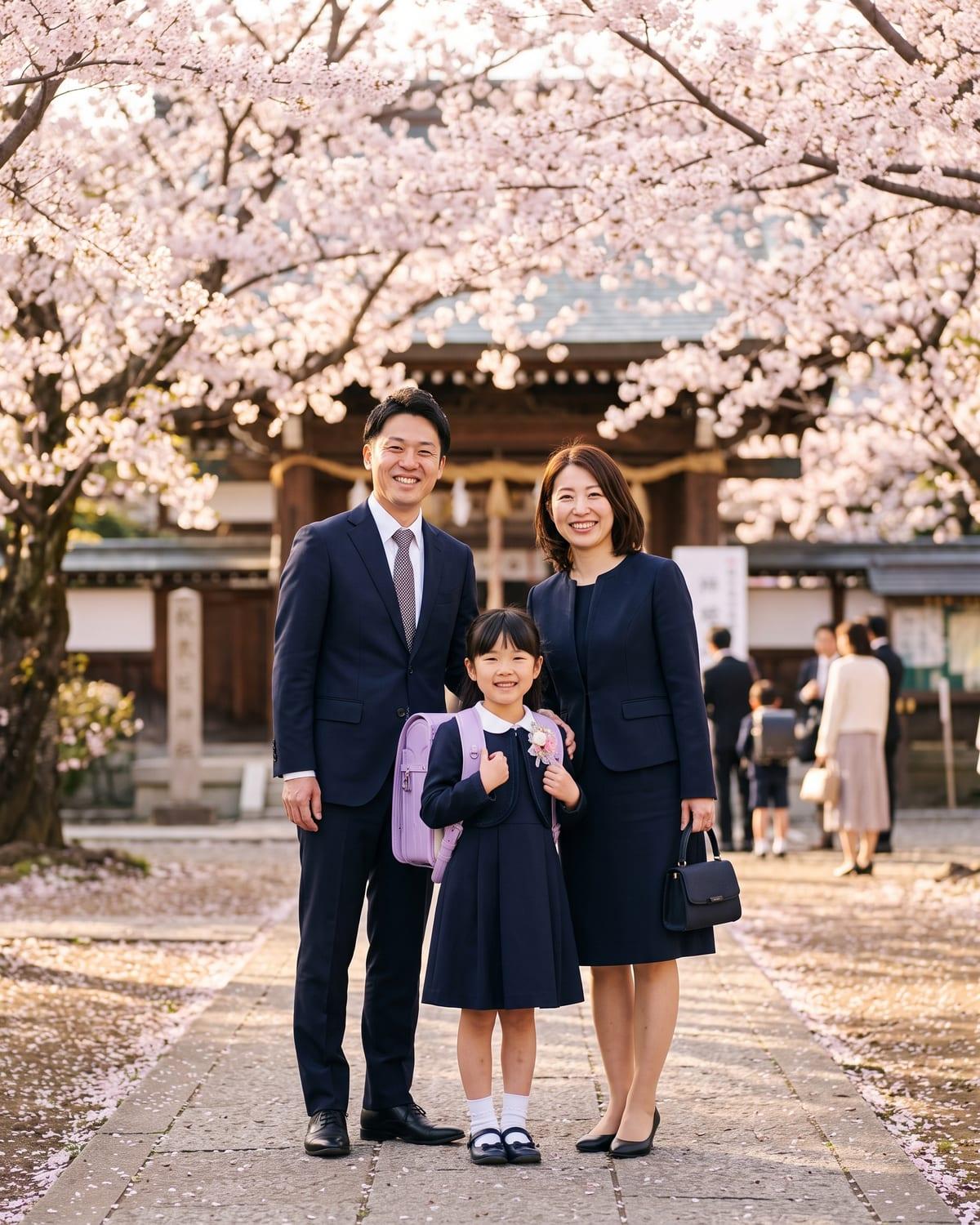
On the evening of a Nyuenshiki (the entrance ceremony Japanese kindergartens and daycares hold for new children, usually in April), your phone is full of near-identical shots: a burst at the entrance sign, blurry ones from the ceremony, a different angle a grandparent sent over. Put off sorting them, and six months later, when it's time for New Year's cards, you'll start by hunting for the good ones. Pick just ten that same week. Make the photo book after the first school year ends. Choose New Year's card photos in November. Thinking in those three steps keeps the photos from getting buried.
Pick ten that week, and only ten
The trick is to fix the number first. With ten, one or two per scene is enough.
As a guide: a full-length shot at the front door before leaving, one with the whole family, one at the sign or gate, a profile during the ceremony, your child in the classroom with a name badge, and one from behind on the way home. Add a few close-ups with good expressions and you're at ten. Check that no single scene dominates, and the set will tell the story of the day. Set a limit, like fifteen minutes together after your child is asleep. Picking alone tends to follow the photographer's own taste; looking together, you'll spot expressions the person behind the camera missed.
Mark your picks as favorites or put them in an album called "Nyuenshiki." That's enough. There's no rush to decide whether to delete the rest. But for bursts of almost identical shots, keeping only the one where eyes are most open makes looking back much easier.
If photos are spread across several family members' phones, gather them in one place before choosing. A Google Photos shared album lets you share photos even with people who don't use the app, and family who join can add their own. Gather photos from dad's phone, mom's phone and the grandparents' camera before picking ten, and you'll find shots of whoever was taking pictures.
Make the photo book after the first year
A whole photo book on the ceremony alone usually runs out of pages. There are only so many scenes on the day, and around ten photos tell most of the story.
A better approach is a book covering the whole first year, opening with the ceremony: April's entrance, summer water play, the autumn sports day, the winter performance, then the end-of-year ceremony in March. Keep the entrance ceremony to the first one or two spreads, and put a photo from the day your child moves up a class on the last page, so the book itself shows how much they've changed. Placing an entrance-day photo and a move-up-day photo taken at the same front door at the start and end works especially well. How to keep shooting in one spot is covered in our article on fixed-point growth photos.
Spring break is a realistic time to make it. If you've picked ten photos per event through the year, all that's left is to lay them out.
Short facts are enough for captions: the date, the place and something your child said. "April 8, entrance ceremony, 'My teacher was nice.'" Years later, that brings back the feel of the day in a way the photo alone can't. You might even put a photo from the end of the year on the cover rather than the ceremony; meeting the small first-day version of your child on the first page makes the change stand out.
If you're making one for the grandparents too, a thinner edition with fewer photos may please them more than a second copy of the same book. What they want to see is their grandchild's face, more than the details of each event. Use clear face shots at a large size, and make the text bigger.
If you bought photos from the school's photographer, you may want to include them. How you can use purchased photos is set by the terms of the sales service, so check before adding them. More on this in our article on photos taken by the school photographer.