
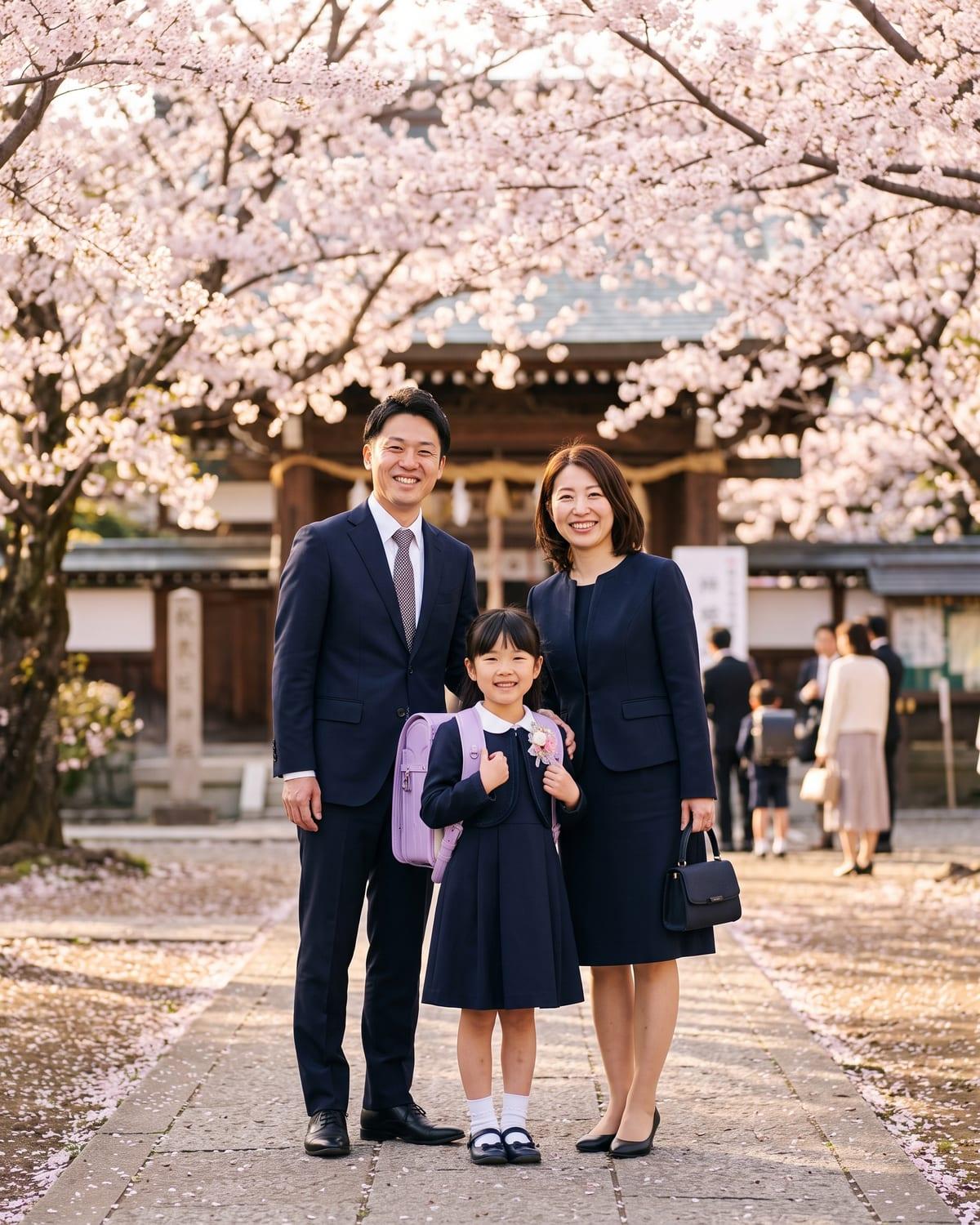
In Japan, children starting kindergarten or nursery school usually attend an entrance ceremony (nyuenshiki) in April, and first graders have one at elementary school (nyugakushiki). If your child runs a fever the day before or on the morning itself, decide whether to go based on both temperature and overall condition, and if you're staying home, call before the ceremony starts. Guidelines for nursery schools from Japan's Children and Families Agency say it's best to keep a child home if they've had a fever of 38°C or higher in the past 24 hours, or are taking fever reducers. Missing the ceremony doesn't mean missing the photo: once your child is well, they can put on the uniform and pose at the school gate or in a studio.
Decide by the "38°C within 24 hours" rule and how your child seems overall
When it's a day everyone has looked forward to, it's tempting to go if the fever has dropped by morning. A useful yardstick is the Children and Families Agency's infection control guidelines for nursery schools. They list cases where staying home is advisable: a fever of 38°C or higher within the past 24 hours, use of fever reducers, or a temperature over 37.5°C from the morning combined with poor overall condition, such as low energy, crankiness or not managing breakfast or fluids. The guidelines add that temperatures are only a guide and should be read against each child's normal temperature. They're written for nursery schools, but they're a reasonable reference for a kindergarten or elementary school ceremony too.
For whether to see a doctor, Kodomo no Kyukyu, a children's emergency guide supervised by the Japan Pediatric Society, is helpful. Its fever page flags signs that need attention, like a limp, listless child, labored breathing, poor color or constant drowsiness, and lists reassuring signs: being lively, drinking, smiling when played with and wetting diapers as usual. If you're unsure at night or on a holiday, the #8000 children's medical phone line is another option. While you watch at home, the guidelines suggest frequent sips of oral rehydration solution, cooled boiled water or tea, lighter clothes if your child feels hot, and warmth if their hands and feet are cold or they have chills.
If your child is diagnosed with influenza or a similar illness, there are rules for returning. Under Japan's school health regulations, children with influenza stay off until five days after onset and two days after the fever goes (three days for preschoolers), and with COVID-19 until five days after onset and one day after symptoms improve. Nursery schools are asked to set their own return guidelines in line with these.
When you call, ask about what happens after the ceremony
Kindergarten entrance ceremonies are usually in early April, often around the 5th to the 10th, while nursery schools vary from late March to late April, and some hold no ceremony at all. Call before the ceremony, using whatever method the school has set. Ceremonies often start around 9 a.m. and last an hour at most, so check what time the phone is answered. Beyond saying your child won't attend, these questions make the following days easier:
- When and how to collect the name badge, commemorative gift and handouts
- How long the "entrance ceremony" sign will stay up, and when you can take photos at the gate
- Your child's first day and what to bring
- Whether a return form or a doctor's note is needed when they come back
Requirements for return forms and notes differ by school and municipality. The same goes for an elementary school ceremony: call the school and ask how to collect handouts and what happens on the first day.