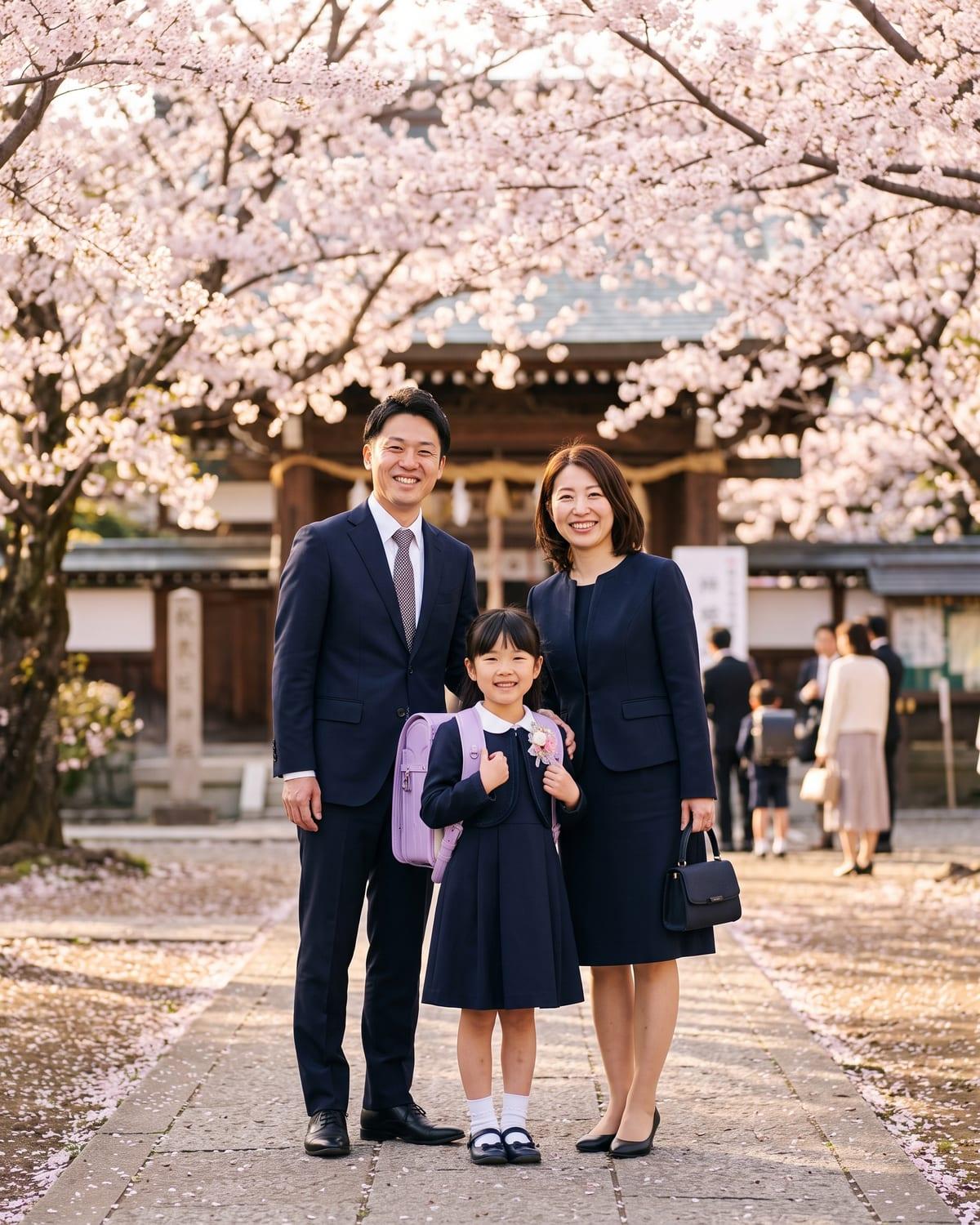
Every year, at every school, some children cry at the Nyuenshiki, the entrance ceremony Japanese kindergartens and daycares hold for new children each spring. A building they've never been in, adults and children they don't know, clothes that feel different. Crying is a natural response from a child who is in the middle of getting used to a new place. The night before, walk them through the day briefly; on the day, don't drag out the goodbye. As for a photo of the tears, take one from a little way off, and decide whether to keep it some years later.
Crying doesn't mean it's going badly
Separation anxiety, strong distress when a child is apart from a parent, is considered a normal stage of development. The MSD Manual explains that it typically begins around 8 months of age, is most intense between 10 and 18 months, and generally resolves by 24 months. A three-year-old crying at an entrance ceremony is probably better understood as nerves about a new environment than as an extension of that stage.
An article on the parenting site HugKum, written by a qualified childcare worker, describes reluctance to go to school after starting not as "proof they can't cope" but as a sign the child is working hard to adjust to a new environment. Even when the reluctance is strong, it says, most children settle within a few weeks to a month or two. Crying on ceremony day doesn't mean the rest of school life will go badly.
That said, if months go by and your child still can't attend, or their anxiety is so strong they can't play with other children, talk to their teacher or your pediatrician.
The night before, explain the day briefly and concretely
Children get anxious when they don't know what's going to happen. The night before, tell your child how the ceremony will go, in words they understand.
"Tomorrow you'll wear your kindergarten clothes and we'll go to kindergarten together. You'll say hello to your teacher, and when they call your name in the room, you say 'Here!' Then we'll come home together." The key is to finish with coming home. When they know there's an end, they can see the shape of the day.
Keep it short. Repeating "don't cry" or "it'll be fine" over and over makes a child wonder what there is to cry about, and brace for it. If they're looking forward to wearing the uniform, talking about that is enough.
Put them to bed at the usual time. Anxiety rises when children are sleepy or hungry, so have them eat their usual breakfast before you head out.
On the day, keep the goodbye short, with the same words each time
At some schools, children go to their teachers first while parents wait in the parents' seats. That handover is the moment tears are most likely.
Arriving with time to spare lets you walk around the school a little before check-in. If you find the classroom and the toilets together, the strange building turns into "the place we just saw." Rushing in at the last minute and being handed straight to a teacher would make even an adult nervous.
The HugKum article recommends that once you've said "see you later" or "bye-bye," you hand your child to the teacher without hesitating, because a parent who lingers looking worried can pass that feeling on to the child. The MSD Manual likewise suggests leaving without prolonged comforting if the child cries, and creating a set routine for goodbyes.
The routine can be simple: a big hug and "have fun," or a high five. Don't slip away silently; always say something before you go. Telling them exactly when they'll see you next helps too: "When they call your name, I'll be watching from the back."
If your child keeps crying during the ceremony, the teachers are used to it; it happens every year. Wait for a teacher's signal before getting up from your seat to go to them. That way you don't unsettle the other children either.
One tearful photo, from a distance
Whether to point a camera at a crying child is something families feel differently about. Some regret not taking a picture; others feel bad that they did.
One option is to stay back and take just one photo from a distance. Pushing a phone in front of a crying child's face only upsets them more. Your child crying in a teacher's arms, or seen from behind from the parents' seats: a slightly wider shot like that records the day without stirring up their feelings. Make sure other children's faces don't fill the frame.
You don't have to decide that day whether to keep it or delete it. A few years on, the photo of them crying at the entrance ceremony can become one you want to set beside their smile at graduation. And if your child grows up and says they don't like that photo, you can delete it then. It's safest to keep it off social media and in the family album.
A photo on the way home, once they've calmed down, is worth taking too. For how to approach photos after the ceremony, see our article on Nyuenshiki poses and what to say.
Say the same thing whether they cried or not
When you get home, talk about what they did that day, not whether they cried. "You put your hand up when they called your name." "You sat and listened to the teacher right to the end." Leave the crying out and name specific things they managed, and your child can face the next school day a little more easily.
Once regular school starts, there may be tearful mornings for a while. Put their feelings into words, "You don't want to go, do you," and promise pickup in terms of their day: "I'll come and get you after snack time." This way of responding works from ceremony day on. For daycares with no entrance ceremony, and how to record the settling-in weeks, see our article on marking the start of daycare.
Tears or not, it's still the day they started
Whether they cried or not, it's the day your child became part of that school. Explain the day the night before, keep the goodbye short. Take the photo or don't; either is fine. Whether to keep it is something you can decide later, together with your child.
References