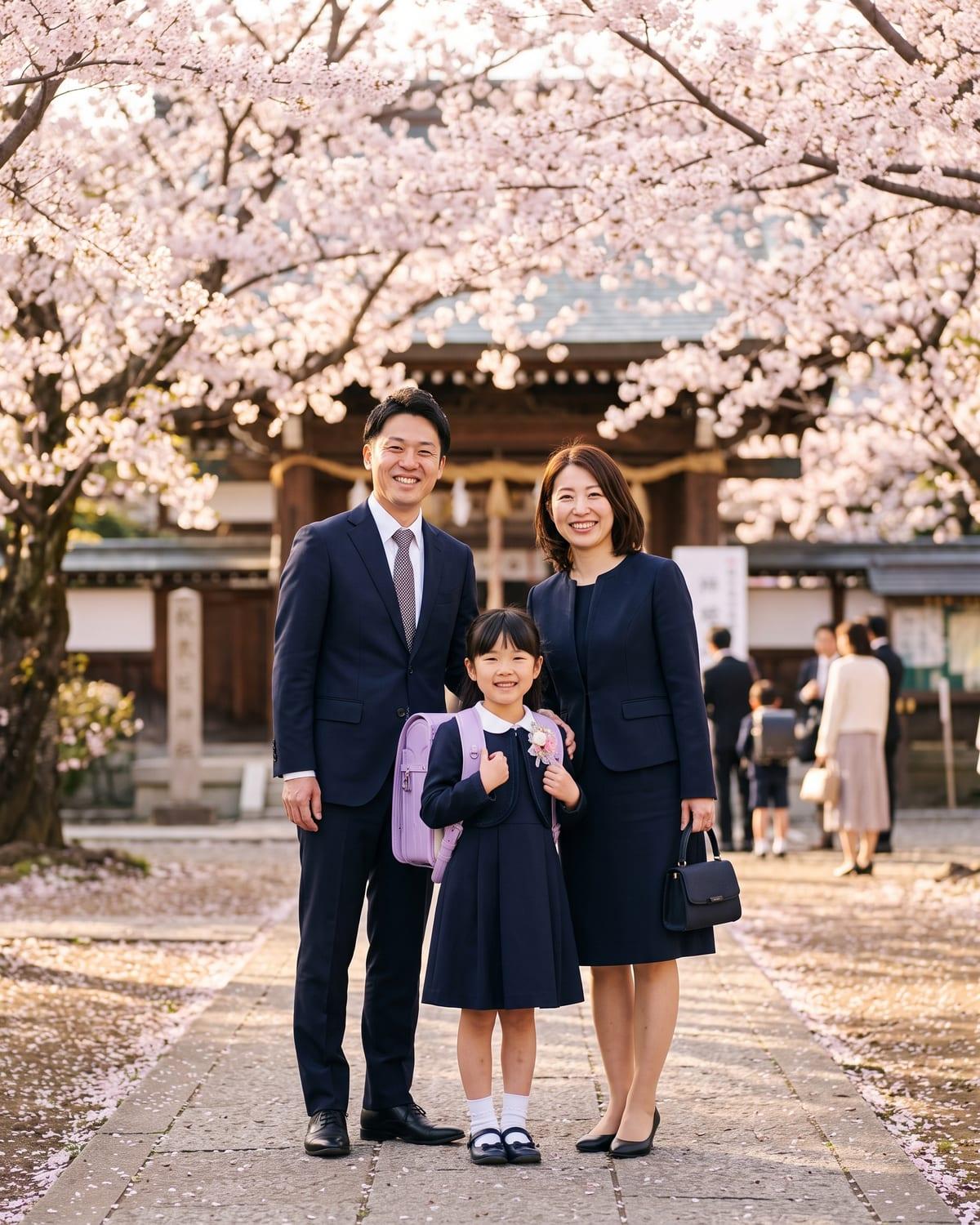
It's the morning of the Nyuenshiki (the entrance ceremony Japanese kindergartens and daycares hold for new children each April). Your child is in a brand-new uniform, you raise the camera and say "peace sign!", and they freeze. Or run off. That's normal for a child of about three. Holding a set pose for any length of time is hard at that age to begin with. So instead of putting them in a pose, give them something small to do and photograph them while they're doing it. Making that switch makes entrance ceremony photos much easier.
Give each spot two or three minutes, then move on
Kindergarten entrance ceremonies often last only about 30 minutes, and one explanation sometimes given is that a three-year-old's attention doesn't stretch any further. Photos work the same way: there's not much time to linger in any one spot. The more you say "one more time" in the same place, the more the expression drains from your child's face.
Trying the uniform on at home the day before is a good idea. An unfamiliar uniform is enough on its own to make a child tense. Put it on at home, add the hat, and take a few phone photos while you're at it. Tell them "we'll take pictures like this tomorrow too," and when the camera comes out on the day, it's their second time.
Aim for two to three minutes per spot. Decide on two or three shots in advance and move on once you have them. Burst mode makes it easier to catch fleeting changes of expression. If you don't get the shot you wanted, it's better to stop and remember you'll have another chance later in the day. You'll end up with better photos that way.
Ask them to do something, and their body relaxes
A child just standing there doesn't know what to do with their hands, and their whole body stiffens. Ask them to do one thing that uses their hands and eyes, and their shoulders drop into a natural posture.
Entrance ceremony day gives you plenty to work with. Ask them to hold the brim of their hat with both hands. To point at the name badge on their chest. To squeeze the strap of their school bag. To lift their new indoor shoes with both hands. Each one shows that it's their first day.
Shots with movement work well too. Ask them to "walk to the gate," then photograph them coming toward you from a little way off. While one parent walks to school holding their hand, the other shoots them from behind. A jump on "ready, set, go!" can also break the tension. If there's an older sibling, ask them to put the hat on the younger one's head, or have the two walk through the gate hand in hand. The older child gets a job as the big brother or sister and often throws themselves into it. Shoot all of these in burst mode and you'll catch the moment feet leave the ground or a head turns back.
Ask questions they can't resist answering, instead of "smile"
Fewer children than adults think can smile on command. The more you ask, the stiffer the smile can get. When you want a smile, a question they can't help answering works better.
Ask about the day: "What's your teacher's name again?" "What do you think was in the classroom?" Ask something a bit silly: "Whose shoes are bigger, yours or Daddy's?" Get the name of their favorite character wrong on purpose. The moment their mouth starts moving to answer, or they laugh and say "no, that's wrong!", is the moment to press the shutter. If another adult talks to them from right behind the camera, their eyes end up near the lens too.
Showing them the photos on the spot works surprisingly often. Some children grin shyly at themselves on the screen or ask you to take another. Others just want to grab the phone the moment they see it, so this depends on your child.
Besides shots looking at the camera, it's worth keeping natural ones too: playing with a friend, a side view listening to the teacher. Years from now, those are often the photos that stay with you.
If your child freezes, step back and wait
A child who's very nervous, or overwhelmed by the crowd, may not be able to move no matter what you ask. Trying to force a smile then can tip them into tears.
Step back and use the zoom so you're shooting from a distance where they won't notice the camera. If they have a favorite stuffed animal or handkerchief, it's fine to let them hold it in the photos. Having something familiar in their hands can calm them a little. A face held in a parent's arms, a hand gripping tight, a face peeking out from behind a parent's leg: nervousness is one of that day's expressions too. How to think about tears is covered in our article on children who cry at the entrance ceremony.
Once the ceremony is over and the tension drains away, some children look like a different child. Leave yourself room to retake the morning's missed shots in the yard as you leave, or on the walk home, and you'll feel less pressure.
Camera height changes the same pose
The same pose reads differently depending on camera height. Shooting from above makes the head look bigger and gives a young, innocent feel. Shooting from low makes legs look longer and gives a neater, more grown-up look. If you want to remember how small they were on their first day, shoot from a little above; if you want the uniform to look sharp, go lower.
Watch your distance too. Hold the phone too close to their face and the wide-angle lens makes the middle of the face bulge. Step back and zoom to about 2x, and their face looks natural, plus they notice the camera less.
When in doubt, shoot at your child's eye level. Crouch down to match their gaze; they no longer feel looked down on, and their expression softens. If a parent is in the shot too, a lowish camera position balances the frame. How to set up at the entrance ceremony sign is covered in our article on photos at the sign.
Pick one pose, then let your child lead
One requested pose is enough for the day. For example: "Stand in front of the gate holding your hat with both hands." Once you have that, follow your child as they move on their own. The planned shot is the record; the shots you chased show who they are. With both, you have everything you need from the first day.
Choose a pose you can repeat at the same spot on graduation day, and it gives you something to look forward to. Put the two photos side by side, same gate, same hat held in both hands, and the years at kindergarten show at a glance. Choosing the pose on the first day doubles as homework for the last.
References