
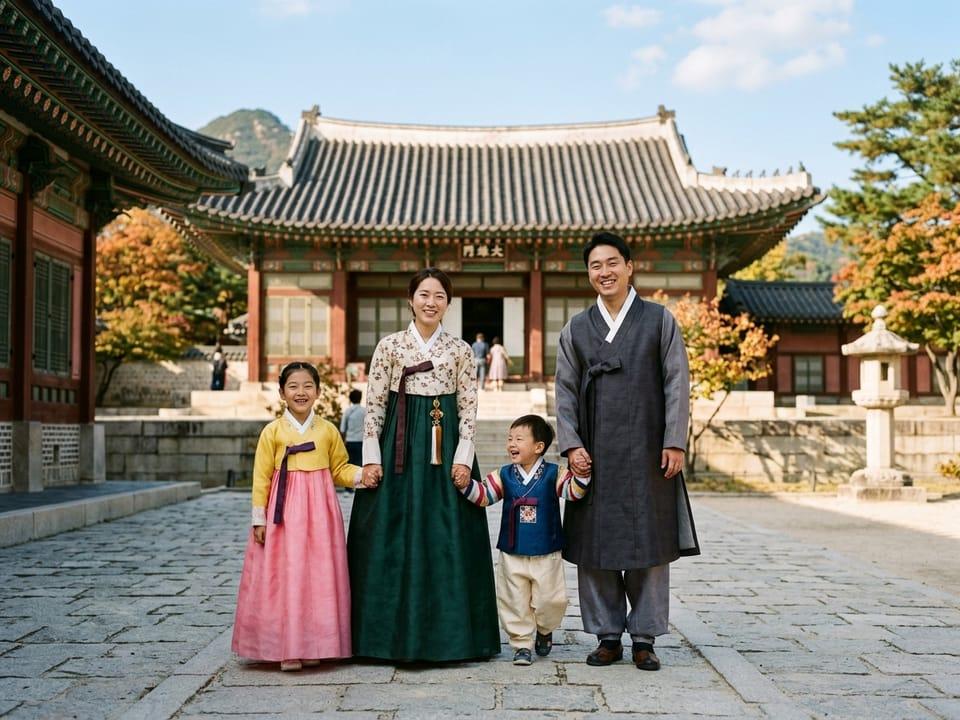
Put a toddler's hanbok on just before the photo and plan to take it off within 15 minutes. Dress them in thin cotton underneath, choose the lightest layers you have, and if they fight the full outfit, a vest or jacket over their own clothes still reads as hanbok in a picture. Take the photo right after charye, the morning ancestral rite, before the sun climbs, or in the late afternoon. Chuseok 2027 falls on September 15, when Seoul's average daily high for the month is 26.2°C.
Heat and scratchy layers are why the hanbok comes off
Seoul's 1991–2020 normals put September's average high at 26.2°C, with a daily mean of 21.7°C and relative humidity around 66 percent; August's average high is 30.0°C. Chuseok follows the lunar calendar, falling on the 15th day of the eighth lunar month, so in some years it arrives in mid-September. In 2027 it is Wednesday, September 15, with the holiday running from the 14th to the 16th on the Korea Astronomy and Space Science Institute's provisional calendar, and a sunny afternoon can still feel like late summer. A mid-September Chuseok is noticeably warmer than one in early October, when Seoul's average high falls to 20.2°C.
A child's hanbok is built in layers: a jeogori jacket, a skirt or trousers, sometimes a vest or coat on top. The fabric matters too. Ramie (모시), the traditional summer cloth, is described as crisp and cool to the touch and quick to dry, which is why it was worn in hot weather; that same crispness can feel scratchy on a toddler's neck and arms. And a child of two to four has opinions. A stiff collar, ties at the chest and a long skirt that catches the feet are all things they can refuse.
Dress last and plan for fifteen minutes
Carry the hanbok to wherever you'll take the photo, and dress the child there. Underneath goes a thin cotton bodysuit, or a vest and shorts, so nothing crisp touches the skin. If you are renting or buying, choose the lightest fabric on offer and run a finger along the inside seams. Loosen the chest tie a notch, and put the hat on last, if at all. A short try-on at home a few days before, five minutes with a favourite snack afterwards, means the outfit isn't a stranger on the day.
Then give it 15 minutes. Take the shots you want most in the first five: the child alone, then with the grandparents, then the whole family. A seated grandparent with the child on their lap keeps a toddler in place. When the child starts pulling at the collar or goes red in the face, take it off. A hot, crying toddler doesn't make the photo you wanted, and their comfort matters more than the picture. Keep water nearby and stay in the shade. Slip a hand down the child's back to check for sweat, and bring a spare set of underclothes.
If the child refuses the whole outfit, offer one piece. A vest (baeja) or a short jacket over a plain T-shirt and trousers looks like hanbok from the waist up, and some children will accept a single piece they picked themselves. Let them choose between two. A jacket held by a grandparent and put on for one photo counts too.