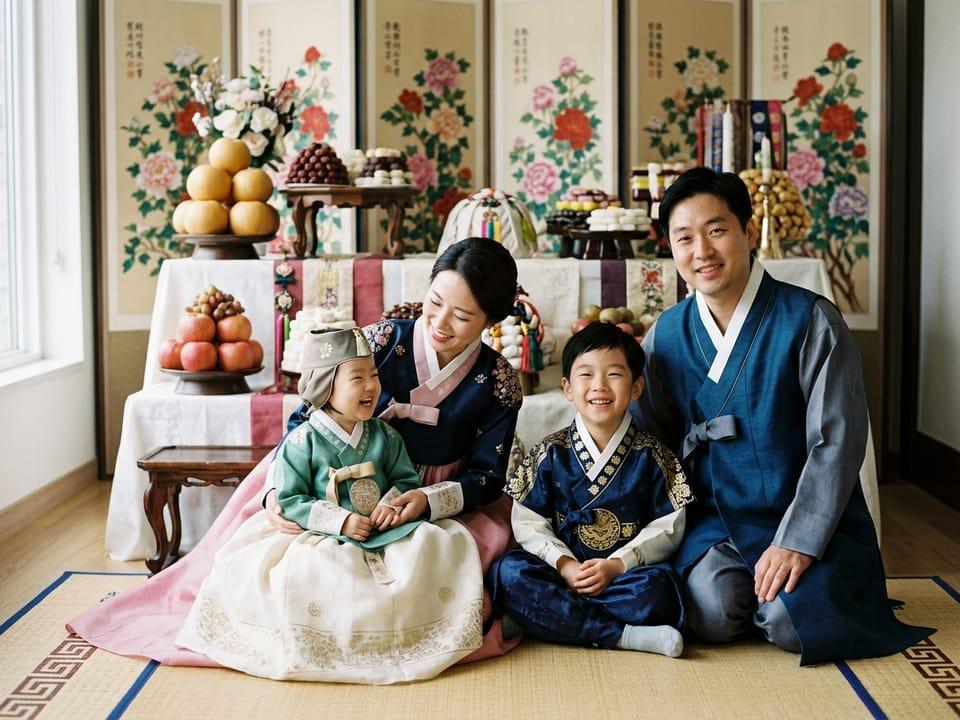
For a chilsun (칠순, 70th birthday) or hwangap (환갑, 60th) family photo, book a morning slot that finishes before the youngest grandchild's nap, and shoot in a fixed order: the whole family first, then each household, then the honoree couple on their own. That gets the picture everyone came for before a two-year-old runs out of patience or a seventy-year-old runs out of standing. Most of what goes wrong on the day is logistics you can settle in advance: who sits where, where the cane goes, and when the toilet break and lunch happen.
The schedule breaks before the people do
A three-generation shoot asks different things of each age at once. Grandparents dress early and then wait. Toddlers arrive after a car ride, get changed into hanbok and are asked to sit still at the hour they normally sleep. The adult children juggle both.
The session is also longer than many families expect. As of October 2026, Bomidam Studio's family session runs two hours, and its shorter one-hour option covers a single background and two poses. Studio prices are usually built around three people plus a fee for each extra person, so a big family means a longer queue of groupings.
Then there's the celebration. The Encyclopedia of Korean Culture describes the traditional hwangap feast as a sequence: the eldest son and his wife bow, offer a cup of wine and bow again, and the other children follow in order of age and generation. Its entry on the hwangap table calls those deep bows of thanks for a long life heonsu (헌수). If the photo and the party fall on the same day, the honorees will spend a long stretch bowing and being bowed to, so plan the photo to cost them as little energy as possible.
Book the morning and count back from the nap
Start from the youngest child's day. If your two-year-old naps at one, look for a slot that ends by noon, which usually means the earliest booking you can get. Feed the children before you arrive, not in the waiting room, and pack a snack that won't stain hanbok.
Then plan the honorees' morning. Hair and makeup take longer than anyone else's dressing, so let them get ready first and arrive last, rather than sit in a stiff collar while the grandchildren are changed. If the celebration lunch is in a restaurant's private room afterwards, book it with a margin after the shoot ends. Eating after the photos also keeps the hanbok clean.
Tradition is on your side if the date has to move. The same encyclopedia notes that the feast wasn't held while the honoree was ill, and that when necessary it was brought forward before the birthday rather than pushed after it, which was thought unlucky. When you book, ask the studio how much notice it needs to change the date, because many price pages don't say.
Shoot everyone first, households second, the couple last
The order matters more than any posing tip. Take the full family group while everyone is fresh. Then photograph each household in turn, which gives the children a break while their aunts and uncles are in front of the camera. Finish with the honoree couple alone, and the solo longevity portrait (장수사진, jangsu sajin) if they want one. By then a parent can take a toddler who has had enough outside without losing anything important.
Choose one adult child to run the day, someone other than the person holding the baby. Their job is to call the next group, keep the others ready, and say when it's time to stop.
Seat the honorees, and settle canes, toilets and lunch in advance
Put the honorees on chairs in the centre, with armrests if the studio has them, and build the group around them: grandchildren in front or on laps for a few frames, adult children standing behind. Before the day, ask whether there are steps at the entrance, where to park near the door and whether the set has chairs with arms. A cane can lean against the side of the chair, just out of frame and within reach.
Call a toilet break for everyone right before the big group, and keep water nearby. Don't ask grandparents to hold a wriggling toddler for long; let the child stand in front of them with a hand on a knee. If a child cries, a few frames of grandma comforting them are often the ones the family keeps.
Studio, a photographer at the party, or your own tripod
|
Studio |
Snap photographer at the party |
Tripod at home or in the restaurant room |
| How cost works |
Session plus a fee per extra person |
Time on site, travel |
Nothing beyond a tripod |
| Toddlers' moods |
Fixed slot, hard to pause |
Works around them |
Stop whenever you like |
| Grandparents' energy |
Travel and changing |
Nothing extra |
Nothing extra |
| Changing the date |
Rebook |
Moves with the party |
Free |
| Result |
Even light, large print |
The bows and the table |
Uneven light, real moments |
A studio is worth it when you want a large framed portrait with even light across ten faces, or when the honoree wants professional hair and makeup. A photographer at the party records the bows and the cups offered, which no studio can. As of October 2026, one snap photographer on the Kmong marketplace lists a 30-minute family-event package for gatherings of under fifteen at 200,000 won, shot in the room you've booked, with a longevity portrait for 20,000 won per person by arrangement. The three options are compared in detail in studio, snap or DIY for chilsun photos, and hanbok for the whole family is covered in our family hanbok guide. For a party in a restaurant room, the running order in a small family doljanchi adapts well.
Try the portrait first with the photos already on your phones
If you'd like to see the hanbok colours and the grouping before booking a session, pokesta can create a hwangap or chilsun family portrait with AI from each person's own phone photos. It's $1 per photo and the first photo is free, so try it with a recent picture of your parents and the grandchildren before you commit to anything. It's an image made from your snapshots, not a record of the day: make a chilsun family portrait.
References