
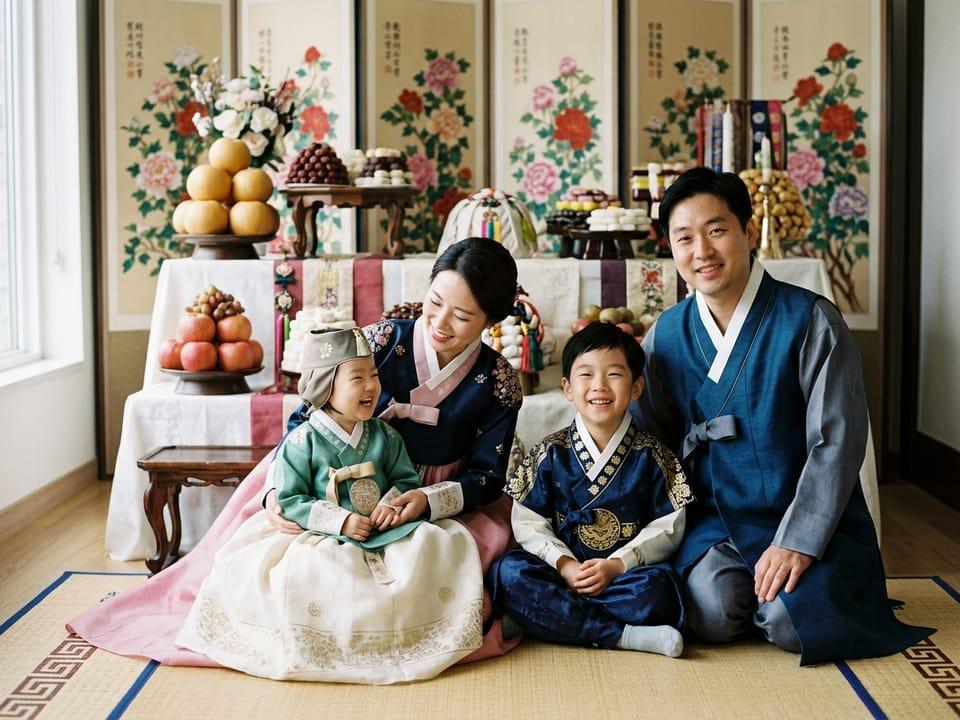
When a son is doing his military service, a daughter lives abroad or someone has just had a baby, the first thing to try for a chilsun (칠순, 70th birthday) or hwangap (환갑, 60th) family photo is moving the shoot to a day they can come; for a soldier, that means building it around his leave. If the date can't move, there are two honest fallbacks: leave a space and have the photographer composite the person in from a matching picture, or photograph them separately and hang the two side by side. Whichever you choose, ask the absent person first, because it's their face going into the family picture.
Move the date first, and plan around leave
A milestone-birthday photo doesn't have to be taken on the birthday, and that gives you room to manoeuvre. For a family member in the forces, leave is the fixed point. The Enforcement Decree of the Framework Act on Military Status and Service sorts leave into annual, official, compassionate, special and regular leave. Enlisted soldiers' regular leave varies with each branch's length of service, and the decree limits the number on leave at one time to a fifth of a unit's current strength, adjustable to the unit's situation. Its list of compassionate-leave occasions covers events such as a wedding, a birth or a death in the family; a parent's birthday isn't on it.
In practice the soldier requests his own leave for your dates, and the unit may not grant exactly those days. Ask him early which weeks look likely, then book the studio for one of them and hold a second date in reserve. Check the studio's rescheduling terms when you book, so a leave change doesn't cost you the deposit.
Relatives abroad often get one trip home a year. If they come for Seollal or Chuseok, the simplest plan is to take the photo then, even if the birthday is months away; families who shoot in hanbok over the New Year holiday will find dressing and timing covered in our Seollal family hanbok guide. A new mother may not want to be photographed weeks after giving birth, and her wishes come first. A later date with the baby in the picture is often the better photo anyway.
Compositing works best when you plan it before the shoot
If the date is fixed, decide on compositing before the shoot, not afterwards. Tell the photographer who is missing and where they would stand, ideally at the end of a row or in the back line, so nobody has to be cut around. Leave the gap in the pose and keep the lighting the same for every frame.
The absent person then needs a matching photo: light falling from the same side, the camera at roughly the same height, a plain wall behind, and clothes of the same formality as everyone else's. If the family wears hanbok, they should wear hanbok or a dark suit; a T-shirt beside a row of durumagi coats looks pasted in. Send the highest-resolution original you have, not a screenshot from a chat app.
Not every photographer does this, and those who do charge for it. One Seoul family photographer on the marketplace Kmong states that it doesn't carry out heavy retouching or compositing, while a retoucher on the same site says cut-outs, compositing and adding people cost extra beyond the quote, vary with difficulty and should be discussed before payment. Ask before you book whether compositing is offered, what it costs and how many revisions are included.