Casual Omiyamairi Family Photos: How Relaxed You Can Go, and What to Decide First

pokesta Editorial Team · Updated October 10, 2026

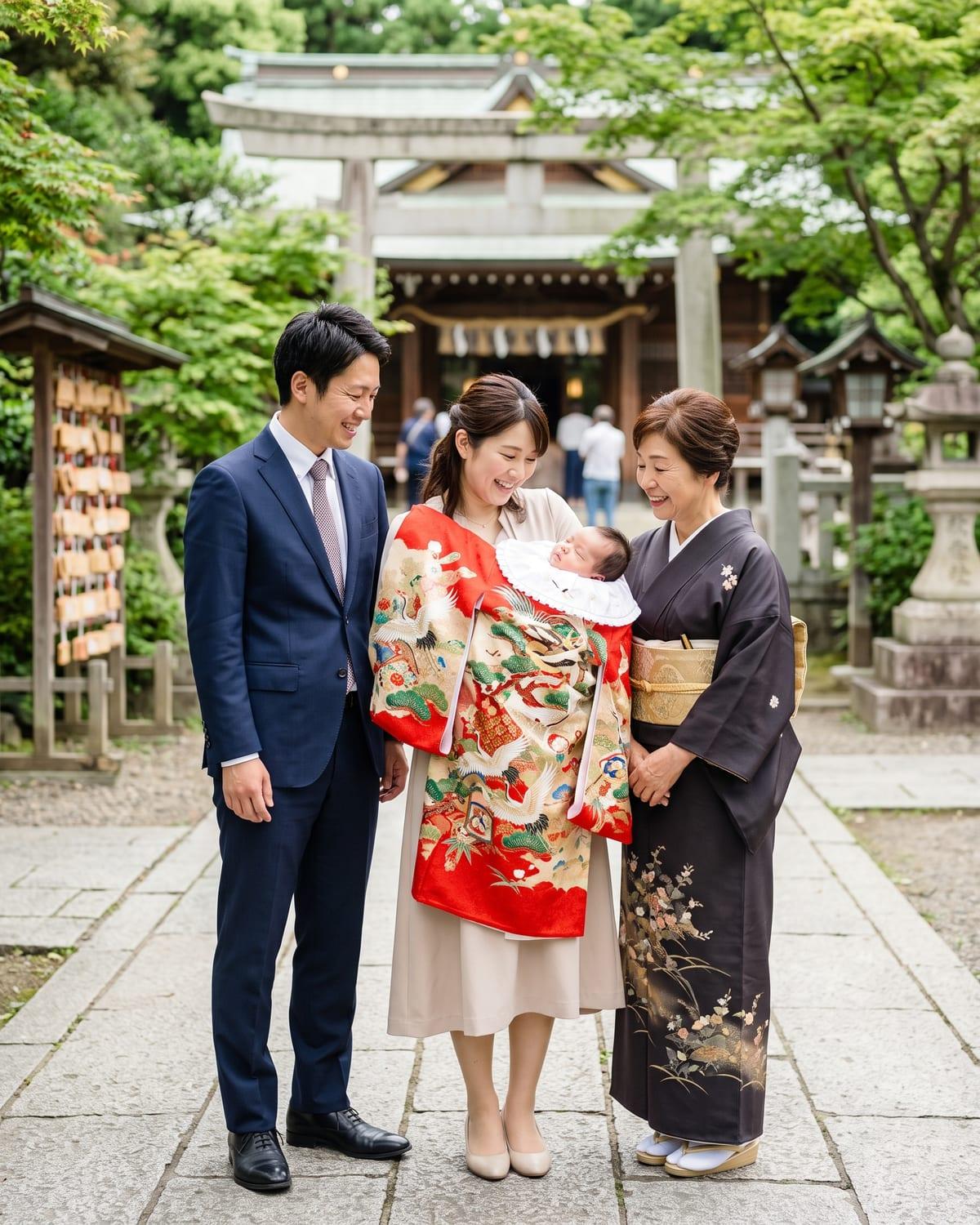
Omiyamairi family photo (AI-generated image)

Plenty of families want Omiyamairi (a newborn's first visit to a Shinto shrine, usually about a month after birth) to feel less stiff. Relaxed clothes and relaxed photos are fine, but the floor is smart casual. If you're having a formal blessing, leave everyday wear like T-shirts and jeans at home. The other thing that matters is the order you decide things in: the relatives' wishes, then the baby's outfit, then the adults' clothes, then how you'll take the photos. Follow that order and you won't end up with a picture where one person looks out of place.

Agree on what "casual" means, and stop at smart casual

When families say they want a casual Omiyamairi, they don't always mean the same thing. It can mean not dressing formally. It can mean skipping the photo studio and using phones or a friend with a camera. Or it can mean scaling down the event itself, for example visiting the shrine to pray without booking a blessing or the family meal afterward.

These three can be separated. You can dress smartly and take the photos yourselves, or wear suits and keep only the photos informal. It saves time to check early which version everyone has in mind. Otherwise dad may think he's talking about clothes while grandma hears that the family lunch is being cancelled.

There's no nationwide rule on what to wear for Omiyamairi. Still, it's an occasion for reporting a birth to the shrine's deity and praying for the child to grow up healthy. HugKum, a parenting site run by the publisher Shogakukan, notes that very casual clothes will look out of place, and a column from the studio chain Studio Alice also recommends avoiding clothes that are too casual or too flashy in favor of something understated.

In practice, that rules out T-shirts with big logos, distressed jeans, shorts, sandals, and tops that leave the shoulders or chest very exposed. On the other hand, a collared shirt or blouse, a plain knit, trousers with a pressed crease, or a dress that falls below the knee won't look odd in the shrine's prayer hall, even without a jacket.

If you're only praying at the shrine and not having a blessing, you can loosen up a little more. Just remember that the photos will be around for decades. It's worth picturing how your child will feel looking at an everyday-clothes snapshot when they're grown.

Start with what the relatives want

The very first step is telling the grandparents who'll be coming that you'd like to keep things informal this time, and listening to how they react. In families that care about tradition, someone may already have an iwaigi (the celebratory kimono draped over the baby) ready, or a grandmother may be planning to wear kimono. Pick your clothes without checking, and you could end up with a photo where only one side of the family is in formal dress.

Once you know where the relatives stand, decide on the baby's outfit. Will you drape an iwaigi, or keep the baby in a white baby dress? Once the star of the day is settled, so is how far the adults can relax. With an iwaigi, the adults should still wear a smart jacket; with just a baby dress, smart clothes without a jacket are plenty.

Next come the adults' clothes, and the photos come last. The reason the photos come last is that once everyone is dressed to the same level, the pictures will look coherent whether you use a studio, a hired photographer or a phone. Choosing each person's clothes is covered in more detail in the articles on what mom can wear and what grandparents can wear.

What not to skip, even when you keep it casual

Relaxing the clothes and photos doesn't mean relaxing shrine etiquette. The basic form of prayer is two bows, two claps and one more bow. Whoever is holding the baby doesn't need to bow deeply, but seeing the rest of the family pray properly gives the photos a sense of occasion on its own.

If you're having a blessing, you also can't skip preparing the hatsuhoryo, the offering paid for it. According to HugKum, 5,000 yen is typical for an individual blessing, but some shrines set a fixed amount, so check the shrine's website or call ahead. Fumbling for cash at the reception desk tends to end up in the photos more often than you'd think.

The other thing is to put the baby's health first. If the reason you're going casual is to make the day easier on mom and the baby, then planning matters more than clothing: fewer outfit changes, shorter travel, a time limit on photos. Looser clothes won't help much if the photo session runs for an hour.

Three habits that keep relaxed photos from looking sloppy

The usual problems with casual family photos are clothes that clash, a parking lot or strangers in the background, and everyone looking down at a phone. None of these is hard to prevent.

First, narrow the colors to about three. If everyone picks from the same small range, say beige, navy and white, the family looks put together even when the cuts of their clothes are all different. How to choose the colors is covered in the article on coordinating family colors.

Second, decide on one spot for photos before you arrive. In front of the torii gate, beside the approach with greenery behind you, or where a bit of the shrine building fits in the frame: settle on "this is where we take the group shot" in advance, and you won't keep the baby waiting while you look around.

Third, take the shot with everyone in it first. A baby's good mood doesn't last long. Photos with different people holding the baby, and close-ups, can wait until the group photo is done. Do it the other way round and the picture you most wanted may well show a crying baby.

If you're keeping the photography casual too

If you're not going to a studio, there are two options: hire a photographer to come to the shrine, or take the photos as a family. For the second, a phone and a small tripod are enough. But each shrine handles photography differently. Kawagoe Hachimangu in Saitama, for example, lets families take photos freely on their own phones and tablets as long as they don't bother other visitors, while only customers of the photo studio on the shrine grounds may bring a photographer into the blessing. If you plan to use a tripod or selfie stick, check with the shrine office beforehand. Phone settings and how to move around are covered in tips for shooting on a phone.

Sometimes grandparents who live far away can't come and you can't get everyone in one shot. In that case, pokesta can make an AI picture of the whole family in Omiyamairi outfits from each person's phone photos ($1 per photo, with the first one free).

Ask the grandparents first, decide the baby's outfit first

Don't decide on a casual Omiyamairi with just the two of you: ask the grandparents first. Then settle the baby's outfit and have the adults dress one notch more modestly, in smart casual. Once that's done, the photos will hold together as a family picture no matter where you take them or who's behind the camera.

References