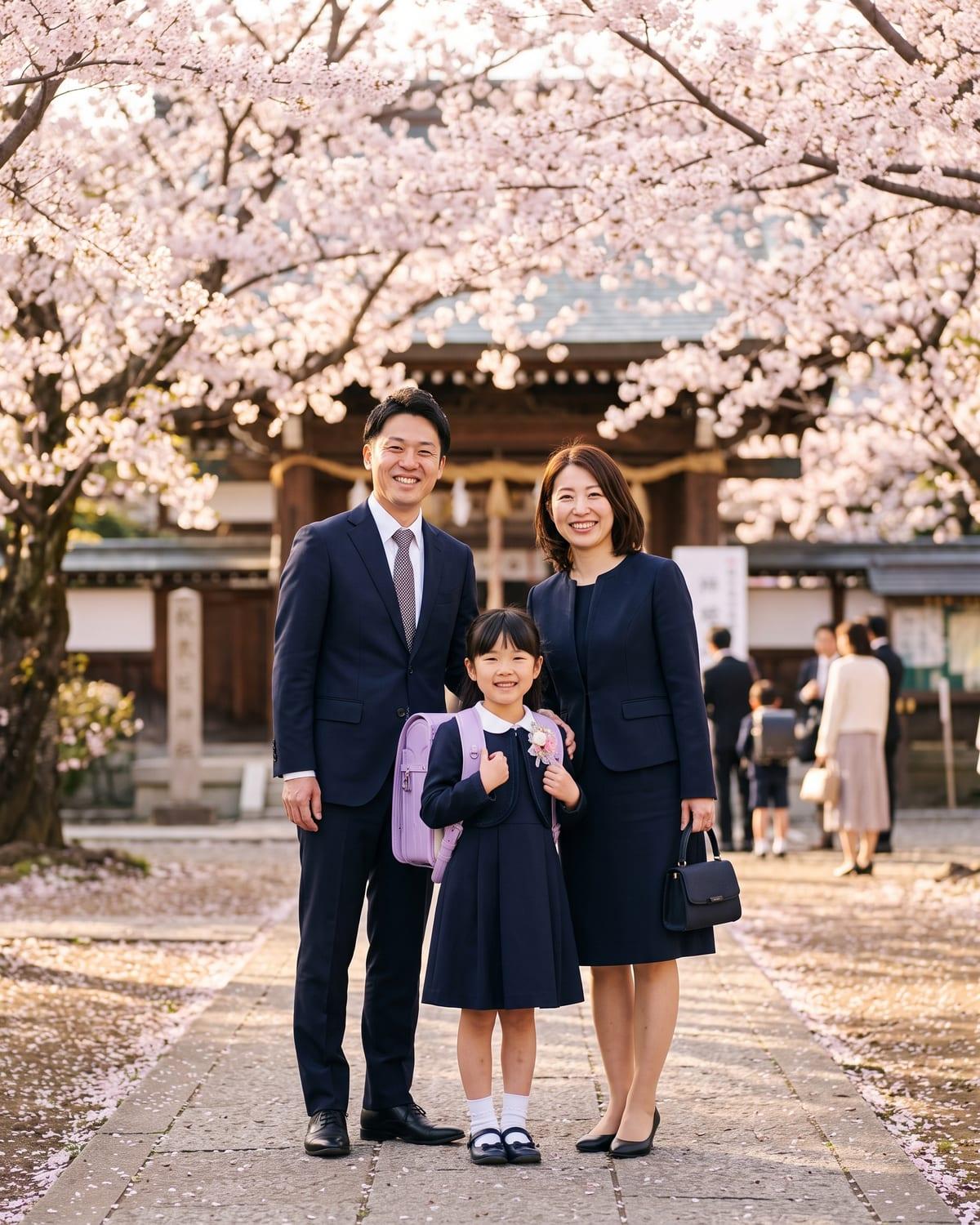
If you're bringing a baby or toddler to your older child's Nyuenshiki (the entrance ceremony Japanese kindergartens and daycares hold for new children each spring), two worries usually come up: will the little one cry in the middle of it, and will you actually get photos of your older child? Sit near the exit, plan the morning backward from the younger one's feeds and naps, and decide in advance who takes photos and who looks after the baby. With those three settled, you can see your older child's big day properly. If someone can look after the baby instead, that's worth considering too.
Leave them with someone if you can; if not, sit by the door
The first question is whether to bring the younger one at all. Many kindergarten entrance ceremonies run anywhere from about 30 minutes to an hour at most. That's short, but it's not a length a baby or one-year-old can sit through quietly. If you want to focus on the ceremony, think about grandparents or temporary childcare.
If you do bring them, a seat near the exit lets you step out the moment they start crying. If parents can choose their own seats, check in early and take an end seat at the back. That's also a spot where it's hard to see your older child, though. Decide as a family whether another adult will take photos from closer to the front, or whether you'll skip shooting during the ceremony and get your pictures before and after.
Some schools limit how many adults can attend or give instructions about younger siblings. When the ceremony notice arrives, check how many people can come and what it says about little ones, along with the date, time and things to bring.
Plan the younger one's day backward from the ceremony time
Most entrance ceremonies start in the morning. Little ones fall apart fastest when they're hungry or sleepy. Work back from the start time: feed them or give a light meal before you leave, and ideally they'll nap a bit in the car or stroller on the way.
On the other hand, if the ceremony overlaps with their usual morning nap, they may fall asleep in the carrier during it. That's up to the child, so in case they don't, find a place you can step out and walk around. A corridor or the area just outside the entrance, where noise won't carry into the hall, is worth spotting when you check in.
For things to bring, your usual outing bag plus a few quiet toys is plenty: toys that don't make noise, cloth books, sticker books. For snacks and drinks, follow any school rules about eating in the hall, and pick a spill-resistant straw cup and snacks that don't leave crumbs everywhere.
- Diapers, wipes and a bag for dirty things
- A full change of clothes and a muslin cloth
- Nursing cover, sippy cup, snacks in small portions
- Quiet toys or cloth books
- Baby carrier (if you bring a stroller, ask the school whether there's somewhere to leave it)
Before you bend down in a carrier, support the baby with your hand
You'll keep finding yourself photographing your older child with the younger one in a carrier. Crouching to their eye level, picking up something they dropped, helping them into their indoor shoes: all of these mean leaning forward.
Japan's Consumer Affairs Agency warns that when you bend forward while using a baby carrier, for example to pick something up, you should always support the child with your hand. It also says to put a baby on or take them off, front or back, in a low crouching position, and to check that buckles and straps haven't loosened. Leaning forward with a phone in one hand is exactly the risky position. When you crouch to shoot, put one hand on the baby's back first, then bend your knees and lower your hips. You'll only have one hand for the camera, so a slightly tilted photo is fine.
Jobs like putting on the older child's indoor shoes or fixing their hat are safer and quicker for the adult who isn't wearing the carrier.
Decide in advance who shoots and who minds the baby
If both parents can attend, agree on roles the night before. One is the photographer; the other is on baby duty. If the little one starts fussing during the ceremony, the baby-duty parent takes them out. Settled that way, the photographer won't miss the moment your older child's name is called and they answer.
If you also want video, decide which comes first, photos or video. One person trying to do both usually ends up doing neither well. Splitting by moment helps: video for the name call and answer, photos for walking in and out. Then the photographer doesn't have to decide on the spot.
The photographer can concentrate on the older child. For the family photo, swap: the baby-duty parent takes the camera, or ask another family to take it. We cover getting everyone in one frame in our article on Nyuenshiki family photos.
Think about how the adult holding the baby will look in photos, too. Carrier straps stand out over a jacket, so you might take it off just for photos, or choose a carrier with straps close in color to your clothes. For outfit ideas, see our guide to what moms wear to the Nyuenshiki.
The entrance ceremony is a nervous day for the older child as well, and they notice when the adults' hands are full with the baby. After the ceremony, hand the baby to the other adult and take one photo of just you and your older child. It tells them "today is your day," and later it's a picture where it's clear who the star was.
On your own with both? Lower the photo goals
Sometimes, because of work or other reasons, one adult has to bring both children alone. On that day, consciously aim lower for photos. One at the front door before you leave, one at the ceremony sign, one at the school gate on the way home. If you get those three, that's enough.
During the ceremony, let photos go. Sit where you can get out quickly if the baby cries, and focus on watching your older child with your own eyes. If the school has a photographer covering the class photo and the ceremony, you may be able to buy prints later, which fills in what you couldn't shoot.
When you ask another family to take a family photo, offering to take theirs makes it easier to ask. How to handle photos with other children in them is covered in our Nyuenshiki photo etiquette guide.
The older child is the star; the younger one just being there is enough
Even if the baby cries and you have to step out partway through, it doesn't ruin your older child's entrance ceremony. They're the star, and the younger one simply being there with the family is plenty for the record. Split the jobs, and get back whatever you missed on another day. Go in with that mindset.
References