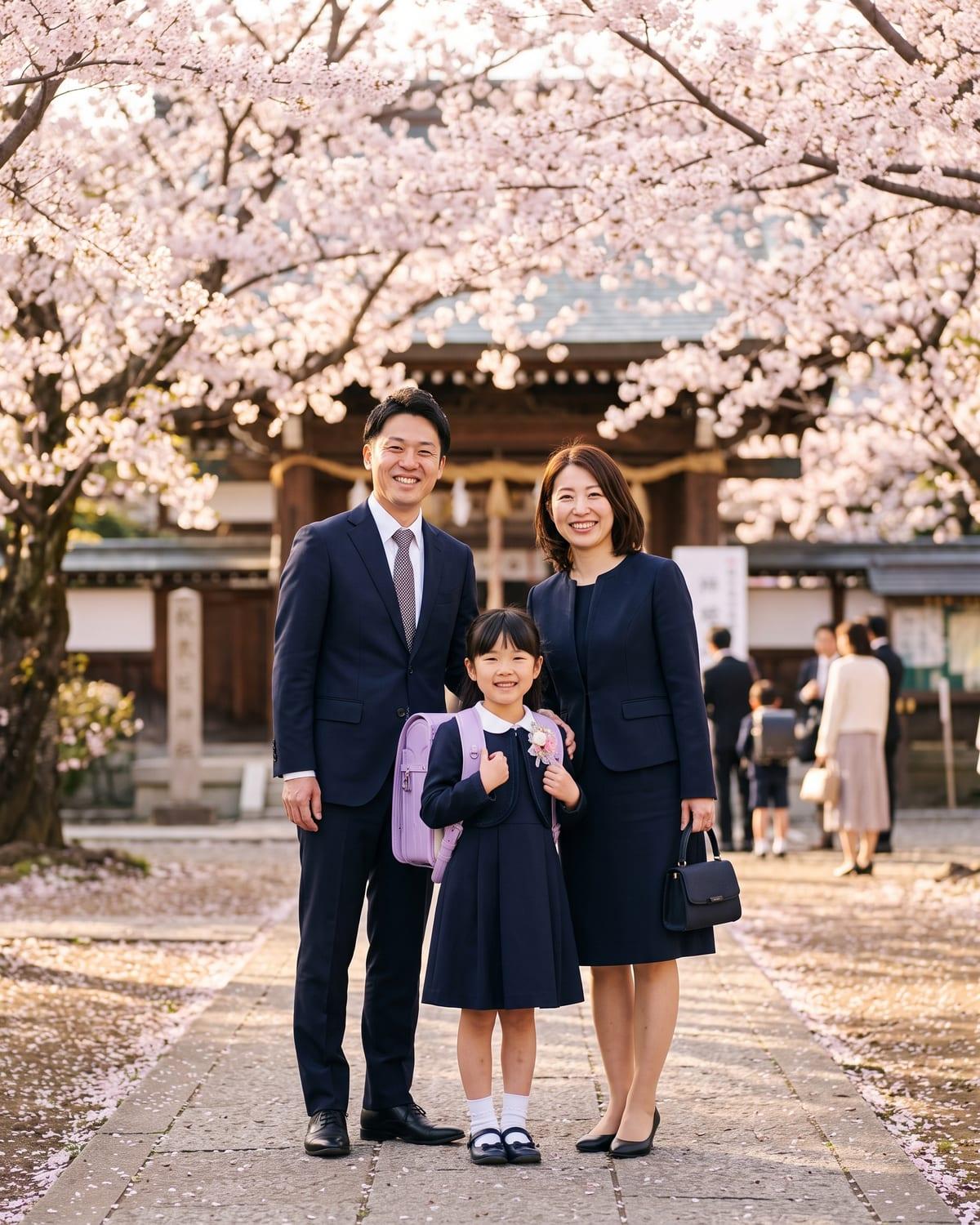
For most parents, a Nyuenshiki (the entrance ceremony Japanese kindergartens and daycares hold for new children each April) is the first time they meet the other families as fellow parents at the school. Everyone wants photos of their own child. But how you shoot shapes how others see you, and how you handle the photos afterward can cause trouble you didn't see coming. Below, in order: what to check before the day, what to hold back on during the ceremony, and what to check before you show the photos to anyone or post them.
The school's letter is the most reliable guide
Photo rules vary a lot from school to school. Some don't allow photos during the ceremony at all. Others set aside an area where tripods are allowed, or tell parents exactly where they may shoot from. Some let parents shoot freely but ban posting on social media.
In almost every case, the rules are in the materials from the pre-entry orientation or in the letter announcing the ceremony. If they aren't, it's fine to ask the homeroom teacher or the school office. Asking in advance is easier on the staff than asking on the day.
If the letter says no photos, that's the end of it. Schools often hire a photographer to cover the ceremony and sell the pictures afterward, which frees parents to simply watch.
During the ceremony, stay seated and shoot at eye level
Even where photos are allowed, the people around you matter. The biggest thing is the view of whoever's sitting behind you. Holding your phone above your head, standing up to shoot or stepping into the aisle all block the parents behind you from seeing their own children. Stay seated and keep the camera no higher than your face. If there's a designated area, move there before you start.
In a dim hall, phones often fire the flash automatically. A flash startles the children, and it barely reaches the stage anyway. Turn off the flash and, where your phone allows, the shutter sound before the ceremony starts. Some phones won't let you silence the shutter; if yours is one of them, avoid burst shooting during quiet moments.
Keeping your phone up through the principal's speech and the guests' congratulations isn't a good look either. Whoever's speaking can see every phone in the audience. Raise yours only when your child is on, and rest it in your lap the rest of the time.
Don't call your child's name or say "look over here" during the ceremony. The child turns around, and the children nearby lose focus too. Three-year-olds who spot a parent's face sometimes get up and run over.
A small wave when your eyes meet is usually fine. But some children cry the moment they see their parent, so when your child has finally settled into their seat, keeping a low profile can be the kind thing to do.
Notes for whoever's filming, and for the group photo
Whoever is filming video holds the camera up much longer than someone taking stills. As a rule, set up a tripod or monopod only where the school says you may. Tripod legs take up more room than you think, blocking the aisle or ending up under your neighbor's feet. If you're filming handheld, keep your elbows tucked against your body; your arms tire less and the picture stays steadier.
Video picks up everything around you. Chat with your family while you're recording and every word ends up on the clip, while the people nearby just hear talking. Agree as a family that whoever's filming stays quiet. If a younger sibling starts making noise, a seat near the exit lets you slip out quickly. On days you bring little ones, pick a seat that's easy to leave from the start.
After the ceremony, class group photos are usually taken by the school's hired photographer or by teachers. If parents start shooting from behind the photographer while the children are still being lined up, the children's eyes scatter in every direction and the group photo takes forever. Wait until the photographer is done and says parents can go ahead.
Photos with other children in them aren't yours alone
Other children inevitably end up in entrance ceremony photos: the group shot, the classroom, the line at the sign. Keeping them in the family album is rarely a problem. Showing them around or posting them online is different.
If the parents of a child in your photo find the post and are upset, that alone can sour things between families. Some schools ban shooting other children or posting on social media altogether. Even when photos at the ceremony are allowed, treat posting as a separate question.
If you want to post a photo where another child is clearly visible, the right thing is to get their parents' OK first. Checking with the parents before posting, even a photo with a friend's family, is long-established etiquette. If they say no, or there's no one you can ask, blur the face or leave that photo out. When parents in a class share photos with each other, adding a quick "please don't put these on social media" helps everyone relax.
Before posting, check the background, the name badge and the location data
Even a photo with only your child in it is worth checking before it goes on social media. If someone can work out where a child is or who they are from a photo, it can put them at real risk.
First, the background. The entrance ceremony sign and the nameplate at the gate show the school's name, which reveals where your child goes every day. Second, the name badge. Badges on the chest may show your child's name or class. Third, the data stored in the photo. Phone photos record the date and time, and if location settings are on, where the photo was taken as well. Before sharing, make sure your settings leave location data out.
Watch the caption too. Avoid naming the school ("at X Kindergarten's entrance ceremony") or adding your child's full name. Limit who can see the post to family and close friends, and it reaches only the people you meant it for.
When in doubt, don't shoot and don't post
There's no nationwide rulebook for photo etiquette, which is exactly why, when you're unsure, it pays to choose the more restrained option. Not sure whether to shoot? Put the phone down and watch. Not sure whether to post? Share it within the family first. That level of caution is about right.
What to shoot at each point of the day is in our article on Nyuenshiki photos, and phone settings for a dim hall or gym are in our article on shooting the ceremony indoors.
References