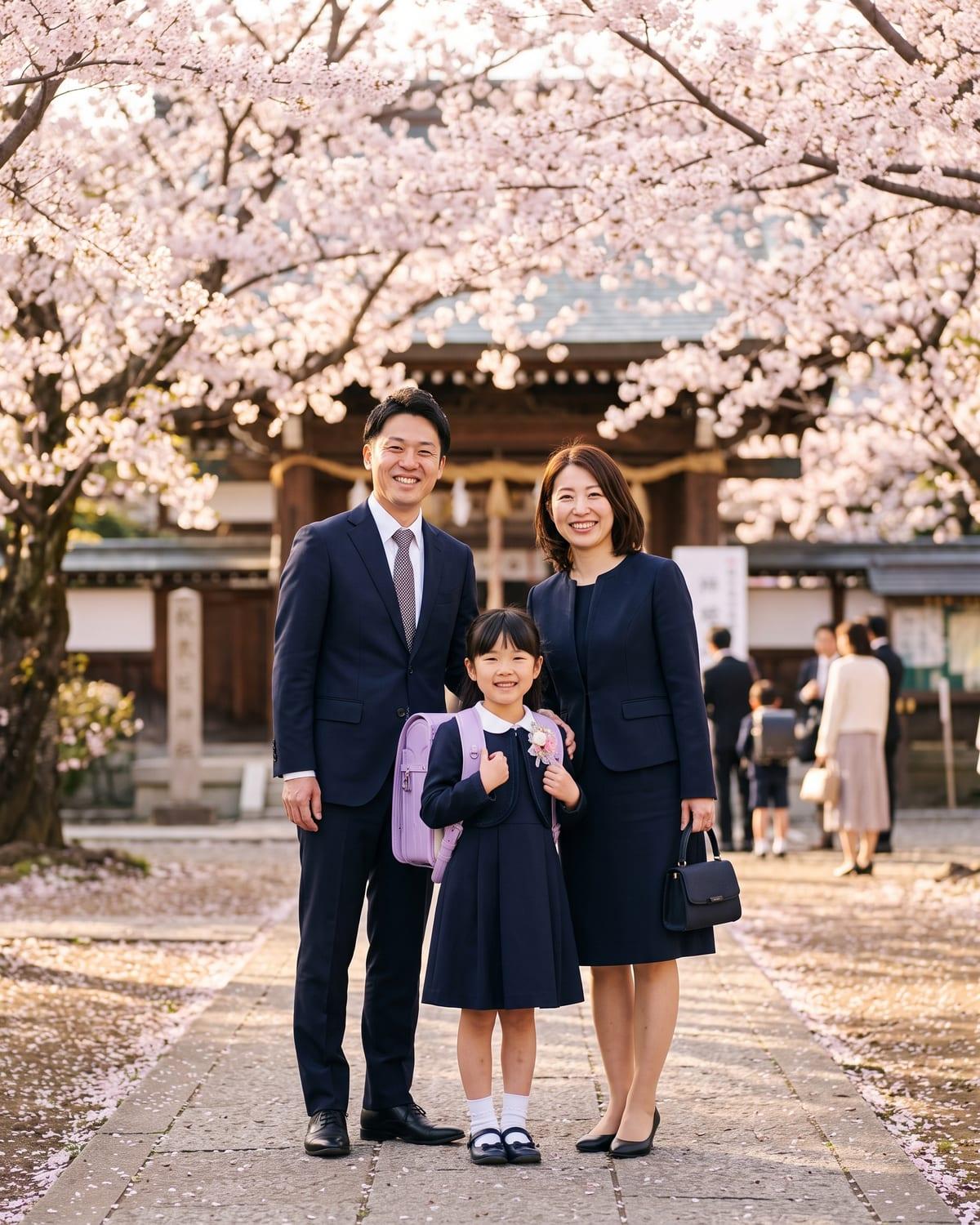
Whether grandparents can attend a Nyuenshiki (the entrance ceremony Japanese kindergartens and daycares hold for new children, usually in April) depends entirely on the school. Some limit how many people each family can bring because of the size of the hall or school policy, and some don't allow siblings to come along. Start by checking the rules in the school's notice. If grandparents can come, think about their seats and stamina. If they can't, decide when you'll see them before or after the ceremony and how you'll get the photos to them. Taking it in that order keeps things easy for the grandparents and the school alike.
Read the notice for headcount and photography first
When the ceremony notice arrives, look for how many people can attend before you even check the date and time. If it just says "parents/guardians," it isn't clear whether grandparents count. Check at the same time whether there's a cap on numbers, whether you need indoor shoes or slippers, and how seating works.
The photography rules are worth passing on to grandparents too. Plenty of schools don't allow flash or tripods. Share the rules in advance so a grandparent excited to see their grandchild dressed up doesn't step forward with a video camera mid-ceremony.
If the notice doesn't answer your question, ask at the pre-entry orientation or call the school. Asking early, "Would it be all right for grandparents to come?", makes it easy for the school to answer and gives grandparents time to plan.
If they can come, think about seats and stamina
Kindergarten ceremonies typically start around 9 a.m. and last an hour at most. Daycare ceremonies are shorter, around 30 minutes to an hour. Even so, with the check-in line, moving between rooms and the class briefing afterward, it adds up to nearly half a day of standing and sitting.
Grandparents traveling a long way will find it easier to arrive the day before and stay the night. At the venue, see whether they can take seats near the back where it's easy to step out, within whatever the school allows. During the ceremony, it may be best if they focus on watching rather than filming.
If there's a younger sibling, having grandparents there is a big help. They can hold the little one in the hallway or yard while the parents watch the ceremony. But at schools that don't allow siblings, the grandparents will be waiting outside the school with the younger child, so check a map beforehand for a nearby park or somewhere to sit.
Many schools take a class or year-group photo in the hall after the ceremony, centered on the children, parents and teachers. Whether grandparents can join in depends on how the school runs it, so plan to take your photo with them separately, outside the gate, and you won't be caught off guard.
For clothes, grandparents should match the parents' level of formality. If mom is in a smart dress, grandma wears something similar. Sending a photo ahead, "This is what I'm wearing," makes it easier for them to choose.
If they can't come, meet outside the ceremony
Even if grandparents can't attend, you can still take photos together. They could come over on the morning of the ceremony once your child is in uniform, and you take a whole-family photo at the front door. Or meet near the school when the ceremony ends and get together outside the gate. Neither depends on the ceremony rules.
If the day itself doesn't work, visit them in uniform on a weekend before or after. Children are tired on the day of the ceremony, so a family meal at the grandparents' house may go more smoothly the following week. Ideas for the rest of the day are in our article on what to do after the ceremony.
For grandparents too far away to see on the day or that weekend, a video call is an option. But calling during the ceremony disturbs other families and may break the school's photo rules. Keep it to five minutes before you leave home and five minutes after you get back, before the uniform comes off: a "see you later" in the morning, and a look at the name badge and new bag in the afternoon. Short as it is, it gives them a feel for the day.
If the grandparents gave an entrance gift, that call is a good moment for your child to say thank you. A photo of your child wearing or using the gift is the best update you can send. More on thanking people is in our article on entrance gifts.
Send a few photos and clips the same day
What grandparents want most is to see how the day went. That evening, send a handful: a full-length shot in uniform, one at the gate or sign, a smile after the ceremony. Hand over the rest later. A few chosen photos get looked at; dozens arriving at once often don't.
The same goes for video. Thirty minutes of ceremony footage rarely gets watched to the end. Cut out about a minute where your child appears, such as answering when their name is called or walking in and out, and send that. Trimming the start and end in your phone's photo app is enough. Handle any parts showing other children's faces or names being read out with the same care as photos.
For sharing everything, a Google Photos shared album works. You can create a link and send it even to people without a Google account. But anyone with the link can view the album, so share it only with family and make sure the link doesn't spread. Grandparents can add photos to it too, which makes it a good place to collect the shots they took.
Be careful with photos that show other children. Grandparents sometimes post them on social media or forward them to friends out of sheer happiness. When sending group photos or anything where another child's face is clear, add a quick "please keep these within the family." For grandparents who don't use smartphones, prints sent with a letter are the surest option.
If you'd like a photo that includes grandparents who couldn't make it, pokesta can create a family photo in entrance ceremony outfits with AI from each person's phone photos (one free try after signing up, then $1 per photo).
Check the rules, then take the grandparent photo outside the gate
Whether grandparents can attend isn't up to the family. Read the notice for headcount and photo rules, and if anything is unclear, ask the school early. After that, all you need to settle is where you'll take that one photo with the grandparents, inside the ceremony or outside it. For who takes the whole-family photo, see our article on Nyuenshiki family photos.
References