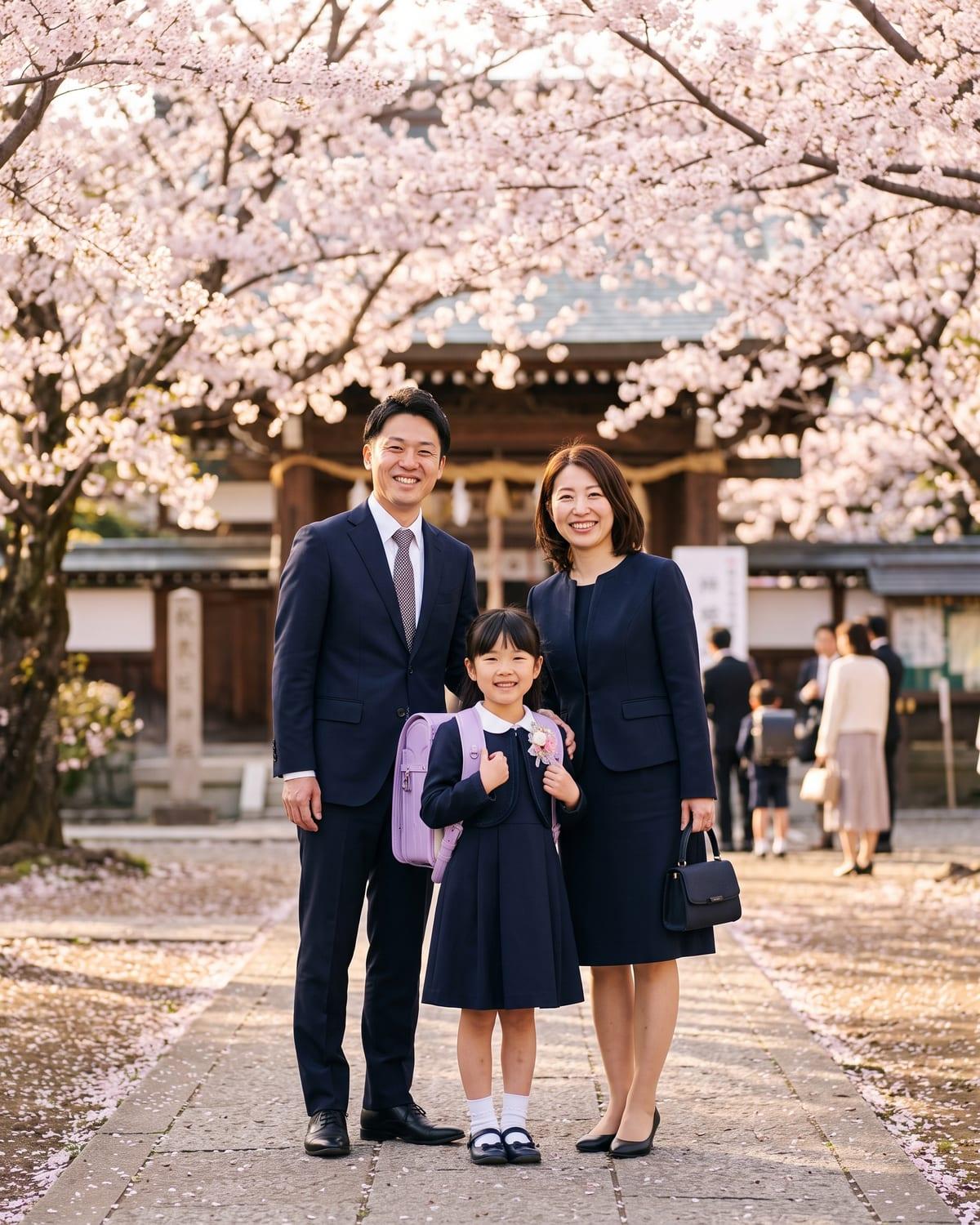
You'll wear the outfit for just a few hours at a Nyuenshiki (the entrance ceremony Japanese kindergartens and daycares hold for new children each April), but it stays in the photos for years. When your child grows up and opens the album, you're the one standing next to them. Still, the child is the star. To land on something that neither steals the show nor fades into the background, work through it in order: color, what's near your face, length, then shoes.
Lighter colors are common, but navy is fine
Mothers at entrance ceremonies often choose soft spring colors such as light beige, light gray and pastels. The thinking goes that a graduation is a solemn occasion, which suits subdued colors like navy and black, while an entrance ceremony is a celebration, which suits brighter ones.
But you don't have to wear a light color. Some mothers come in navy or black suits, and they rarely look out of place. Navy is often recommended as a color that works for both entrance ceremonies and graduations: a white top underneath makes it feel like an entrance ceremony, a black one shifts it toward a graduation. If you want one outfit to get you through several years, navy is the economical choice.
What to watch out for are the extremes. A pure white outfit can make you look like the star, so if you want white, go for an off-white like ivory. All black looks severe and can make you look like a teacher or a guest of honor. If you wear black, lift it with a lighter top or accessories.
What near your face makes the difference in photos
In group shots and snapshots, you often appear only from the chest up. That's why the colors near your face set the tone of the photo.
The easiest fix is a white top. White just below the face bounces light back up and brightens your complexion in photos. Even with a navy or gray suit, a white blouse or knit top makes you look far more springlike in the pictures.
For the corsage, colors that contrast gently with your outfit are the easiest to pair: pale cherry-blossom pink, coral pink, beige, off-white. It's safest to avoid bright red, orange, deep pink or very dark shades. Entrance ceremony outfits tend to be in thin, light fabrics, so a corsage in a light material like organza blends in well.
Pearls are the usual accessory alongside the corsage. A single strand is fine, and so is one pearl hairpin. Pearls also don't date much, so the photos won't look old-fashioned when your child looks back at them as an adult.
Keep makeup and hair natural. Going heavier because it's for photos tends to look out of place under outdoor spring light. If your hair is long, tie it back low so it doesn't fall across your face when you crouch or pick up a younger child. Your face then stays clear in every shot.
Choose the length by crouching and sitting
Mothers crouch a lot more on entrance ceremony day than they expect. To photograph your child at eye level, to line up together at the sign, to help them change shoes. A hem that's fine standing up can ride above the knee when you crouch.
Besides ceremony suits, coordinated sets and dresses are popular too. You don't need a suit; a smart dress with a jacket over it won't look out of place.
Skirts should cover the knee. A flared skirt doesn't bunch when you crouch. Parents' seats can be low, and you may crouch beside your child in the classroom to listen, so avoid anything too short. If you choose a trouser suit, soften it with your top or corsage so it doesn't look like workwear.
Wear natural, skin-toned stockings, not black. Black stockings are associated with mourning. Inside the venue you'll usually take off your shoes and wear slippers, and people notice feet more than you'd think. Pack a spare pair in your bag in case of a run.
Pick shoes and bags for the walking and the paperwork
Pumps without too high a heel are the right choice. Black goes with dark outfits, beige with light ones like white or beige. Avoid thin stilettos: in a dirt yard they sink into the ground, and leading a child by the hand gets hard. Some schools ask parents to bring their own slippers. Pack a pair that looks a little more presentable than the ones you use at home, along with your shoes.
A big bag looks casual, so carry a small formal bag plus a second bag for handouts. At the ceremony you may receive letters, forms and teaching materials all at once. A second bag that holds A4 papers without folding saves trouble on the way home. Choose a plain one in a calm color so it doesn't clash with your formal outfit.
With a little one in tow, pregnant, or in kimono, movement comes first
If you're bringing a younger child, choose clothes on the assumption you'll wear a baby carrier. Carrier straps crease the shoulders and collar of a jacket. Use the carrier while you're moving around and take it off to hold the baby in your arms for photos, and your jacket will look neat in the pictures. If the little one is at the drooling or food-smearing stage, a mid-tone color that hides marks is worth considering.
If you're pregnant, choose maternity formalwear. Something that doesn't press on your body, or a dress whose front hem won't ride up as your belly grows, is the safe choice. Put your health first, and check your seat early so you won't have to stand for long.
If you go in kimono, a homongi (a semi-formal visiting kimono) or an iromuji (a single-color kimono) is the usual choice. It looks lovely in photos, but crouching to your child's level, holding a younger child and walking across the yard are all much harder than in Western clothes. If you choose kimono, agree in advance that dad handles the carrying and the bags.
Still stuck? Navy suit, white top, pale corsage
If you have too many options and can't decide: a navy suit, a white top, and a pale pink or beige corsage. That combination rarely looks out of place at any school, and it keeps your face bright in photos. Coordinating colors across the family is covered in our article on Nyuenshiki family photos, and what children and dads wear in our article on what kids wear and our article on what dads wear.
References