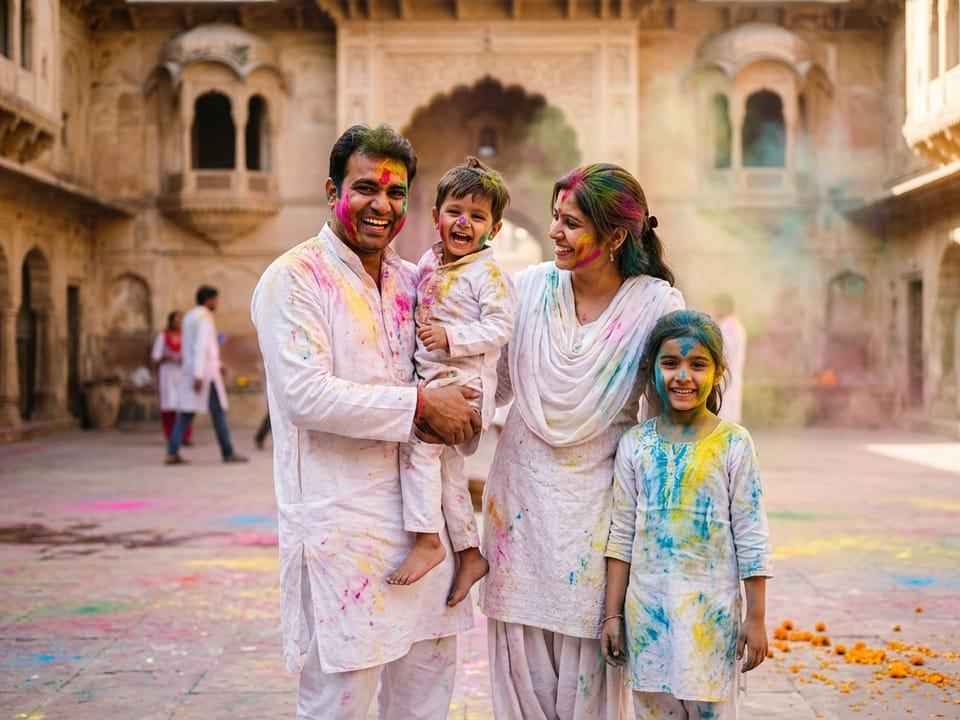
Holi powder, called gulal or abir, was originally made from flowers and plants. Much of what is sold in markets today is synthetic dye, and some of it is sold with no quality control and no label at all. With children, use a small amount of powder whose ingredients and maker you know, and plan ahead to keep it out of eyes and mouths. Those two things take care of most of the worry.
Colours once came from flowers; now they come from factories
The English Wikipedia article on gulal says that traditional gulal was made from the flowers of trees such as the coral tree and the palash (also known as flame of the forest), and was thought to be good for the skin. After synthetic dyes appeared in the mid-19th century, these natural colours were gradually replaced, a shift sped up by the loss of trees in cities and the pursuit of higher profits.
The same article notes that synthetic powders have been linked to eye irritation, allergies, skin infections and asthma, and that street stalls have been found selling powder still in boxes marked "for industrial use only". The Wikipedia article on Holi adds that a 2007 study looked at the link between severe eye irritation reported in Delhi after Holi and malachite green, a blue-green synthetic dye, and that a 2009 study reported that industrial dyes containing metals had increased skin problems after the festival.
Telling which market powder is safe and which is not, just by looking, is close to impossible. That is why the rule is simple: if you don't know what it is, don't use it on children.
If you buy, choose by the label
When choosing powder in a shop, check three things:
- The ingredients are listed (plant-based, starch-based, or whatever it is made from)
- You can tell which company made it and how to contact them
- It comes in a sealed pack, not sold loose by weight or in a plain bag
Some products call themselves "herbal" or "natural", but those words alone guarantee nothing. Read the ingredient list, and if it includes things you don't recognise, choose another product. Wikipedia notes that some companies do make plant-based colours, but they tend to cost more. Children don't need much. One small pack of something you can trust, even if it costs a little more, is plenty.
Limiting the colours helps too. Dark green, purple and near-black shades cling to skin, and getting them off tends to mean hard scrubbing. For small children, one or two bright colours such as yellow, pink or orange make everything easier, clean-up included.
Colours from the kitchen, and what to watch for
The Wikipedia article on Holi lists traditional sources of colour: turmeric for yellow (sometimes mixed with gram flour, made from chickpeas), hibiscus or pomegranate for red, beetroot for magenta and purple, henna (mehndi) leaves for green, and indigo for blue.
Of these, the ones easy to make at home are a yellow powder of turmeric mixed with gram flour, and a pink coloured water from grated, squeezed beetroot. Both are food, so if a child gets some in their mouth, it is less of a worry than synthetic dye.
Natural does not automatically mean gentle on skin, though. Turmeric leaves yellow stains on clothes, nails and skin, and beetroot juice soaks deep into white fabric. Henna is a plant used precisely to dye skin and hair, so on a child's face the colour lasts for days. If your child has food allergies, check ingredients such as gram flour as well. Before using anything, dab a little on the inside of the arm and see whether it turns red.
Protect eyes, mouths and noses
Powder in the eyes is the worst of it. Put sunglasses or swimming goggles on small children, and when colouring their faces, apply it gently to cheeks or forehead. Make a rule from the start, for children among themselves too, that nobody throws powder at anyone's face.
Wikipedia notes that in cities some people wear masks over the nose to avoid breathing in powder. For children with asthma, staying away from places where powder is flying around is the safer choice.
If powder still gets in an eye, don't rub it; rinse it out with clean water. If pain or redness doesn't ease, or vision is blurry, see a doctor promptly. If powder goes in a child's mouth, have them rinse and spit.
For children with sensitive skin, eczema or atopic dermatitis, keep the colour to the backs of the hands or on top of clothing. Powder that gets into irritated patches can sting, and scrubbing it off can make things worse. If you are unsure, talk to your child's doctor before Holi so you aren't deciding on the day.
Coloured water and leftover powder
For water pistols, powder is dissolved in water. Coloured water soaks deeper into clothes and skin than dry powder, so one option is to fill small children's water pistols with plain water. Getting wet is plenty of fun on its own, and it is far easier on whoever gets sprayed.
Close leftover bags tightly and store them out of children's reach, somewhere they won't be mistaken for food. The Wikipedia article on Holi also points out that metal-containing pigments can temporarily pollute waste water after the festival. Avoid pouring large amounts down the sink; keep it for next year or dispose of it according to your local waste rules.
Nothing unknown, a little at a time, hands before faces
For children, choose a small pack of powder whose ingredients and maker you know. Start on hands and arms rather than faces. Never throw it towards eyes. Agree on those three things as a family before opening the bag, and playing with colour becomes far more relaxed.
Safety with colour is not only about ingredients. An adult smearing colour on a child's face when the child doesn't want it, or a stranger dousing them in powder: moments like these weigh much more on a child. If your child says they don't want any colour, watching is enough for that day. Next year they may reach for the bag themselves.
We cover clothing and getting colour off afterwards in What to wear for Holi and Removing Holi colour, and how to enjoy the day at different ages in Celebrating Holi with children. If you'd like a family photo without covering everyone in powder, pokesta can also create a family photo surrounded by Holi colours with AI, from each person's own photos ($1 per photo, the first one free).
References