
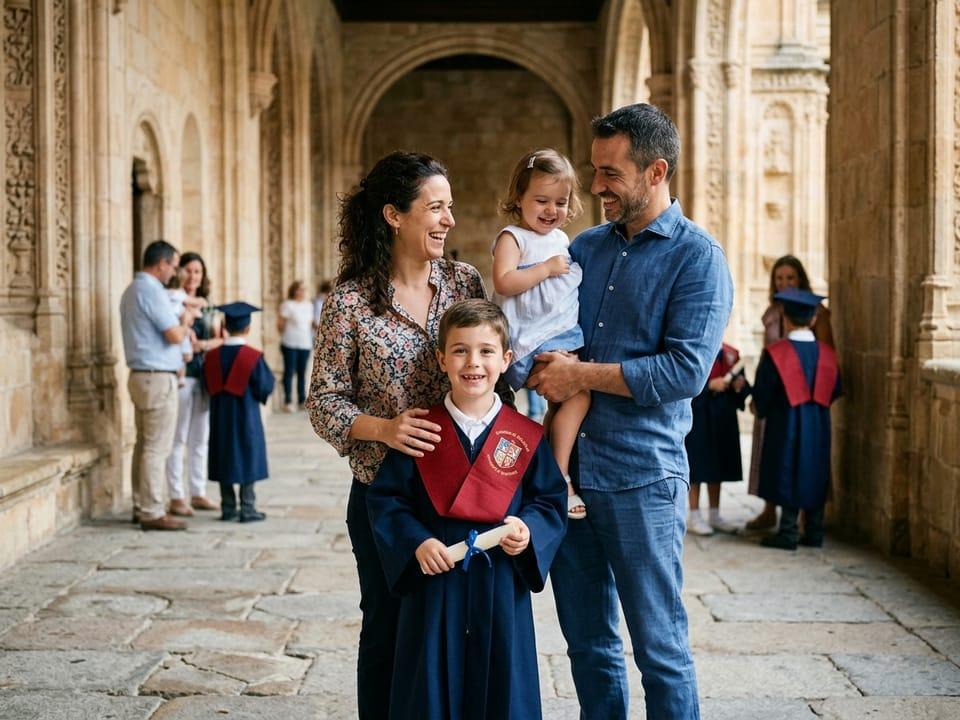
A school orla is the framed composite of a class, with a portrait of each child and often the teachers, made when children finish Educación Infantil or primary school. It is usually arranged by the AMPA (the parents' association) or the school with a photography company, and the photos are sold to families who want them. In one example, the AMPA of CEIP Gonzalo de Berceo in Coslada, near Madrid, charged 17 € to members and 33 € to non-members in 2024–25 for a 13x18 cm photo, four 7x10 cm photos and a 30x40 cm orla. Being photographed is a separate question: Spain's data protection authority (AEPD) says photos taken for purposes other than teaching need consent, given by parents for children under 14, and that consent can be withdrawn.
What an orla package actually contains
The Coslada notice, sent to families in the last year of infantil, is a useful model of what you are buying. The photos were taken at school on one set day in March. Children were asked to come in a white shirt, polo or T-shirt with jeans, and to avoid buns, high ponytails and large hair ornaments, because one of the photos was taken wearing a birrete, the graduation cap. Payment was by bank transfer to the AMPA's account, with the child's name and class in the reference, by a deadline a few days before the shoot.
The price covered more than the composite. For non-members it included the beca (the sash) and the birrete; members received both as a gift from the AMPA. Families who wanted no photos but did want the sash and cap could buy them alone for 14 €. The notice lists only printed photos, with no mention of digital files.
These figures are one AMPA's prices for one school year, checked in October 2026. Each AMPA agrees its own package and price with its photographer, so read the notice from your school carefully.
Consent to the photo and buying it are two separate decisions
The AEPD's guide for schools draws a clear line. A school may take pictures of pupils as part of its teaching without asking. Pictures taken for other purposes need the consent of the pupils, or of their parents if they are under 14. When an outside company takes the photos, either the school collects consent on the company's behalf, or the company collects it for its own purposes and must make clear that it is the one responsible for the data. Article 7 of Spain's data protection law sets the age: below 14, consent has to come from whoever holds parental authority. The guide adds that consent can be withdrawn at any time, though not retroactively.
In practice you will usually be asked to sign a consent form for the orla. Signing it lets your child appear in the composite; it does not oblige you to pay. In the Coslada notice the wording was that "those interested" should pay. If a letter from your school presents the orla as compulsory, ask the AMPA or the school directly what happens if you don't buy it, and whether your child will still appear in the class composite. The AEPD guide also notes that an AMPA may use its members' data under the membership relationship, but needs consent from families who are not members.