A one-year-old who cries at the studio or refuses to touch the cake is behaving normally. The paediatricians who write for Familia y Salud, the family site of Spain's primary care paediatricians (AEPap), note that babies between 7 and 11 months usually show anxiety with strangers, and a new room, a stranger with a camera and a sticky cake are a lot at once. The fixes are practical: book the session after the main nap, ask for ten minutes of play before the camera comes out, and touch the cake yourself first. If it still doesn't work, the same setup can be repeated at home.
The tears come from the stranger and the room, not the cake
Look at the session from the baby's side. A room they have never seen, bright lights, a person they don't know crouching close with a large black camera, and a parent who keeps stepping back out of the frame. The same Familia y Salud article explains that some separation anxiety is normal in all children between 18 months and three years, so around the first birthday a baby is between the two: still wary of new faces, and soon less willing to let you out of sight.
Food is the other half. The Asociación Española de Pediatría (AEP) reminds parents not to read a first refusal of a new food as permanent; it can take up to 10 to 15 tries before a baby accepts something new, and a certain amount of mess is normal at that age. A cake covered in thick icing is new in taste, texture and size. A baby may poke it once and turn to look at you, and that look is a photo too.
Book the slot after the nap, and arrive fed but not full
Ask the studio for a time that starts about half an hour after your baby usually wakes from the main nap. A baby who has just slept and had a light snack is curious; one who is due a nap or is hungry is not. If the baby naps after lunch, a late afternoon session is likely to suit better than late morning. Bring the usual comforter and a snack, and arrive without rushing.
When you get there, ask for ten minutes before any photos: let the baby crawl around the set, touch the props and hear the photographer's voice from a distance. A good photographer starts shooting from further away and moves closer slowly. Cronoshare's guide to smash cake sessions in Spain lists a mini sesión previa, a short session in clean clothes before the cake, as one option; doing the tidy portraits first, while the baby is fresh, means the important photos are already done before any icing appears.
Show the cake first, and use ingredients they already know
Sit next to the cake, take a little icing on your finger and taste it with obvious pleasure. Put a small piece on the tray in front of the baby rather than the whole cake. Seeing a parent's hand in it first may be all it takes. If the baby still refuses, stop for a minute, give them a toy, and try again later rather than pushing their hand into the cake.
Check what goes into it. The AEP's advice on birthday food says there can certainly be a cake, and suggests making it at home, using less sugar, decorating with fruit or simply serving a sensible portion. It also asks parents to check for food allergies and intolerances and to adapt food to the child's age to avoid choking. Ask the studio what their cake contains; if it includes anything your baby has not eaten before, bring your own. A fruit version is another choice: Cronoshare lists a smash cake de fruta among the session types.
Studio, a photographer at home or your own kitchen
| Option |
Cost to plan for in Spain |
Shy or tired baby |
Changing the date |
Suits |
| Studio smash cake session |
100–300 €; basic session from about 160 € |
New room and new faces |
Ask about illness before you pay |
A finished set with props and lights |
| Photographer at home |
Ask for a quote; travel may be extra |
Familiar room and smell |
Usually agreed directly |
Shy babies |
| Your own kitchen |
The cost of a cake |
Parents behind the camera |
Any day |
Families with a free afternoon |
The studio figures come from Cronoshare's smash cake price guide for Spain, dated January 2026 and checked in October 2026: from about 160 € for a standard session, 170 € for a family session and 150 € for a fruit version, with an overall range of 100–300 €. Prices vary by studio and city, so check each studio's own list. Before booking, ask whether a session can be moved if the baby is ill on the day, and with how much notice. A studio is worth it if you want a styled set and good light; for a very shy baby, a photographer who comes to your home may get more smiles.
If they never touch it, try again at home
If the studio session ends with a clean cake and a tearful baby, you have not lost anything. Keep the outfit, buy a small cake, and repeat the same plan on a good afternoon at home: after the nap, on a high chair or a sheet on the floor next to a big window, with one parent taking photos and the other sitting close. Our guide to first-year photo packs explains why it can make sense to keep these sessions flexible, and you can see how other families celebrated in everyone's birthday posts.
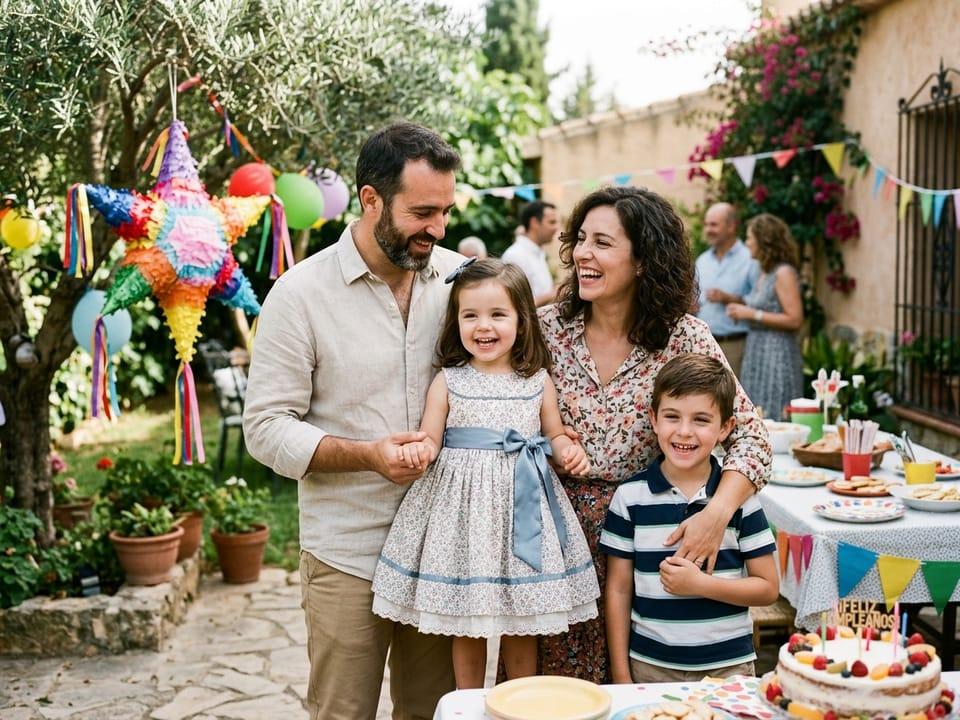
There is also an option that needs no cake at all. pokesta can turn phone photos you already have into a first-birthday family portrait with AI, with a party outfit and a birthday cake on the table. It is a generated image, not a photo of the day, so keep your own pictures as the real record. It costs $1 per photo and the first is free: try it with a photo from this week and see if it is the picture you were hoping for.
References