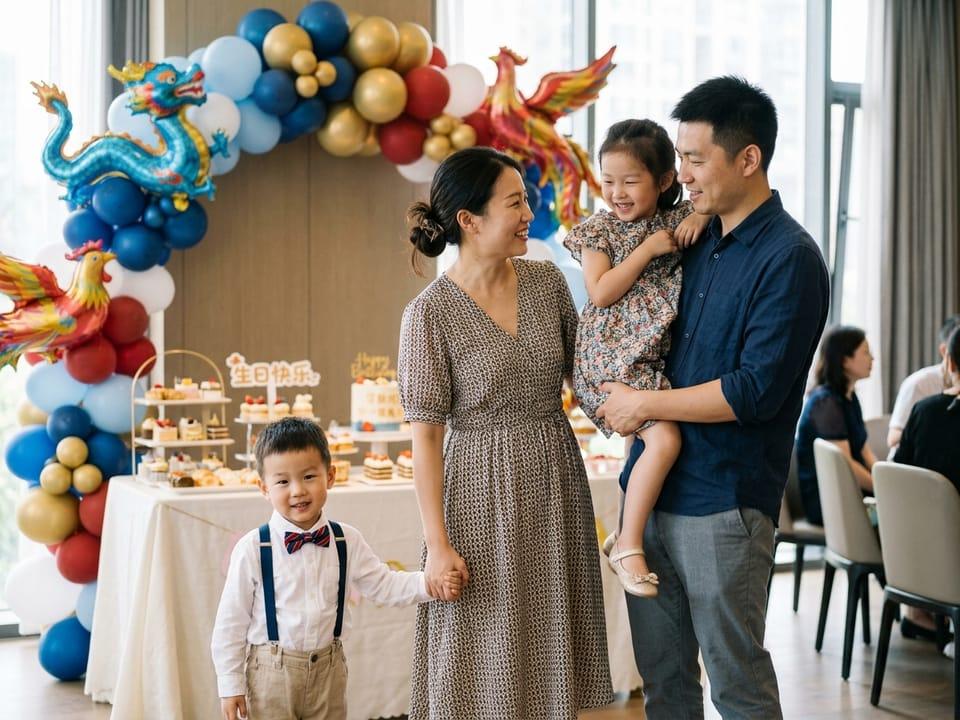
When a two- to six-year-old won't cooperate for birthday photos, it's rarely defiance. They're usually hungry, tired, or have been asked to "stand still, look here, smile" for too long. Giving them a job works better than asking for a smile: counting the candles, carrying the cake, passing chopsticks to a grandparent. Shoot in the good stretch before a meal or a nap, a few minutes per round. The CDC's milestone checklist says a five-year-old can pay attention for 5 to 10 minutes during an activity, and younger children manage less.
Most refusals come down to hunger, tiredness and posing
Rule out the physical causes first. The cake usually comes after the meal, yet the half hour before dinner, waiting for food, is when children are least patient, and the hour before a nap is much the same. So take birthday photos in the morning, or after the nap and a snack, and save cutting the cake for last.
Then look at the setting. In an unfamiliar place or with a photographer they've never met, children watch the adults before deciding how to feel. The CDC's two-year milestones include exactly this: looking at your face to see how to react in a new situation. When the adults get tense, so does the child. Putting the phone down and playing for a few minutes does more than any amount of coaxing.
Finally, there's posing itself. Standing on one spot and smiling at a dark lens is a strange thing to ask of a small child. Instead of making the child fit the photo, make the photo fit whatever the child is already doing.
A word the night before helps too. Show your child last year's birthday photos and explain that there'll be a few pictures tomorrow, then cake. Children resist less when they know what's coming and when it ends. Don't threaten "no cake unless you smile", or the birthday will be remembered for the tears.
At two and three, follow the play instead of directing it
A two- or three-year-old understands "come here" and "give it to Mama," but can't follow instructions for long. Photograph them where they're already playing: crouch and follow as they push a toy cart, or shoot from the side while they stack blocks. Turn on burst mode and pick the frame with open eyes and no hand in the mouth.
Clothes can start trouble as well. A scratchy or tight party outfit sets off the wriggling the moment it goes on, so shoot in everyday clothes first and change into the outfit for a few frames at the end.
If you want them to look at the camera, make the sound come from behind it. Have a second adult stand behind whoever is shooting and call the child's name, shake a little bell, or hold a favorite toy just above the phone. Peekaboo works too. Pop out from behind the phone with "there you are!" and catch the giggle.
At four and five, give them a job to do
By four, children like to be helpers and love pretend play; both appear in the CDC's four-year milestones. Use that and give them a role: "You're the birthday star today, so you're in charge of counting the candles," or "Can you carry Grandpa's longevity noodles?" A child with something to do looks far more natural than one told to smile.
Around five, most children can count to ten and follow rules or take turns in games. Turn the shoot into a game: everyone takes a turn pulling a funny face, or "on three, everybody jump." Then let the child be the director and shout "three, two, one" themselves; that's often when you get the most relaxed picture of the whole family.
Cake and longevity noodles: shoot it set, then shoot it eaten
The birthday has two stars: the cake and the longevity noodles (长寿面, changshou mian). By tradition the noodles aren't cut, and each strand is eaten whole as a wish for a long life. One lovely frame is a grandparent lifting a long strand with chopsticks while the birthday child watches from their lap.
Order matters. Before the candles are lit, take a few frames of the child with the whole cake. Then light the candles, sing and blow them out; this part is better filmed, and you can pull a still from the video later. Cutting and eating come last. An adult should hold or steady the cake while the candles burn, and keep the child's face and hair back from the flames; never ask a child to lean in closer for the sake of a shot.
Studio, home-visit photographer or DIY: which copes best with a meltdown
A studio has staff whose job is to coax smiles, plus props to do it with. It suits a formal portrait you'll frame, or three generations in one picture. The catch is the fixed slot: if your child cries, you have to calm them within the booked time. When you book, ask whether you can reschedule if your child is ill or unsettled, whether that costs extra, and whether you can come back if the session doesn't finish.
A home-visit photographer keeps the child on familiar ground, which helps with shyness, but the photographer is still a stranger; ask them to play for a while before raising the camera. Doing it yourself is the most flexible of all: if the child melts down, you stop and try again tomorrow. The setup and light in Chinese first-birthday photos at home work just as well for later birthdays, and other families' birthday photos are full of ideas.
If this year's photos didn't work out
If a whole day of trying has left you with tears and the back of a head, don't put your child through more. pokesta can take the everyday phone photos you already have of your child and family and create an AI family portrait around a birthday cake, everyone dressed for the party. It's $1 per photo and the first photo is free, so start with a recent picture of your child smiling. It's a generated image, not a record of the day. The real day belongs to that photo of your child crying while blowing out the candles, which may turn out to be the one you look at most in a few years. Make a birthday family photo
References