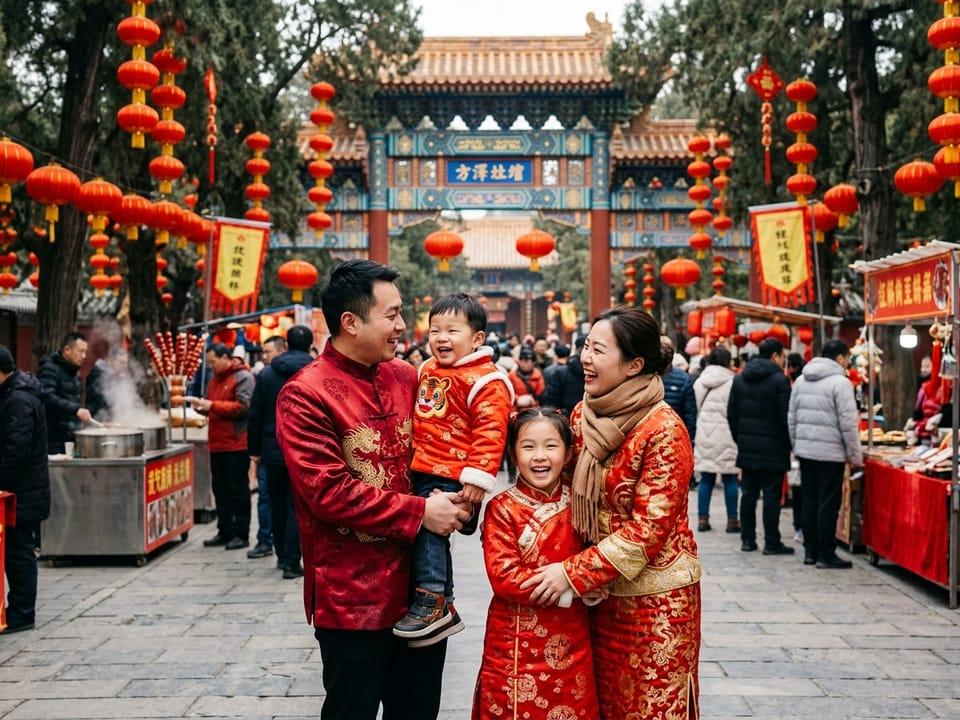
Pick the size of a living-room family portrait (全家福) by where it will hang and how far away people will stand, then check that the photo has enough pixels. At 300 pixels per inch, a "small 12-inch" print (8 × 12 inches) needs about 2400 × 3600 pixels and a "large 12-inch" (10 × 12 inches) about 3000 × 3600, which an original 12-megapixel phone photo (roughly 3000 × 4000) just about covers. Large group shots blown up even bigger are where pixels run out first. A studio frame saves effort, so judge it on materials and after-sales care; an online print plus your own frame is more flexible, so judge that on paper and colour.
Start with where it hangs and how far away people stand
The spot decides the size. A photo on a desk or picked up and held needs no more than a 6-inch (4 × 6 inches) or 7-inch (5 × 7 inches) print. On a bookshelf or TV cabinet, seen from a step or two away, 8-inch (6 × 8 inches) up to 12-inch works well. On the wall behind the sofa, looked at from across the room, it needs to be bigger.
Watch the naming. In Chinese print shops, "6寸" means a 4 × 6 inch print, not a 6-inch diagonal, and 12-inch comes in two versions: 小12寸 (8 × 12 inches) and 大12寸 (10 × 12 inches). For anything larger, go by the inches or centimetres on the order page rather than the "寸" label.
Think about proportions as well. Most phone photos are 4:3, while a 6-inch print is 3:2 and a large 12-inch is 6:5, so something gets cropped. In a long three-generation line-up the crop can clip the people at each end, so leave space at the sides when you shoot and try the crop at the print's ratio before ordering.
Check the pixels at 300 per inch
The Chinese Wikipedia table of photo sizes lists the pixels each size needs at 300 pixels per inch, which makes a handy check:
| Chinese name |
Inches |
Pixels needed at 300 ppi |
| 6寸 |
4 × 6 |
1205 × 1795 |
| 7寸 |
5 × 7 |
1500 × 2102 |
| 8寸 |
6 × 8 |
1795 × 2398 |
| 小12寸 |
8 × 12 |
2398 × 3602 |
| 大12寸 |
10 × 12 |
3000 × 3602 |
For larger prints, multiply each side in inches by 300: a 16 × 20 inch print needs 4800 × 6000 pixels, about 29 megapixels. A print on a wall seen from across the room doesn't strictly have to reach that, but the fewer the pixels, the softer it looks up close. The simplest test is to view the photo at 100% on a computer and see whether faces and hair hold up.
Big group photos are where it usually falls short. With a dozen people lined up, whoever is shooting stands far back and each face fills only a small patch of the frame. Add digital zoom, a later crop, or a compressed copy saved from a chat, and faces turn to mush once enlarged. For the picture you plan to print large, skip digital zoom and walk closer instead, and send it as an original file (原图) or as a document.
Silver-halide prints and inkjet: what's the difference
Two terms come up when ordering. 银盐 (silver halide) means a chromogenic, or C-type, print: lasers or LEDs expose the digital image onto light-sensitive paper, which is then developed in chemicals. 微喷 means inkjet, and professional inkjet printing usually uses pigment inks on fine art paper or canvas. According to Wikipedia, pigment inks resist fading far better than dye-based inks, and how long a print lasts also depends on the paper and framing, including UV-filtering glazing.
Don't worry too much about the labels. Ask three things: which process and paper (gloss or matte), whether you can get a small test print, and how far the colour will differ from your screen. Screen and paper never match exactly, so a small print before the big order is the safest step.
Studio framing or an online print plus your own frame
|
Studio framing |
Online print plus your own frame |
| Colour |
Adjusted by the studio before printing |
You choose; order a small test first |
| Frame |
See materials and samples in person |
Standard sizes are easy; others need custom frames |
| Cost |
Often added on photo-selection day |
See each platform's listed prices |
| Best for |
Files are with the studio; you want it done in one go |
You hold the originals and want control of the budget |
A studio does it all in one place: retouch, print and frame, handed to you ready to hang. It's worth it when the files are with the studio anyway, or when you want a large, matted, formal piece for the grandparents. Before paying, ask what the frame is made of, whether the front is glass or acrylic, whether it filters UV and who is responsible for damage in delivery. Our guide to 全家福 prices explains how to read the whole quote, and hidden costs at children's photo studios covers extras added on selection day.
Online printing suits families who already have the original files. When we checked in October 2026, Fujifilm China's official site listed its online printing channels, including official stores on Tmall, JD and Pinduoduo and a WeChat mini program; prices are whatever each platform shows when you order. If your originals are at a studio, confirm before paying that you'll receive them all. In a March 2024 Workers' Daily report, a lawyer argued that customers own all the original files from a shoot.
Only scattered phone photos? Make one first
If your family has never had a photo with everyone in it, pokesta can use AI to turn photos from each person's phone into a New Year family portrait in tangzhuang, at $1 per photo, with the first one free. It is a generated image, not a picture taken on a real day together. Make one free from a recent photo of your child, see which colours suit everyone side by side, and then decide whether this Spring Festival is the year to take the real one for the wall.
References