
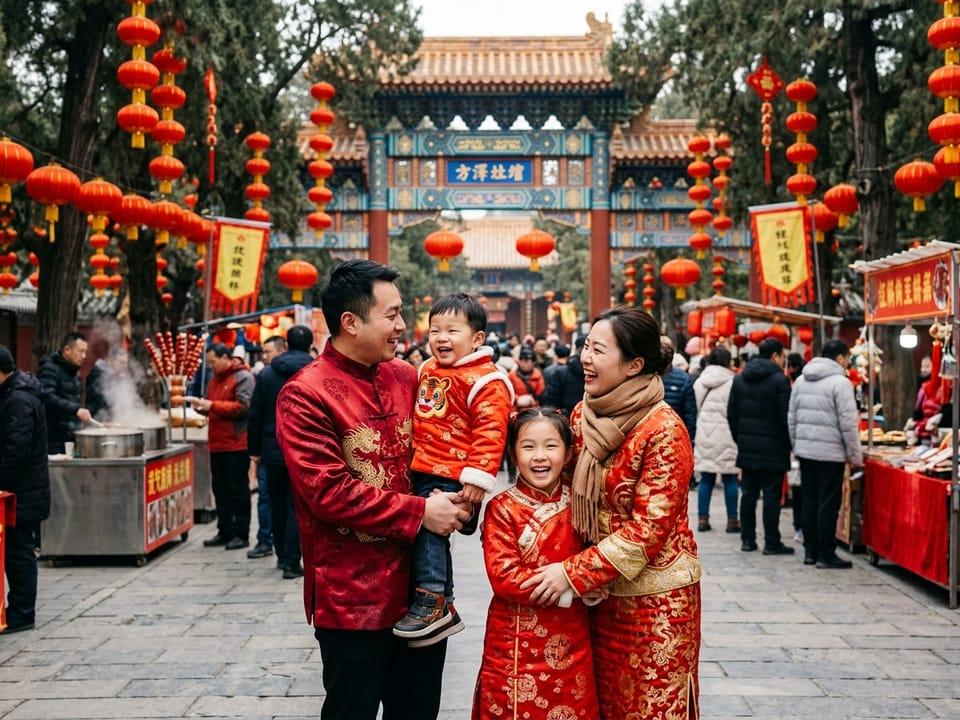
A Spring Festival quanjiafu (全家福, the whole-family portrait) looks coordinated because of color, not because everyone wears the same outfit. Keep the whole family to two or three colors, say red, navy and beige, put only the grandparents and the children in tangzhuang jackets or frog-button padded coats, and let everyone else wear plain sweaters they already own. In the photo, that reads as one family. For ten or so people, buying matching sets, borrowing the studio's wardrobe and wearing your own clothes add up to very different totals. If you do spend, spend on the few pieces that will be worn again next year.
Color makes a family look matched, not identical outfits
New clothes and red at New Year are an old custom: new clothes stand for a fresh start, red is traditionally believed to ward off evil, and it's the color of celebration. Yet ten people in head-to-toe bright red tend to blur together on a phone screen, and the red reflects onto their faces. What actually looks orderly in a photo is a lead color with supporting ones.
Pick a lead color: red. Then pick one or two supporting colors; navy, beige and camel all sit well with red. The people at the center wear red and everyone else picks from the supporting colors. Black coats and busy patterns grab the most attention, so take them off for the shot or swap them out. White works as a shirt under a sweater, but don't put anyone in white from head to toe: white is traditionally the color of mourning, and older relatives may mind.
Red comes in many shades, too. Scarlet, wine and orange-red clash when they stand side by side, and colors bought online don't always match their pictures. Buy the lead pieces from the same shop, or hold them together by a window before the day and swap any that are far apart.
Who sits at the center? In most family portraits it's the grandparents in the middle, with the children in front. Put those few in Chinese-style clothes, such as a tangzhuang or a qipao-style padded coat, and the picture says Spring Festival at once. The adults standing behind need only plain sweaters to frame them.
How the three options add up
| Option | Where the money goes | Suits | Watch out for |
|---|---|---|---|
| Buy matching family sets | Number of people × price, plus postage for size exchanges | Small families who'll wear them again | Children outgrow them; older relatives' sizes are hard to judge |
| Use the studio's wardrobe | Outfits included in the package, or a per-outfit charge | Several looks in one session | Large adult and toddler sizes may be missing |
| Wear your own | Almost nothing | Big families, little time | Agree on colors in the family chat beforehand |
When buying, don't stop at the price of one outfit; work out the total. Multiply the price by the number of people, then add return postage for size swaps. Grandparents' builds and children's heights are hard to guess, so if you're ordering online, leave time for at least one exchange. The closer to the holiday, the less time you have.
If you'll use the studio's clothes, ask first whether outfits are included in the package or charged per outfit or per person, whether the outfits in the sample photos cost extra, and whether there are large sizes for grandparents and small ones for two- and three-year-olds. Some studios run special family portrait packages over the holiday; get the outfits, number of people and retouched photos written into the order before you pay. Prices vary by studio and change over time, so go by what the studio itself lists.
Wearing your own clothes costs least; the hard part is coordination. A week ahead, post a simple plan in the family group chat: who wears red, who wears navy or beige, and who should leave the black coat behind. On the day, once the coats come off, the family is mostly matched already. Whichever route you take, hang everything up the day before, cut off the tags and steam out the folds; packing creases show more in photos than you'd expect.