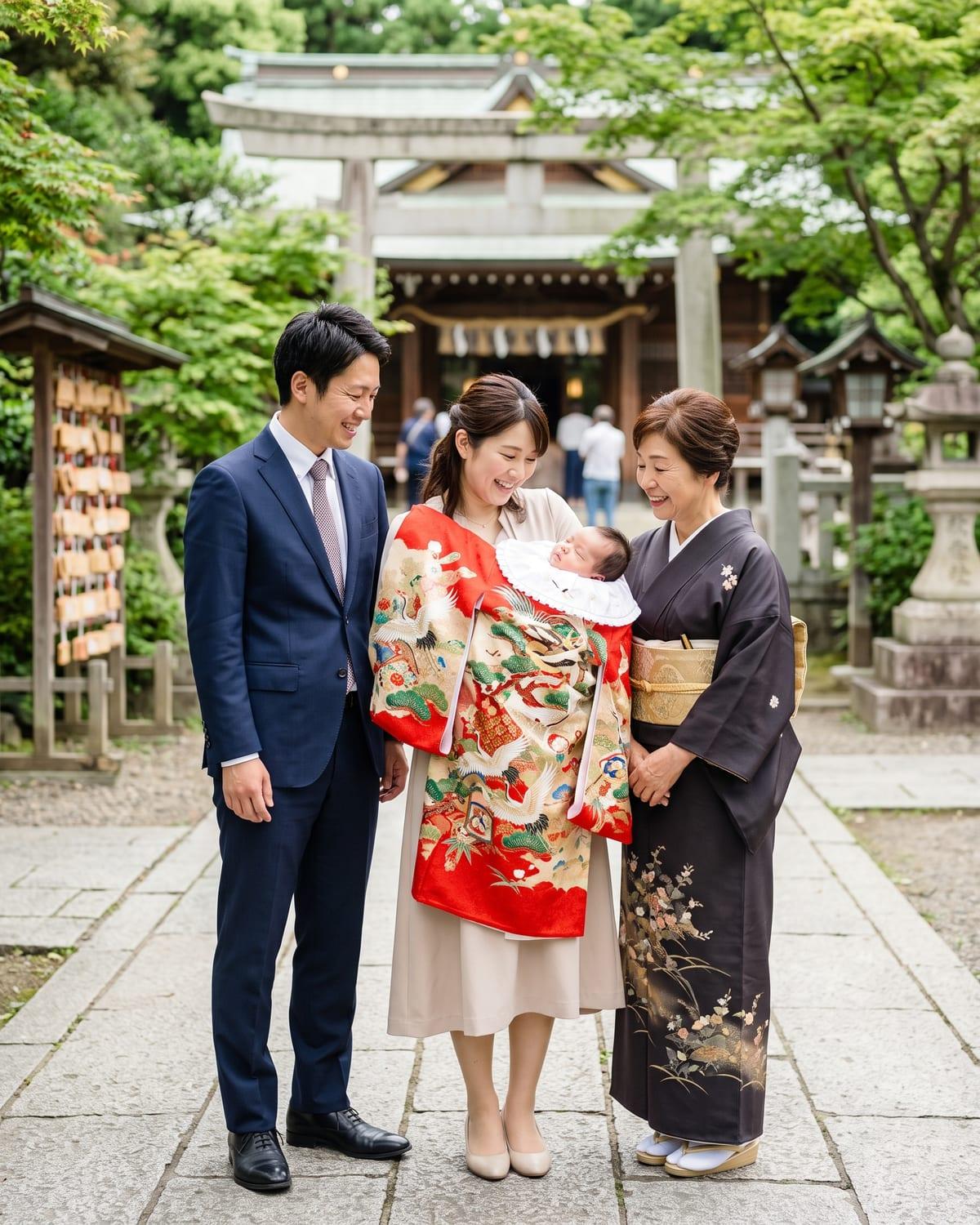
When there's an older child along for Omiyamairi (a newborn's first visit to a Shinto shrine, about a month after birth), it's the older child's mood, more than the baby's, that sets the pace of the day. What helps most is choosing one adult whose only job is the older child. Dress them to match the baby's level of formality while letting them move freely, and take the sibling photos first, while their patience lasts. Even though the day is for the new baby, giving the older child a part to play changes the expressions you get in the photos.
Clothes that match the baby and are easy to move in
Start by matching the older child's outfit to how formally the baby is dressed. If the baby wears an iwaigi (a ceremonial kimono draped over the baby), go a little smart: a collared shirt with a vest or jacket for a boy, a dress for a girl. If the baby is in just a baby dress, neat everyday clothes won't look out of place. A preschool or kindergarten uniform is another option, if they have one.
Calm colors such as black, navy and brown, or soft pastels, keep the baby from getting lost in the photos. Big cartoon characters and primary colors grab too much attention in a picture.
Just as important is whether the clothes are comfortable. Small children can object to stiff fabric, tight necklines or tags that scratch, and announce on the day that they won't wear it. Have them try the outfit on a few days before and check for anything they dislike. Stretchy or soft fabrics hold up fine while they run around the shrine grounds. Choose something that will also work for a school entrance ceremony or Shichi-Go-San (a celebration for children aged three, five and seven), and it gets a second outing.
For shoes, stick mostly to ones they're used to. If you want them in smarter shoes, let them wear their usual pair while moving around and switch only for the blessing and the photos, so blisters don't ruin their mood. Even in summer, skip sandals and bare feet.
Choose one adult just for the older child
On Omiyamairi day, mom and dad's hands are full with holding the baby, checking in and getting through the blessing. So choose in advance one adult who looks after only the older child. If a grandparent is coming, asking them is the most natural choice. If it's just the parents and the two children, dad takes the older child and mom takes the baby.
The designated adult walks the grounds with the child when they get bored, takes them to the bathroom and hands out snacks. Just having someone assigned means far fewer moments of mom or dad asking, "Where did they go?" Pack the older child's toys, snacks and spare clothes in a small bag separate from the baby's things, and have the designated adult carry it so it's to hand when needed.
Getting through the wait and the blessing
The blessing usually takes around 20 to 30 minutes, and with the wait from check-in until you're called, it can add up to nearly an hour. That's a long time for a small child.
Pack small toys that don't make noise, a sticker book or a thin picture book. For snacks, choose ones that don't crumble or leave sticky hands. Don't let them eat inside the hall or while walking around the grounds; use the waiting room or a rest area. Take them to the bathroom right after you check in. If they need to go partway through the blessing, they'll have to leave with the designated adult.
If the older child gets noisy during the blessing, it's fine for them to step outside with the designated adult for a while. Waiting outside calms both the child and the families around you better than forcing them to sit still. Having them happy for the photos after the blessing matters far more.
Give the older child a job
Even if they understand the day is for the baby, an older child can feel left out when every adult's attention is on the newcomer. A small job of their own can change their whole face.
Putting the coins in the offering box, carrying the baby's hat or other small things, holding the bag with the charms and talismans you receive: pick one to suit their age and tell them that morning, "This is your important job today, as the big brother" (or big sister). Praise them as a family once they've done it, and their expression in the photos will soften.
If they're school age, handing them a phone and making them "the baby's photographer" works well too. Photos taken from a child's lower eye level can catch surprisingly good expressions. When it's time for the family group photo, they switch from taking pictures to being in them.
Sibling photos first, and one of the older child alone
Take the photos of the older child with the baby as soon as you arrive at the shrine, while the older child is still in a good mood and able to focus. While you wait for the blessing, or afterward, they're often too tired for photos.
If the older child is going to hold the newborn, they must be sitting down. Sit them on a bench, lay the baby on their lap, and have an adult support the baby's head and body from right beside or behind them. Don't worry if a bit of the supporting adult's hand shows in the picture. Never let them hold the baby standing up.
If they're too young to hold the baby, have them stand next to the adult holding the baby, peering into the baby's face or gently holding the baby's hand. That makes a lovely sibling shot. The photographer should crouch down to the older child's eye level to capture their expression.
In the family group photo, put the older child right next to the person holding the baby, or in front of them. Detailed arrangements are in Omiyamairi with both sets of grandparents: arranging a three-generation group photo.
On top of the sibling and group photos, take one photo of the older child on their own. Dressed up, proud after doing their job: that face only happens on this day. It can be after the blessing or just before you leave. When they look back at the photos later, seeing that they were properly in them too means a lot to an older child.
The older child's mood decides the day's photos
A photo of the baby crying becomes a funny story later. A photo of the older child sulking is different: they may mind it when they're older. If you have to choose between sticking to the schedule and keeping the older child happy, choose their mood. Even if you wrap up earlier than planned, it's enough as long as you got the sibling photos at the start. See other families' photos in the Omiyamairi posts, and for the flow of the whole day, read How Omiyamairi day goes.
References