Newborn Photos and Omiyamairi Photos: Timing and Safety
pokesta Editorial Team · Updated October 12, 2026
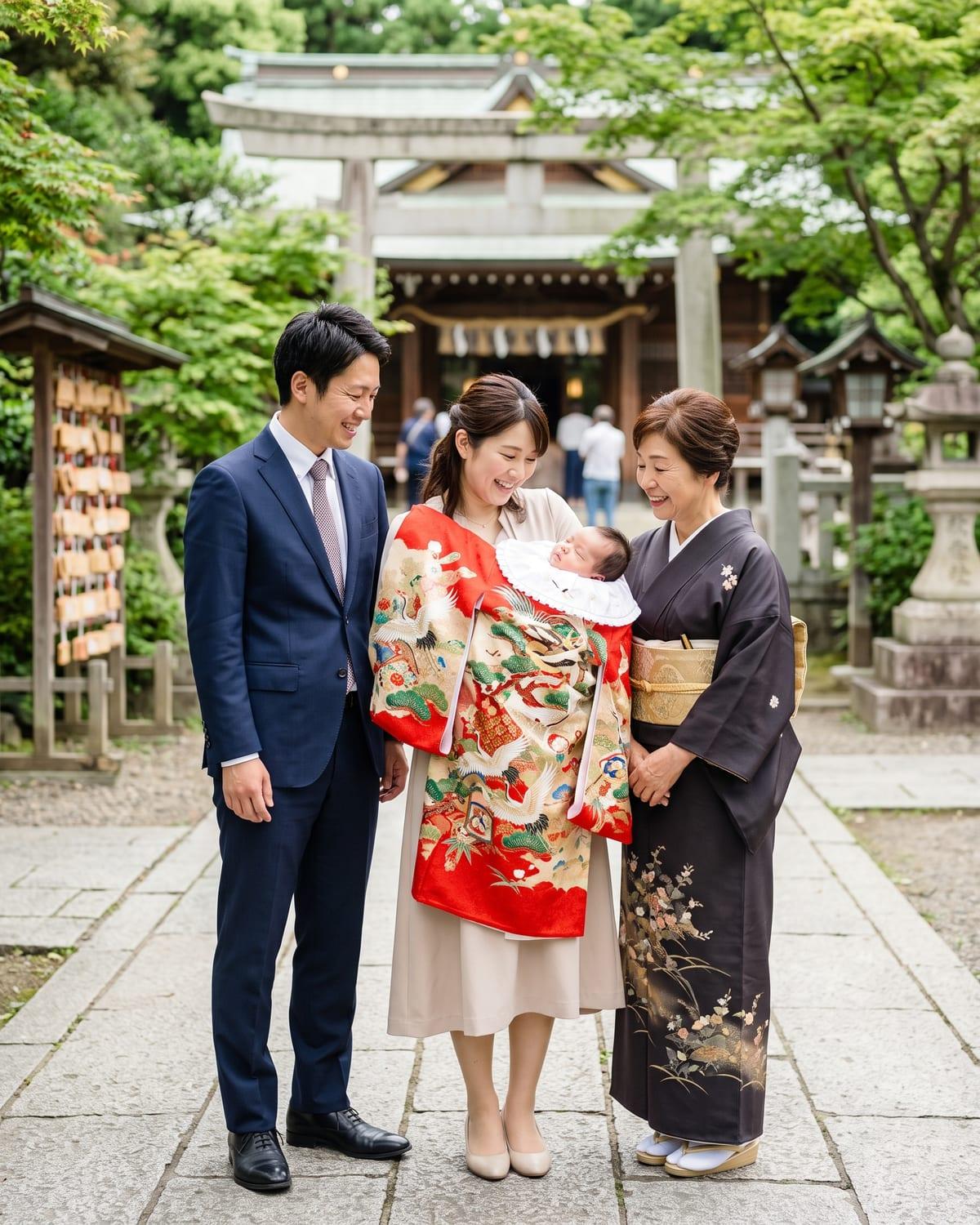
Newborn photos and Omiyamairi photos (Omiyamairi is a newborn's first visit to a Shinto shrine, about a month after birth) both capture a baby just after birth, but their ideal timing is slightly different. Newborn photos are best taken within about three weeks; Omiyamairi comes at around one month. How you handle that gap decides whether you do one shoot or two. Either way, the first thing to think about is the baby's safety.
The ideal windows are one to two weeks apart
Newborn photography means photographing a baby in the neonatal period, which in pediatrics lasts until 28 days after birth. When exactly to shoot varies a little depending on who you ask. An article that interviewed newborn photographers recommends finishing by day 21, because sleep cycles change around then and babies stay awake longer, making it harder to finish a shoot in one sleep. A column from the studio chain Studio Alice recommends shooting within 30 days.
As for Omiyamairi, the Association of Shinto Shrines (Jinja Honcho) describes the 31st day after birth for boys and the 33rd for girls as typical. Many families shift it around the baby's health and the weather, and some go a little later.
So the Omiyamairi period starts just as the window for newborn photos closes. If you try to do both on one day, one of them has to move a little.
Two shoots, or one
If you split them, a comfortable plan is newborn photos at home at two to three weeks, then family photos at the shrine on the day of Omiyamairi at around one month. Newborns are vulnerable to outside stimulation and infection, and Studio Alice's column says newborn photos are safer taken at home. If you hire a photographer, choosing one who comes to your home or your parents' home means the baby doesn't have to go out.
There are two main ways to combine them. One is to include newborn-style shots, like the sleeping face and tiny hands and feet, among the photos on the day of Omiyamairi. The other is maedori (taking the commemorative photos before the shrine visit) at a studio that can also do iwaigi shots (the iwaigi is the celebratory kimono draped over the baby). With the latter, you'll be taking the baby out before the one-month checkup, so decide based on how mom and baby are doing.
Combining has its own pitfalls. The day of Omiyamairi is full of stimulation for the baby: changing clothes, travel, the blessing. Squeeze in a slow, careful newborn-style session too, and the baby may get overtired and unable to sleep, leaving both sets of photos half-done. If you combine, limit the Omiyamairi-day shots to things that take a few minutes, like close-ups of the sleeping face and hands and feet, and accept that you won't be doing anything elaborate.
If you're unsure, ask yourself whether you really want classic newborn poses: the curled-up position, the swaddled shots. If you do, splitting the shoots and putting timing first is the safer bet. If you'll be happy just to capture how tiny the baby was, combining them on Omiyamairi day probably won't leave you with regrets. Shooting on the day, before and after are also compared in Omiyamairi photos on the day, before or after?.
Don't put a newborn into poses they can't hold
The pose often seen in newborn photos, the baby asleep with chin propped on hands, isn't a position a baby without head control can actually hold. Professionals usually take one shot supporting the head and another supporting the wrists, then combine them into one image. Taking it in one shot without compositing is described as extremely dangerous.
Studio Alice's column lists poses to avoid: the chin-on-hands pose with elbows propped up, a pose where the swaddled baby stands upright like a bagworm cocoon, and lying face down. Please don't try to copy cute photos you see on social media at home.
Pay attention to the room, too. The same column advises keeping air conditioner drafts off the baby, avoiding direct sunlight, and keeping the room warm enough that adults feel a little hot. When you unwrap the swaddle for photos, keep each stretch short and wrap the baby up again often.
What to check before booking
If you hire a newborn photographer, first make sure they're experienced with newborns and understand which poses are dangerous. Ask to see past work, and if there's a chin-on-hands pose, ask whether it was made by compositing.
Also check what happens if the date changes. Babies don't arrive on schedule, and if mom or the baby is unwell after the birth, the date will have to move. Knowing the cancellation and rescheduling terms in advance means you won't push yourselves on the day. Some studios take bookings during pregnancy, so if you're planning two shoots, getting in touch before the birth makes scheduling easier.
If the same photographer will also do the Omiyamairi photos, check whether the shrine you're visiting allows photographers. Some shrines don't allow outside photographers, or require advance permission.
If you shoot it yourselves, keep the baby on their back and keep it short
The Studio Alice column mentioned above advises against doing newborn photos yourself. If you do anyway, don't pose the baby; only photograph them lying on their back. A while after a feed, when they're sound asleep, is the easiest time. Avoid right after a feed, since babies often spit up. When shooting from directly above, loop the strap of your phone or camera around your wrist so you can't drop it on the baby.
For a backdrop, spreading out the iwaigi you'll use for Omiyamairi, or dressing the baby in a baby dress on a white sheet, gives a newborn-photo feel without any special equipment. For using light at home, see Tips for bright indoor photos.
Settle safety first, then the schedule
Whether to do newborn and Omiyamairi photos together or separately comes down to which poses you want. Whichever you choose, settle two things first: no unsafe poses, and if anyone's unwell, move the date. Other families' Omiyamairi photos are in the Omiyamairi posts, and you can create a family photo here.