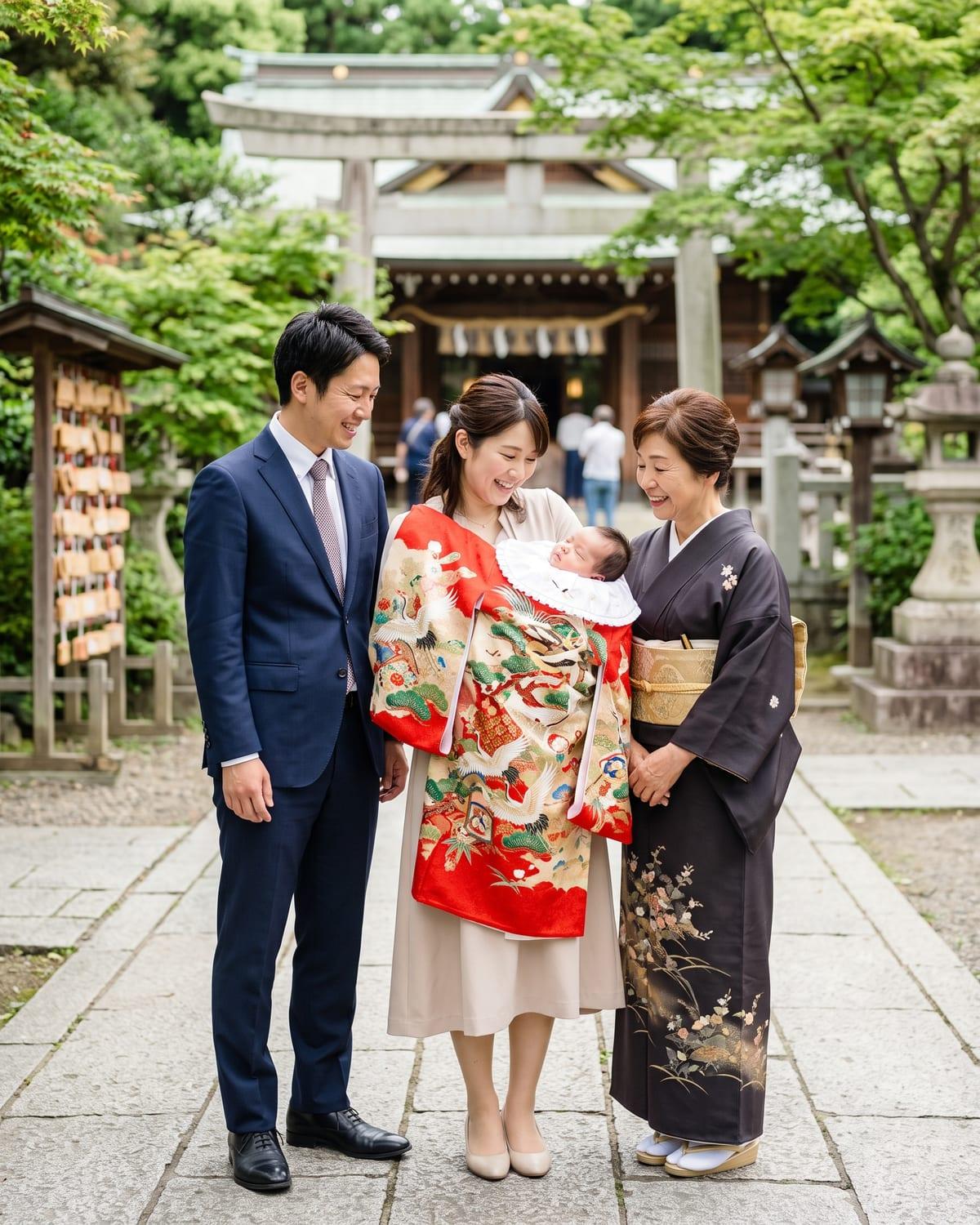
If rain is forecast for your Omiyamairi (a newborn's first visit to a Shinto shrine, about a month after birth), the first decision is whether to go or postpone. A reasonable rule of thumb: postpone if heavy rain or a sharp drop in temperature is expected, and go ahead with some preparation if it's only drizzle. If you postpone, let the shrine know early if you've booked a blessing. If you go, put the iwaigi (the ceremonial kimono draped over the baby) on once you're under a roof, and take photos under the eaves or in a covered walkway. There are even some photos you can only get on a rainy day.
Decide by the evening before
Making the call by the evening before gives everyone, including the grandparents, time to adjust. If you wait until the morning, grandparents coming from far away may already be on the road, and it may be too late to change bookings at a photo studio or restaurant.
Base the decision on how hard it's raining and how cold it is. If it's the kind of rain that soaks your feet even under an umbrella, or if rain comes with a big drop in temperature, a different day is the safer choice for the baby and the mother. For drizzle, or a forecast that clears by midday, many families prepare and go ahead. Either way, hear out the plans and views of the grandparents and anyone else coming, then let mom and dad make the final call. One upside of rain: the grounds may be less crowded than on a sunny weekend, so you can get the popular photo spots without waiting.
Around one month after birth is only a guideline for Omiyamairi; a few days' or even a few weeks' delay is no problem. Some shrines describe the window for the first shrine visit as anytime up to about the 100th day after birth.
If you postpone, you can move just part of the day
If you've booked a blessing, contact the shrine as soon as you decide to postpone. How changes and cancellations are handled varies from shrine to shrine, so asking about rain when you book saves you a scramble on the day. Some shrines take same-day walk-ins for blessings, but there may be days when they can't, for example when the priest is away or conducting a ceremony elsewhere, so if you're changing the date, check in advance that the new day works.
You don't have to postpone everything. You can keep the meal and the studio photos as planned and have just the immediate family visit the shrine on a sunny day. If grandparents are coming from far away, that way their trip isn't wasted. If you've booked an on-location photographer, check their rain postponement and cancellation policy when you book.
Put the iwaigi on under a roof
If you go ahead in the rain, the thing most worth protecting is the iwaigi. Walk from home or the parking lot with it on and the hem and sleeves get wet, and mud splashes can leave stains. While moving, keep a rain cover over the baby carrier, and drape the iwaigi only once you're under the roof of the shrine hall or the shrine office. A practice run at home makes it quick to do under cover.
Choose adults' clothes with rain in mind too. In kimono, have it dressed with the hem slightly shorter to avoid mud splashes, and bring a kimono rain coat, covers for zori sandals and a spare pair of tabi socks. Walk slowly with small steps. In Western clothes, polyester that dries quickly and resists creasing works well; avoid leather and fabrics whose dye may run.
Footwear matters most. Wet stone steps and paving are slippery, and falling while carrying the baby is the biggest danger. Avoid thin heels and choose shoes with grippy rubber soles. Have someone walk beside whoever is carrying the baby and hold the umbrella over them, so the carrier has both hands free.
Add one or two towels to your bag, plus bags for wet umbrellas and clothes. Bring a change of clothes for the baby and a swaddle you can wrap around them quickly. On rainy days the humidity makes babies sweat, and damp clothes chill them. But piling on layers out of worry about the cold just makes them sweat more, so adjust one layer at a time while you watch how the baby is doing.
Shoot under cover, facing the bright side
On a rainy day, the basic rule is to take photos under a roof. Look for spots that stay dry: the eaves of the main hall, a covered corridor, the side of the kagura-den (the stage for sacred dance). Don't block worshippers' paths or the area in front of the offering box, and if you're not sure a spot is okay, ask at the shrine office.
It tends to be dark under a roof, but face the right way and faces will still come out bright. Have the family stand facing out from under the roof, toward the brighter open sky, while the photographer stands outside the eaves, shooting back in toward them. On a rainy day the whole sky acts as a soft light source, so faces don't get harsh shadows, and skin can look smoother than on a sunny day.
If it's still too dark, tap the face on your phone screen and raise the brightness. On a camera, raising the ISO brightens the image and helps prevent blur, but push it too far and the picture gets grainy.
When you shoot from under the eaves with the outdoors as a backdrop, include drops falling from the edge of the roof in the foreground, and the photo will say "rainy day" at a glance. With a camera, a slightly slower shutter speed turns raindrops into thin streaks, while a fast one freezes them as drops. Either way, raindrops show up best against a darker background.
Photos you can only take in the rain
Some photos only happen on a rainy day. Choose a light-colored umbrella, such as white, pale pink or light blue, or a clear plastic one. Black or navy umbrellas cast shadows on faces and darken the photo. A shot of the family from behind, under clear umbrellas, with the main hall at the end of the path, makes a lovely rainy-day shrine picture.
Wet stone paving and rain-washed trees photograph in deeper colors than on a sunny day. When the rain stops, look for puddles that reflect the torii gate or the hall. Hold your phone low near the ground and the reflection fills more of the frame.
If the photos at the shrine didn't go as planned, you can also take them at home afterward. pokesta can create a family photo against a sunny shrine backdrop using AI, from each family member's phone photos (your first photo is free, then $1 per photo).
When in doubt, start from what can't move
If the forecast leaves you torn, ask what postponing would actually cost you. The shrine visit itself can move by a few weeks without any problem, but grandparents' travel plans and a lunch reservation are harder to shift. You can keep the fixed plans as they are and move only the shrine visit and the outdoor photos to a dry day. If you do go ahead, two things are non-negotiable: keep the iwaigi dry, and don't let anyone fall while carrying the baby. The photos themselves can be taken perfectly well under the eaves. See other families' photos in the Omiyamairi posts.
References