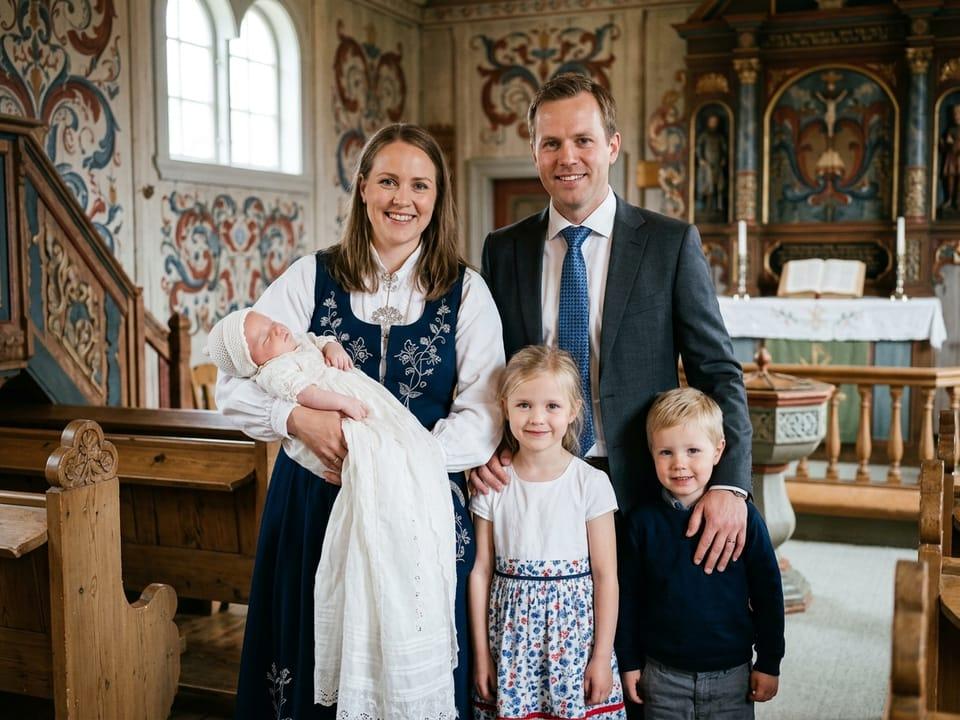
Christening Gown in Norway: Borrow One from the Church, Inherit, Rent or Buy
pokesta Editorial Team · Updated November 8, 2026
You rarely need to buy a christening gown in Norway. The Church of Norway says many parishes keep a dåpskjole that families can borrow or rent, and it leaves the choice of clothing to the parents. Ask your parish office first, then the family, and shop only if both come up empty: a new merino wool gown from the craft retailer Norsk Flid was listed at NOK 1,299 as of October 2026.
Ask the parish office before you buy anything
Baptism in the Church of Norway costs nothing, and most children are baptised before their first birthday. The church's questions-and-answers page includes a line many parents miss: many parishes have a christening gown that can be borrowed or rented. It is not a national scheme, though. Each parish decides whether it keeps a gown, whether it charges for it and how far ahead you need to reserve it, so the only reliable answer comes from your own church office (kirkekontoret).
The easiest moment to ask is when you book. You book the baptism on the website of the parish where you live, and a staff member then contacts you to arrange the baptism conversation (dåpssamtale). Raise the gown in that same exchange: is it free or is there a rental fee, which baby sizes does it fit, when can you collect it, and should it come back washed or unwashed? If you want to see it before the day, ask for a photo.
The pressure comes from tradition, not from a rule
Plenty of Norwegian families have a gown that several generations have worn, and that is where the feeling that every baby needs one comes from. The church itself says there is no single right way to dress the child. Oppsal parish in Oslo puts it plainly on its baptism page: you can borrow, rent, make, inherit or buy a gown, and if you don't have one, ordinary smart clothes are fine.
The long white gown most people picture has only been common since the late 1800s, according to the church's page on sewing one. Before that, christening clothes were often colourful, trimmed with lace, ribbons and embroidery, and frequently made from worn or outdated garments. The same page notes that a gown doesn't have to be white and suggests looking to the bunad for ideas. A baby in a white knitted set is not breaking any custom.
Four routes, compared on cost, effort and the photos
Route
Cost
What to check
In the photos
Parish gown
Free or a fee set by the parish
Size, pick-up and return dates
Depends on the gown, so ask for a picture
Family heirloom
Free
Yellowing, fragile lace, real length
Its history makes close-ups worth taking
Second-hand
Varies with fabric and age
Stains, care label, measured length
Fine if the white is still even
New
From NOK 1,299 (Norsk Flid, October 2026)
Stock and delivery time
Fits well, and you keep it
The new option is worth a closer look. The Lille Lam gown sold by Norsk Flid is 100% merino wool, comes in sizes 62, 68 and 74, and measures 112 cm from the shoulder in size 68. A matching bonnet (dåpslue) was listed at NOK 499. Both were marked out of stock when we checked, and prices vary by shop and season, so confirm on the retailer's site before counting on it.
Sewing is a fifth route for anyone handy. The Church of Norway links to a pattern by Rebekka Slettebø, made for the Diocese of Oslo, in sizes from three months to six years. It suggests sewing a test version in cheap fabric first, reusing fabric with family history such as a tablecloth a grandmother embroidered or an old wedding dress, and embroidering the child's name and baptism date.
A long gown needs the right hold and a warm layer underneath
A long gown only shows its length in pictures when the hem can hang free. Hold the baby upright against your shoulder, or across your forearms with the skirt draped over your arm, rather than tucked into a blanket. Agree beforehand who carries the child to the font and who takes off the bonnet, since a family member removes it there if the baby wears one. That small gesture is one of the nicest moments to catch from the pew.
A thin cotton gown is cold for much of the Norwegian year. A wool body underneath keeps the baby comfortable without changing the outline, and a coat or bunting bag can stay on until you're indoors. Our guide to a winter dåp goes into the details.
Studio, hired photographer or your own phone
A studio session on another day shows a long gown at its best. The photographer can lay out the full length and pick up lace and embroidered names in steady light, and the date can move if the baby is unwell. It costs extra, and a borrowed gown may have to go back before then, so book it within the loan period. We break down the prices in what a studio christening session costs.
A photographer booked for the baptism day sees the gown in context, at the font and at the lunch, but the date is fixed and the baby's mood is whatever it is. During the service the gown is mostly in someone's arms. Your own phone handles one picture surprisingly well: the gown alone on a hanger by a window, the evening before. If the gown is borrowed, that photo may be the only one of it you keep.
Borrowed gown, kept picture: try a portrait from your phone photos
Once the parish gown has gone back, you can still have a portrait of your baby in white. pokesta uses AI to build a christening family picture from phone photos your family already has, with a white gown and a painted wooden church as options. It costs $1 per photo and the first one is free, so test it with a recent picture of your baby before paying for anything else. It is a created image rather than a record of the day, which is why it works best alongside your real photos. Try a dåp portrait