
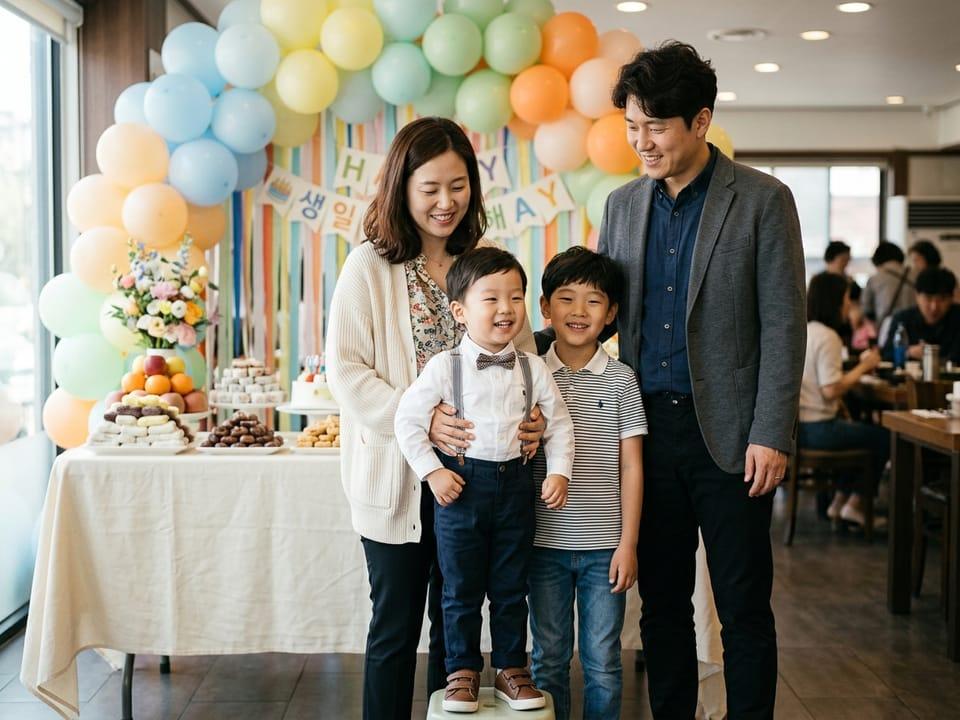
Stop trying to make a two-year-old sit. For a second-birthday (dudol, 두돌) shoot, photograph your child moving first, keep to one outfit, take a break every 15 to 20 minutes, and save the seated portrait for the end, with a snack in your hand. Running, saying no and wanting to choose are ordinary at two, so plan the session around them, and tell the studio before the day that this is how you want it shot.
"No" is part of being two, and so is running
The CDC's milestone checklist for two years includes running, kicking a ball, walking up a few stairs, and looking at a parent's face to see how to react in a new situation. The American Academy of Pediatrics' page on emotional development at two describes children who want to explore, whose moods go up and down, and who meet limits with anger, frustration or a tantrum. Its tantrum tips add that meltdowns are most common between one and three, and that they tend to peak when a child is hungry or tired.
Put together, those explain most bad shoots. A studio is a new room with a stranger holding a large camera, and the child checks your face to decide whether that's all right. An outfit with a stiff collar is a limit to push against. And the booked slot often lands exactly when the child would normally be napping or eating. Fix the timing and your own expression first; neither costs anything.
Photograph the movement first and the sitting last
Start with what the child wants to do anyway. Let them walk toward a parent crouching just beside the photographer, so their eyes land near the lens. Give them a favourite toy to carry, which gives their hands a job. Running, peeking out from behind a curtain and climbing onto a parent's lap all make pictures, and the photographer can follow without asking the child for anything. Don't ask for a smile either. A posed grin at two tends to look like a grimace, while peekaboo from beside the lens, or a parent pulling a silly face, gets a real one.
Keep to one outfit. If the child refuses it, photograph them in what they arrived in and offer the outfit again after a break; a second change at two is a gamble, not a plan. Letting the child pick between two tops sometimes works where insisting doesn't. When attention goes, stop for a drink and a wander round the room instead of pushing on. Rounds of 15 to 20 minutes with a short rest between them keep the session moving and give everyone a reset.
Leave the seated portrait for the end, when the child has had a run and is ready to sit for something. A small snack offered once they are in place buys a few calm frames; choose one that won't stain. If they still refuse, the AAP suggests small, directed choices rather than yes-or-no questions, so "the red chair or the blue one?" works better than "will you sit down?" And keep calm. The child is reading your face.