
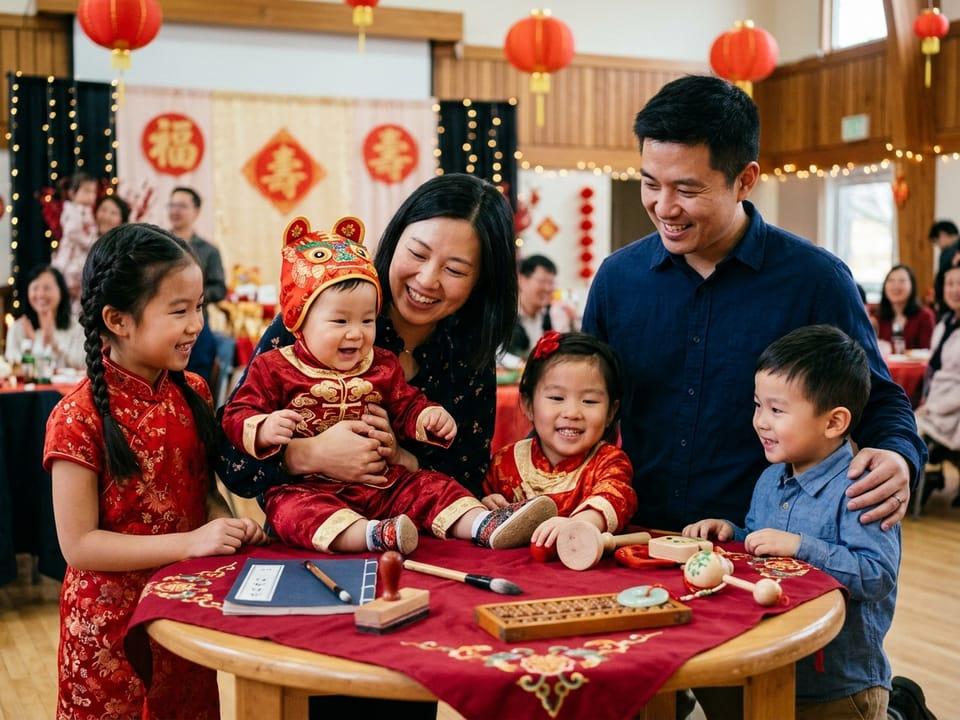
A self photo studio, called zipaiguan (自拍馆) or zizhu zhaoxiangguan (自助照相馆) in Chinese, rents you a lit set and a remote shutter for a timed session, so you can take your own baitian zhao (百天照, the 100-day photo) or zhousui zhao (周岁照, the first-birthday photo) with no photographer in the room. It suits a calm baby, parents who are happy to direct themselves, and a family that brings its own outfit. It's a poor fit for a posed sleeping shot, a baby who can't yet hold their head up, or a fussy baby on a tight time slot.
How a self photo studio works
The format is simple. A Shanghai newspaper, Xinwen Chenbao, described it in 2021: the set, camera and lights are ready, a staff member walks out and tells you the clock has started, and you press a remote in your hand. Each frame appears on a large screen opposite, and you can shoot as many as you like within the session. A photographer the paper interviewed divided them into two kinds. One is a studio with a professional camera, lighting, a display screen and a remote. The other leans on themed sets and racks of costumes, and you bring your own camera or phone and take turns photographing each other.
Prices are usually per head, closer to an exhibition ticket than a photo package. In September 2021 the Shanghai paper IT Times found solo sessions at self photo studios in the city generally around 180 yuan and two-person sessions around 250 yuan, with makeup and a hired photographer costing extra. A studio inside a shopping mall charged 299 yuan for a solo self-shoot, and its parent-child and best-friend portrait sets ran past 1,000 yuan. Those are five-year-old figures from one city. Prices vary by city, season and plan, so check the current listing for the studio you have in mind, and ask whether a baby counts as a paying person.
Both reports also show who these studios were built for. One studio told Xinwen Chenbao that 95% of its customers were women aged 18 to 25, and the costume room IT Times visited held nearly 200 garments, mostly dresses, from Korean hanbok to wedding gowns. The same report did mention another studio where whole extended families sometimes came in together. None of that rules out a baby, but the sets and wardrobes generally weren't designed with one in mind.
The clock is the hard part with a baby
The timer is part of what keeps self studios cheap, and it's the part that fights a baby's day. A three-month-old can need a feed, a nappy change and a nap inside an hour, and none of those wait for the session to end. Before you book, ask four things: whether the timer can pause for a feed, whether there's somewhere private to feed and change, whether a pram fits in the studio, and how many adults the room holds. Book the slot that starts just after the baby's usual feed and nap, not the one that suits the adults' lunch.
Plan the shots before you arrive. Decide the three or four photos you want, in order: the baby alone, the baby with each parent, and the whole family. Taking the family photo first, while everyone's fresh, is often smarter than saving it for last. Weekend slots at popular studios can fill up; at the studio Xinwen Chenbao visited, weekend sessions needed booking one to two weeks ahead.