When to Take Newborn Photos, and What If You're Past Two Weeks
pokesta Editorial Team · Updated October 12, 2026
The classic sleepy, curled-up newborn photo is easiest to get in roughly the first two weeks, when babies sleep long and deeply between feeds. That window is a photographer's rule of thumb, not a medical deadline. If recovery from the birth, jaundice or a hospital stay pushed you past it, photos at four to eight weeks aren't a lesser version of the same thing. They show a different baby: one who opens their eyes, studies faces and, before long, smiles back.
The two-week window is about sleep, not a cutoff
The advice to shoot early comes from photographers rather than doctors. One photographer quoted in the Canadian magazine Today's Parent suggests aiming for five to ten days old, because babies that age sleep for long stretches and very deeply, so you can settle them without much disturbance. The NHS describes most newborns as being asleep more than they're awake. A sleeping newborn also tends to stay in the tucked, curled shape they had before birth, and that shape is what gives posed newborn pictures their look.
The polished studio versions involve more than timing, though. Many of the most striking poses, the chin-on-hands one in particular, are composites: an assistant supports the baby in each frame and the frames are combined in editing. None of that belongs in a living room. If you're taking the photos yourself, keep your baby in positions they settle into on their own, on their back on a blanket or curled up in a parent's arms, and read our newborn photo safety guide before you start.
The same two weeks are already full
The first fortnight is also when a household is most stretched. In the United States, the American Academy of Pediatrics schedules the first well-baby visit at three to five days old. In the UK, a health visitor carries out a new baby review within 10 to 14 days of the birth. Ireland, Canada and New Zealand each have their own pattern of midwife, nurse or doctor visits, and they land in the same weeks you'd pencilled in for photos.
Recovery counts as well. After a caesarean, the NHS says most people leave hospital one or two days later, won't be able to drive for a few weeks, and may not feel ready for normal activities for six weeks or so. A home shoot that has the parent who gave birth kneeling on the floor, lifting the baby in and out of blankets, can wait.
Then there's jaundice. According to the NHS, the yellow tinge is usually most noticeable when a baby is around three days old and usually takes around two weeks to go. If treatment is needed, it's usually phototherapy, normally given in hospital. A yellowish cast will show up in pictures, and our guide to editing newborn photos on your phone covers how to soften it without making skin look unreal. A photo is no guide to how jaundiced a baby is, though: if the yellow worries you, ask your midwife, health visitor or doctor rather than judging it on a screen.
Some babies spend their first weeks in a neonatal unit for other reasons. Photos from that time are worth taking for their own sake, like the tiny hand around a parent's finger or the first hold, but they're a record rather than a portrait session, and the unit's own rules on photography come first.
Past two weeks, change the picture instead of chasing it
At three, four or six weeks, babies stretch out more and stay awake for longer. Trying to fold an alert four-week-old into a tight newborn curl usually ends with a crying baby and a frustrated parent, and it isn't worth the risk. Point the camera at what this age does well.
The CDC's milestone checklist says that by two months, most babies look at your face, smile when you talk or smile at them, and hold their head up when lying on their tummy. Each of those is a photo. Lay the baby on their back on a plain blanket near a window, get down to their eye level, and let the open eyes and expression carry the picture. Photograph tummy time while they're awake and an adult is right beside them; the CDC's own advice is not to leave the baby alone during tummy time and to move a sleepy baby onto their back in a safe sleep space. Hands, feet and the curl of an ear still make good close-ups at six weeks. They're just a little bigger.
Sleeping shots are still possible. After a feed, a baby asleep in a parent's arms needs no posing at all. When the photos are done, put them down on their back in their own cot or crib.
At six weeks, the family photo matters more than the pose
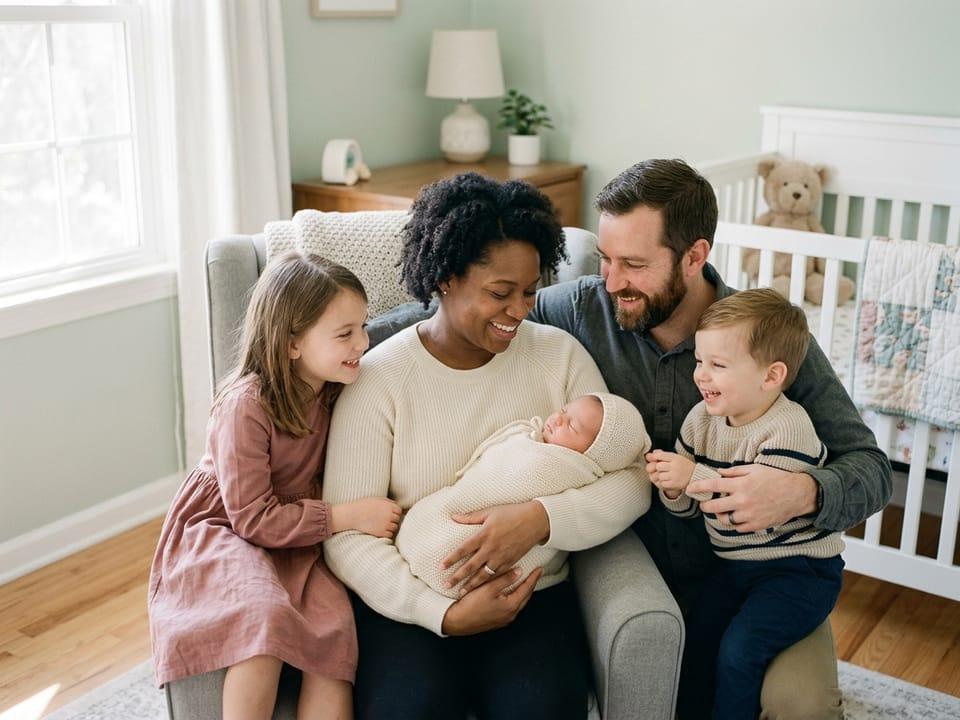
Waiting has an upside that's easy to miss. By the second month, the parent who gave birth is often more able to sit, stand and actually enjoy being photographed, and older siblings have had time to get used to the new arrival. Grandparents who couldn't travel for the birth may have visited by then. A newborn photo taken at six weeks with everyone in it may well be the one a family ends up framing.
Plan these around feeds and naps rather than the clock, and expect breaks. Our guide to newborn family photos at home covers how to seat a sibling holding the baby with an adult's hand ready, and how to get the person taking the photos into the frame.
Season and hemisphere change the light, too. A December baby in Ireland or the UK arrives in short, low winter days, so plan to shoot near a window in the middle of the day. In New Zealand the same month is early summer, and the problem is more often harsh midday sun that needs a sheer curtain.
Book a photographer around the baby, not the calendar
If posed, curled images are what you want, that's the clearest case for a professional. Newborn posing means supporting the baby throughout, keeping them warm and knowing when to stop, and photographers who've trained for it are worth seeking out. Certification isn't required, so ask what training they've had. If you book before the birth, around the due date, ask how they handle a baby who arrives early or late, or a stay in hospital, and whether they offer sessions for older babies if the first weeks don't work out. Prices are set locally, in dollars, pounds or euros, and vary with region, season and package, so compare what each one includes rather than the headline figure.
If a grandparent overseas missed the first weeks entirely, pokesta can use AI to make a newborn family photo with everyone together, from each person's own phone pictures ($1 per photo, the first one free). You can also browse what other families have shared under newborn photos.
Pick the date by how the family is doing
The best date for newborn photos isn't day seven or day ten. It's the first day the parent who gave birth wants to be in the picture and the baby is fed, warm and settled. If that turns out to be week five, the photos will show a baby who looks back at the camera, and that's a keepsake of its own.