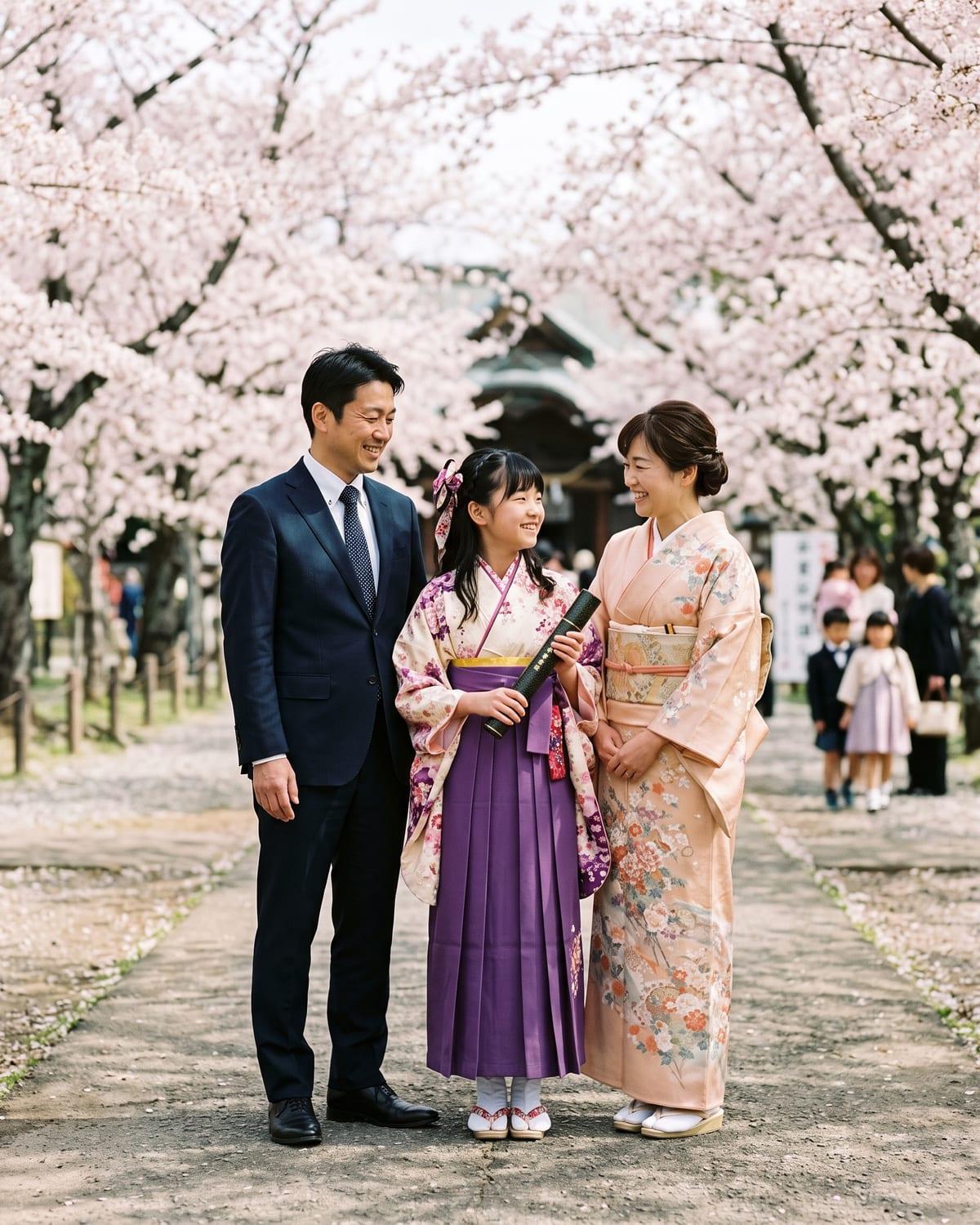
Hay Fever at Kindergarten Graduation: Good Photos Despite Itchy Eyes and a Runny Nose
pokesta Editorial Team · Updated October 22, 2026
Sotsuen, the graduation from kindergarten or nursery school in Japan, takes place in March, right in the season when Japanese cedar (sugi) pollen is heavy. To keep red eyes and a runny nose out of the photos, the first step is seeing a doctor early in the new year to plan treatment. On top of that, prepare three things: move the photos indoors or to low-pollen times, carry something to dab eyes and nose without rubbing, and decide when the mask comes off. Any redness that remains can be toned down a little in editing afterward.
Talk to a doctor about treatment before the pollen arrives
According to the Japan Ophthalmologists Association, cedar pollen flies from around February to March. Starting anti-allergy eye drops before the pollen begins can make symptoms milder or the bad stretch shorter, and for cedar pollen allergy the guideline is to begin around late January. If you're preparing with graduation in mind, see a pediatrician, ophthalmologist or ear, nose and throat doctor once the new year starts.
The association stresses using eye drops prescribed by an eye doctor and warns against reaching for over-the-counter drops on your own judgment. Which medicines suit a child depends on age and symptoms, so ask the doctor how to use them around the ceremony too. This article covers planning the photos; dealing with symptoms comes down to the doctor first.
Move the photos indoors or to low-pollen times
Japan's Ministry of the Environment says in its hay fever manual that cedar pollen counts rise about seven to ten days after the season starts, and stay high for about four weeks after that. Within that period, counts are especially high on sunny, warm days, dry and windy days, the day after rain, and after two or three warm days in a row. By time of day, pollen generally peaks around midday and after sunset.
You can't choose the graduation date, but you can choose when and where to take photos. Rather than lingering in the playground around midday after the ceremony, take a few quick shots at the graduation sign as soon as you arrive and do the rest indoors, in the classroom or entrance hall. That cuts the time your child spends in the pollen. On a windy day, limiting outdoor shots to a few at the sign is a reasonable call.
Clothing helps too. The same manual notes that wool picks up more pollen than cotton or synthetics and suggests avoiding wool on the outer layer when going out. If your child wears a layer over the ceremony outfit, a smooth-surfaced fabric can be brushed off quickly before photos.
The night before matters as well. The manual says that opening windows wide to air the house in peak season lets in a large amount of pollen, while opening them only about 10 cm with a lace curtain drawn cuts the pollen coming in to roughly a quarter. Good sleep is also described as important for keeping the immune system working normally. The night before graduation, keep airing to a minimum and put your child to bed a little earlier than usual.
Dab eyes and nose; don't rub
The Japan Ophthalmologists Association explains that scratching itchy eyes can make symptoms worse the more you scratch. Before photos, the thing to avoid most is a child rubbing their eyes. Agree with your child in advance that when their eyes itch, you'll press gently over the eyelid with a clean handkerchief or tissue instead.
For a runny nose, wipe by pressing lightly under the nose with a soft tissue rather than rubbing, to keep irritation down. Making "just press" the rule right before photos gives your child an easy action to remember. Glasses help too: in an experiment cited in the manual, ordinary glasses cut the pollen reaching the eyes by about 40 percent, and pollen glasses by about 65 percent. Even if the glasses come off for photos, wearing them during the ceremony helps keep the eyes calmer.
Take the mask off just before a shot and put it back right after
A mask reduces inhaled pollen to roughly one third to one sixth. Keep it on during the ceremony and take it off only for photos, and you get faces in the pictures while holding symptoms down. That means narrowing the shots in advance. Pick about three, such as at the sign, holding the diploma and with the family, remove the mask right before each and put it back as soon as you're done. A close-fitting mask blocks more pollen but can leave marks on the cheeks or nose, so for the one shot that matters most, like the sign, take it off a few minutes early.
Compare studio, hired photographer and DIY by how they handle pollen days
If you're taking keepsake photos on a different day, compare the options by how well they cope with pollen. A studio is indoors, so outdoor pollen barely matters. For a child with heavy symptoms, or a family who wants a polished photo without worrying about red eyes, a studio is worth it.
An on-location shoot happens outside, so heavy-pollen days don't suit it. With a service like fotowa, though, where changing the date is free (as of October 2026), you can steer around windy days or bad symptom days. Its base fee is 24,200 yen on weekdays and 29,700 yen on weekends and holidays (tax included); prices vary by season and plan, so check the official site. If you shoot yourselves, you can skip the day after rain, pick a day when symptoms are mild and retake as often as you like.
Studio
Hired photographer
Do it yourselves
Pollen exposure
Almost none indoors
High outdoors
You pick the place and day
Rescheduling
Ask the studio
Depends on the service
Anytime
Best for
Heavy symptoms, wanting a polished photo
Mild days, wanting scenery
Keeping costs down, choosing the day
Soften leftover redness in editing, or create the photo
After the shoot, adjusting brightness and color a little in your phone's editor can make red eyes and a pink nose less noticeable. Change the shape of the face or the skin too much, though, and your child stops looking like themselves. Keeping edits to brightness and color is explained in tidying up keepsake photos on your phone. Photographing during the ceremony is covered in photographing your child at kindergarten graduation, and drawing out a shy child's expression in kindergarten graduation photo poses.
Some years, symptoms are bad enough that a smiling photo just doesn't happen. With pokesta, you can create a graduation family photo with AI from a photo of your child taken on a symptom-free day, for $1 per photo, without leaving home. It's a created image, not a record of the ceremony, but it gives you one picture of their usual, un-rubbed face. The first photo is free, so try it with a photo from a good day.