Headbands and Hats for Babies with Little Hair: Choosing Them, Fit and Cord Safety

pokesta Editorial Team · Updated October 12, 2026

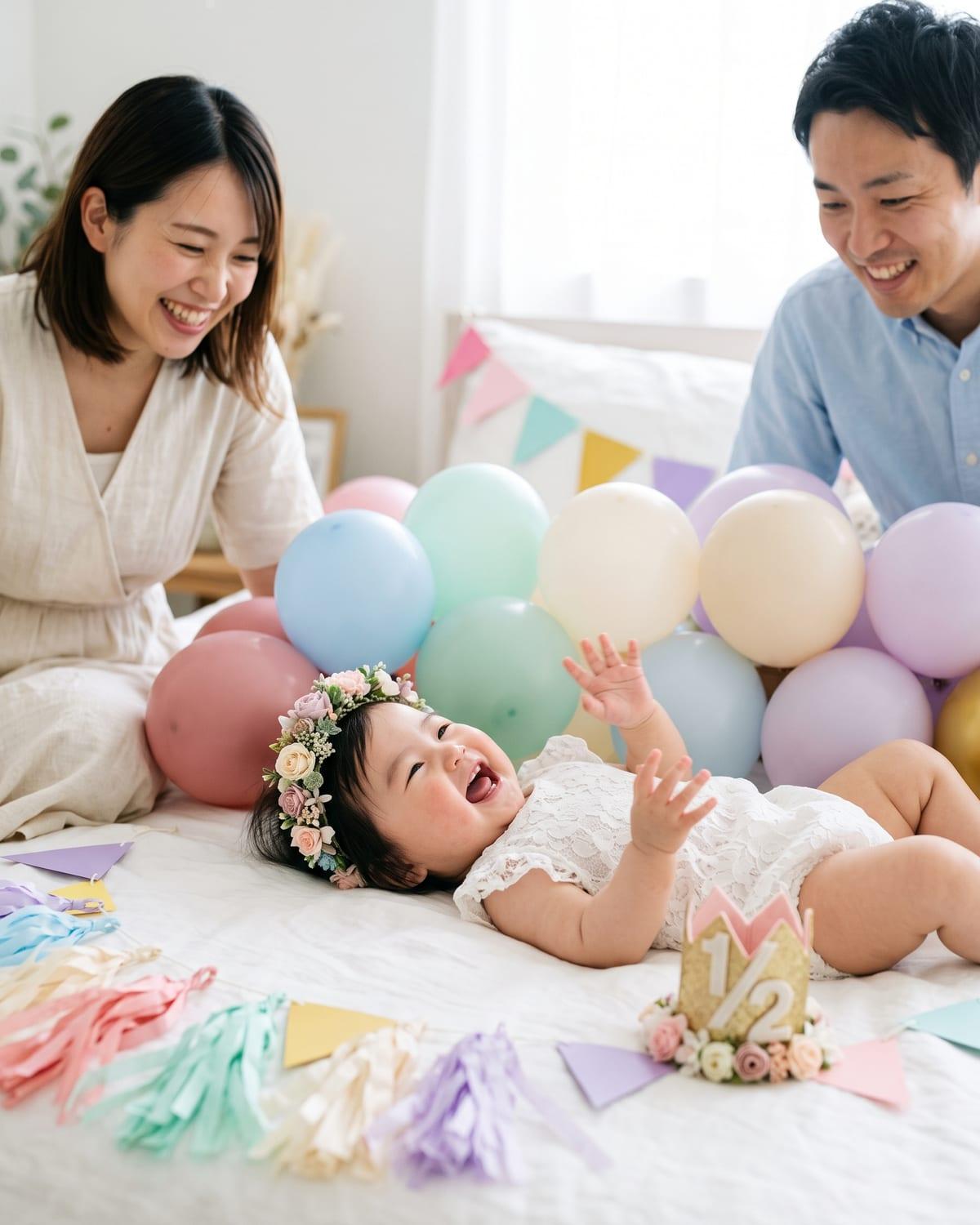
Half Birthday family photo (AI-generated image)

At around six months, plenty of babies still have very little hair, or are partway through losing their newborn hair while new hair grows in. For half-birthday photos (the six-month milestone many families in Japan celebrate with photos at home), a headband or hat adds color around the face and brightens the whole picture. The ones that work best are wide, soft headbands or hats that follow the shape of the head. Check that no trim can come off and no cord hangs around the neck, and put them on only for the few minutes you're shooting.

Little hair: use light instead of hiding it

Before you pick any accessories, take one photo with nothing on the baby's head. Shoot with the window behind the baby, a little backlit, and soft new hair catches the light at the edges so each fine strand shows. Turn their profile toward the window and the curve of the head and the fuzz both come out beautifully. Years later, once their hair has grown in, you may find that the photo of their head as it was at this age is the one you love more than the decorated ones.

Then bring in headbands and hats when you want to add color or a mood. They're easier to choose if you think of them as part of the outfit, not a stand-in for hair.

Headbands: wide, soft, with trims sewn on

Baby headbands range from thin elastic with a big bow to wide knit bands. For a baby with little hair, the easiest are stretchy fabric bands about 3 to 5 centimeters wide. They rest on a broad area of the head, so they don't dig in at one point the way thin elastic does, and they don't slip as easily either.

Once it's on, check that an adult finger slides easily between the band and the head. Too tight, and it leaves a red mark on the forehead that shows up in the next photo. Too loose, and it slides down over the eyes when the baby moves. Take it off often between shots and check the mark has faded before the next one.

Choose trims that are sewn to the band. Pearls, beads and small bows that are glued on can come off when pulled. Japan's Consumer Affairs Agency puts the size of a three-year-old's mouth at about 4 centimeters across and warns that anything smaller can go in the mouth and be swallowed. Six-month-olds put whatever they touch straight into their mouths. Before using a headband, give each trim a gentle tug to make sure nothing is loose.

Color and size shape the photo too. Pick up one color that's already in the outfit and the look comes together. With a white romper, try cream, pale pink or a muted light blue, just a shade deeper than the outfit. If the outfit has a pattern, keep the headband plain. Pattern on pattern leaves the eye with nowhere to land.

It's tempting to think a bigger bow or flower photographs better, but a baby's face is very small. Once the trim is about half the size of the face, people look at it before they look at the eyes. In lying-down shots taken from above, a trim on the side of the head looks larger than you expect, so take a test shot, check on the screen that the baby's face is still the focus, and then shoot for real.

Hats and bonnets: don't leave the ties knotted

For babies who won't tolerate a headband, a hat that covers the whole head is often better. Knit hats, baby hats with a small brim, hats with bear or bunny ears: anything that follows the shape of the head works regardless of how much hair there is. On a knit hat with a pompom, check that the pompom is firmly sewn on.

A bonnet tied under the chin has a lovely classic look, but the ties need care. Japan's industrial standard for cords on children's clothing (JIS L 4129) does not allow cords that hang from the head or neck area. The Consumer Affairs Agency explains that the standard doesn't regulate sales, so products that don't meet it may still be on the market. Tie a bonnet's ribbon loosely only to shape it for the photo, then untie it and take the bonnet off as soon as you're done.

Babies sometimes fall asleep right after lying-down shots. The Consumer Affairs Agency advises against leaving anything with cords near a sleeping baby's face. If the baby looks drowsy, take off headbands and hats alike.

For boys: hats, or style it at the neck

For a boy's half birthday, a hat is often easier to work with than a headband. A knit watch cap, a beret or a short-brimmed cap looks natural even with little hair. A hat covers the forehead and draws attention to the eyes, so the baby's expression comes through clearly.

If you'd rather leave the head bare, you can build the outfit at the neck and chest with a bow tie or suspenders. Bow ties usually fasten with a clip or elastic, so check they aren't digging into the baby's neck and that the fastener can't come loose and end up in the baby's mouth. And of course, a bow or flower headband on a boy is perfectly fine too. For more on colors and props, see Half-birthday photo ideas for boys and Half-birthday photo ideas for girls.

If there's just enough hair to tie up

If the hair on top or at the front has grown a little, a tiny tuft tied up on top of the head (called a chonmage in Japan, after the old samurai topknot) makes a photo that's very much of this age. Use a soft elastic made for baby hair, not a thin adult one, and don't pull the hair too tight. Put small elastics and hairpins back in their case as soon as they come out, and never leave them on the floor. Hair clips tend to slide right off a baby with little hair and can end up on the floor without anyone noticing.

If you'd like a photo with the whole family, you can create a half-birthday family photo with AI on pokesta from each person's own phone photos, choosing outfits and hair accessories (one free try after signing up, then $1 per photo).

On only for the photo, then out of reach

Headbands and hats are costume pieces for the photo. Put them on just for the few minutes you're shooting, then take them off and put them where the baby can't reach. One photo with nothing on, one with an accessory. With those two, everything that makes a baby this age who they are, little hair included, is captured.

References