Handprints, Height and Their Own Words: Keepsakes from the First Day of Preschool

pokesta Editorial Team · Updated October 12, 2026

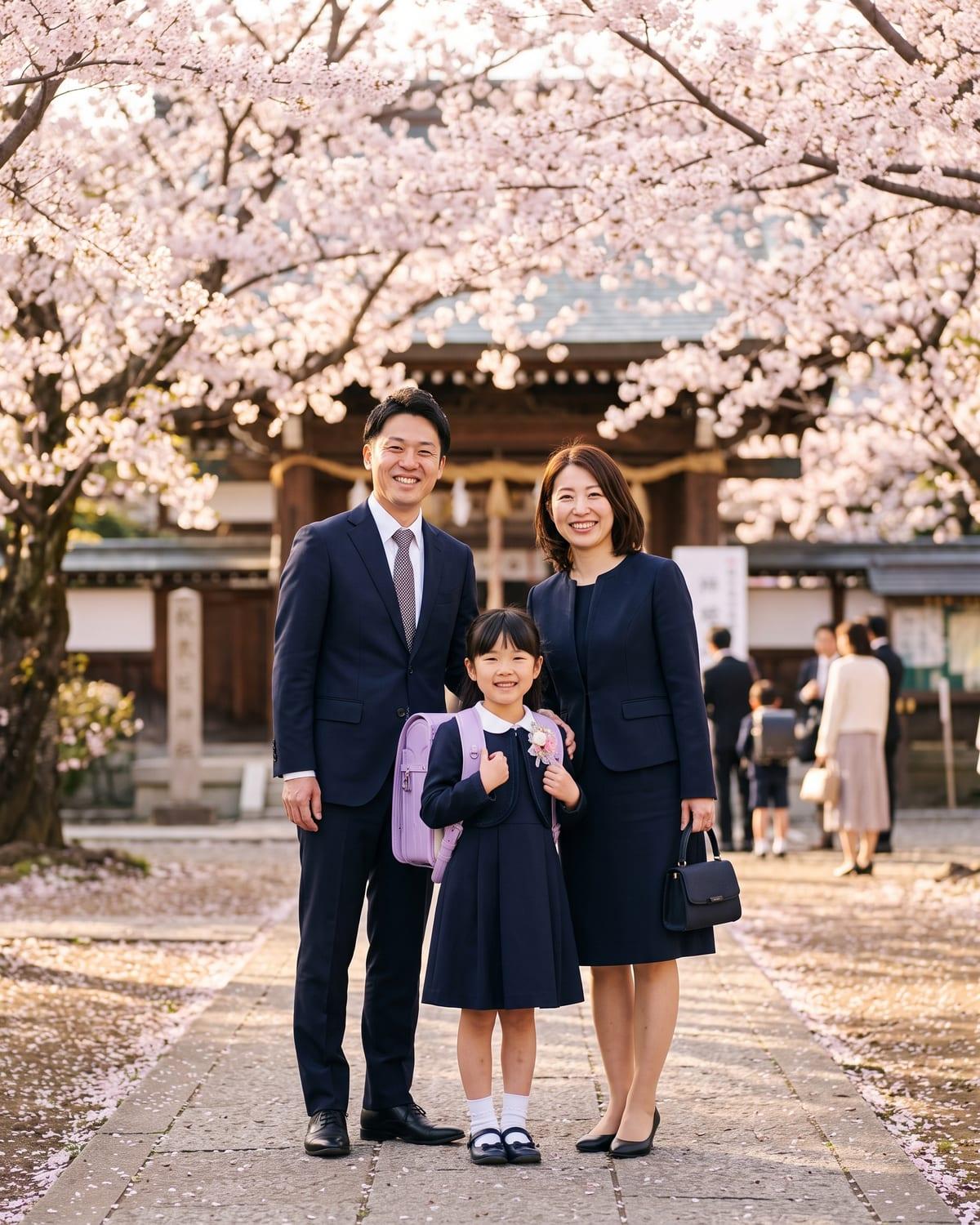
School Entrance family photo (AI-generated image)

Photos from the first day of preschool tend to prompt the same reaction a few years later: "So small!" To keep a record of just how small, note down a handprint, a height and something your child said that day alongside the photos. In Japan, children usually start kindergarten at three with a Nyuenshiki (an entrance ceremony for new children, held in April), and over the three years to graduation they grow roughly 20 centimeters. Photograph the records together with your child, repeat the same thing on graduation day, and the change is plain to see.

About 20 centimeters in three years

According to the Children and Families Agency's 2023 national survey of infant and child growth, the average height at three years to three and a half is 94.3 cm for boys and 93.2 cm for girls. At six years to six and a half, it's 114.5 cm for boys and 113.9 cm for girls. From starting in the youngest class to graduating from the oldest, that's around 20 cm on average.

Twenty centimeters is roughly the span of an adult's outstretched hand. Hands grow in the same way. It's common for the indoor shoes and hat bought for the first day to be outgrown and replaced by the final year. Seen every day, the change is easy to miss, which is why it's worth recording the starting size in numbers and in shapes.

Children grow at their own pace, and there's no need to compare with the average. What you're recording is your own child's three years, not how they measure up to others.

At three, they can make a handprint themselves

Baby handprints are usually taken while the baby sleeps, but a three-year-old can press their own hand down. Many want to do it themselves, so make the handprint part of celebrating the start of preschool.

Choose an ink made for handprints and intended for use on skin. Paints and markers are art materials meant for paper. The Art and Creative Materials Institute (ACMI), the US body that certifies art materials for safety, notes that products intended to be applied to the body, such as face paint, are regulated as cosmetics rather than art materials. More on choosing handprint ink is in our article on half-birthday handprints and footprints.

The trick is to put the paper on the floor and have your child stand and press down with their weight from above. Pressing while sitting puts the pressure in the fingertips, and the middle of the palm comes out faint. Ask them to spread their fingers a little, and gently press the back of their hand. It rarely works on the first try, so have at least three sheets ready. Keep the faint ones too; they're still a record your child made.

Rather than the morning of the ceremony, do it the day before or on the first weekend after. There's no risk of ink on the uniform, and you can pick a time when your child is in a good mood. Write the date and "first day of preschool" at the edge of the paper.

Plan the setup around where you'll do it. Spread newspaper on the floor near the bathroom sink, lay the paper on top, and keep a damp towel within reach. As soon as the print is done, wrap the hand in the towel and head straight to the sink. If inky hands never walk through the house, you can relax and enjoy watching. Leave the paper where it is until it dries.

If you get several good prints, keep one and send the others with a thank-you to grandparents who gave an entrance gift. How to say thank you is covered in our article on entrance gifts.

Mark height on paper you can take with you

The old habit of notching heights on a wooden pillar doesn't work well if you move or rent. Instead, stick a long strip of paper or masking tape to the wall and mark it. Paper can be taken down and kept, and if you move, you can continue on the same strip.

Have your child stand straight with heels against the wall, hold a book or other flat object level on their head, and mark the spot. Then photograph your child standing next to the mark. The position of the mark next to their head says more later than the number does. Write the date and "first day" beside it. Add a mark on the same paper each time they move up a class or have a birthday, and by graduation there'll be a staircase of marks on one strip.

It's handy to note the measurement in your child's health record book too. In Japan, the Maternal and Child Health Handbook includes growth curves for height and weight, and handbooks issued from April 2025 onward use curves based on the 2023 survey.

Write down what they say, exactly as they say it

The part of the first-day record you'll most want to reread may be your child's own words. At bedtime, ask a few questions: What's your teacher's name? What was the most fun thing today? What's your favorite food? What do you want to be when you grow up?

Write the answers down word for word, without correcting them. "I don't know the teacher's name" is a perfectly good answer from a three-year-old. If you can, film them answering for about 30 seconds. Their voice and way of talking are things neither photos nor writing capture.

Collect the notes on the back of the handprint paper or on a sheet of card. Ask the same questions in the same order on graduation day, and three years of change line up in words too.

A letter from you adds depth to the record. What you were thinking on that first morning, how you prepared the night before, what worried you about your child and what you were looking forward to. Seal it in an envelope marked "open on graduation day." Reading it three years later, you may find that most of those worries quietly passed.

Put the records and your child in one photo

Handprint, height mark and notes all make a stronger record when photographed with your child than on their own.

The simplest shot is your child holding the handprint in front of their chest, framed from the waist up. Take another close-up of their real hand laid on top of the print. On graduation day, place their hand on the same paper, and the fingers spilling past the print show the growth.

You can also arrange things and shoot from above. On the floor near a window, lay out the handprint, name badge, school hat, indoor shoes and a card with the date, and photograph them from directly overhead. Use only natural window light, so ceiling lights don't cast shadows. For shooting in the same spot every year from start to graduation, see our article on fixed-point growth photos.

On graduation day, same paper, same questions

The first-day record isn't finished on its own. On graduation day, make a handprint on paper of the same size, mark their height on the same strip on the wall, and ask the same questions. Only then do the three years take shape. Write the paper size and the questions down in your first-day notes: a handover to yourself three years from now.

References