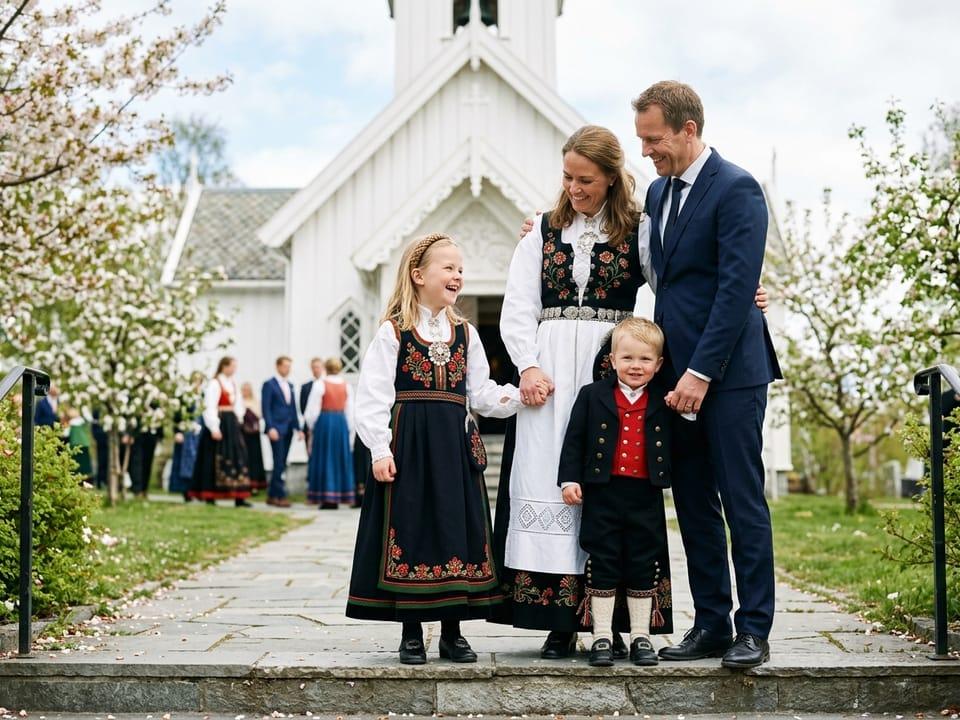
Norwegian Confirmation Photos: Church vs. Humanist Ceremonies, Studio Portraits and Snapshots
pokesta Editorial Team · Updated October 12, 2026
In Norway, confirmation (konfirmasjon), usually in the year a teenager is in ninth grade, is the biggest family occasion of the teenage years. Whether your teenager is confirmed in church or at a humanist ceremony changes both the date and the moments you can photograph. A simple plan works for either: get the polished portrait at a studio on a separate day and, on the day itself, stick to snapshots around the ceremony and at the family celebration.
Until 1912, everyone had to be confirmed
Confirmation began as a Christian rite confirming baptism, and it came to mark the step from childhood to adulthood. In Denmark-Norway it became compulsory by law in 1736. Without a confirmation certificate you could not marry, be called up for military service, stand as a godparent or act as a witness in court. The obligation ended in 1912.
Today it's a choice. According to the Norwegian encyclopedia Store norske leksikon, around 32,570 young people were confirmed in the Church of Norway in 2023, about 48 percent of all 15-year-olds living in Norway, down from 93 percent in 1960. In 2022, almost 13,800 had a humanist confirmation, a little over 21 percent of the age group. So within a single school year, some teenagers are confirmed in church, some at a humanist ceremony and some not at all.
Church and humanist ceremonies give you different moments
In the Church of Norway (Den norske kirke), confirmation most commonly takes place in the year the young person is in ninth grade. The church says all young people are welcome, with no requirement about what they believe. Confirmands need to be baptized, but they can be baptized during the confirmation period, which lasts about eight months and ends with the confirmation service. The service runs from 45 minutes to an hour, a little longer when there are many confirmands. After music, Bible readings and a sermon, the confirmands go up to the altar one by one and are prayed for by name. During that prayer, family members may stand with them or stay seated.
The non-religious tradition began on 6 May 1951, when 34 young people took part in a civil confirmation ceremony in the University Aula in Oslo. The Norwegian Humanist Association (Human-Etisk Forbund) took over the arrangement in 1957, and in 2005 the name changed to humanist confirmation (humanistisk konfirmasjon). A course on ethics, worldviews and human rights ends in a ceremony with family and friends as guests, usually held in a town hall or cultural centre, with a welcome speech, music or other performances, the handing out of course certificates and a procession. There is also a summer-camp option during the school holidays, with ceremonies in Oslo, Bergen and Trondheim in September. Other faith communities hold confirmations as well.
From a photographer's point of view, the difference is clear. In church, the prayer at the altar is each confirmand's moment, but it happens in the middle of a service, so the most you can do is shoot quietly from your seat. At a humanist ceremony, the certificate and the procession are the highlights, and photo rules depend on the venue and organizer. Either way, set aside time after the ceremony for photos with just the family.
Spring or autumn: book the studio once you know the date
Some parishes hold confirmations in spring, others in autumn, and some let families choose, so check with your local church. A spring confirmation falls in the same season as 17 May, Constitution Day, which means bunad and festive clothes can be sorted out in one go. For coordinating the rest of the family's colours, see our 17 May family photo guide.
As for clothing, the church notes that most people wear their best clothes and that many who own a festdrakt, a kofte (traditional knitted jacket) or a bunad choose to wear it. There are no rules. The studio session can be before or after the confirmation. If it's before, the bunad or outfit has to be ready by then, so work backwards from the date, including time for tailoring or alterations.
What a studio gives you: a relaxed face and every detail
Confirmation day is packed: the ceremony, getting from place to place, the party. There's hardly any time for a proper portrait. In a studio, with good light and a clean background, you can capture the bunad's embroidery and silver in full detail. Around fifteen is also exactly the age when being photographed in front of others feels awkward. With only the photographer and the family watching, natural expressions come far more easily than in a crowd on the day.
Before you book, look for bunad or formal-wear portraits in the studio's portfolio, and ask whether family or sibling photos can be added and whether they shoot outdoors. Check how many digital images are included, whether prints are part of the package, and when the finished photos will arrive. Delivery dates matter if you want pictures on display at the party or on thank-you cards. Prices vary widely, so compare what's included rather than just the total. The day before the session, press the bunad and polish the silver. It makes a visible difference.
On the day, the family covers the service and the party
On photography during the service, the church's guidance is that you may take pictures but should be discreet, and that you should follow any announcement about photos at the start. It's best to skip the flash and not leave your seat to get closer. Confirmands usually sit in the front pews, often marked with signs. Services start on time, and if you arrive about fifteen minutes early, as the church suggests, you'll have a calm moment for a photo of your teenager and the family before going in. Humanist ceremonies and other venues may have different rules, so check with the organizer.
After the service, the area outside the church fills with families. That's when photos of the confirmand alone or with family and friends are usually possible. Rather than waiting for the crowd to clear, move a little way off and take the group photo quickly. If godparents (faddere) or grandparents are there, include them.
Many families then host a celebration with a confirmation cake, and invited guests usually bring a gift. At the party, the best window is the fifteen minutes before guests arrive: photograph your confirmand with the decorated cake table and take the whole-family shot then. Once the party starts, whoever is taking pictures becomes a host too. Speeches are usually given by parents and godparents, and some guests write a song for everyone to sing or hand the confirmand a letter. Point the camera at your teenager listening rather than at the speaker. Those are the pictures people come back to.
Ask your fifteen-year-old first
Don't plan the photos without your teenager. Ask what kind of pictures they want and which ones they're happy to have posted on social media or shared in the family group chat. By fifteen, most young people have clear views about how their photos are used. Asking up front will also make their expression a lot more relaxed when you point the camera at them on the day.
In years when grandparents living abroad can't come, or someone in the family can't attend, pokesta can use AI to create a family photo in the outfits and setting of this occasion from each person's own phone photos ($1 per photo, first one free).