Newborn Shoot Booked, Baby Arrived Early, Late or in Hospital: How Rescheduling Works in the Netherlands

pokesta Editorial Team · Updated November 6, 2026

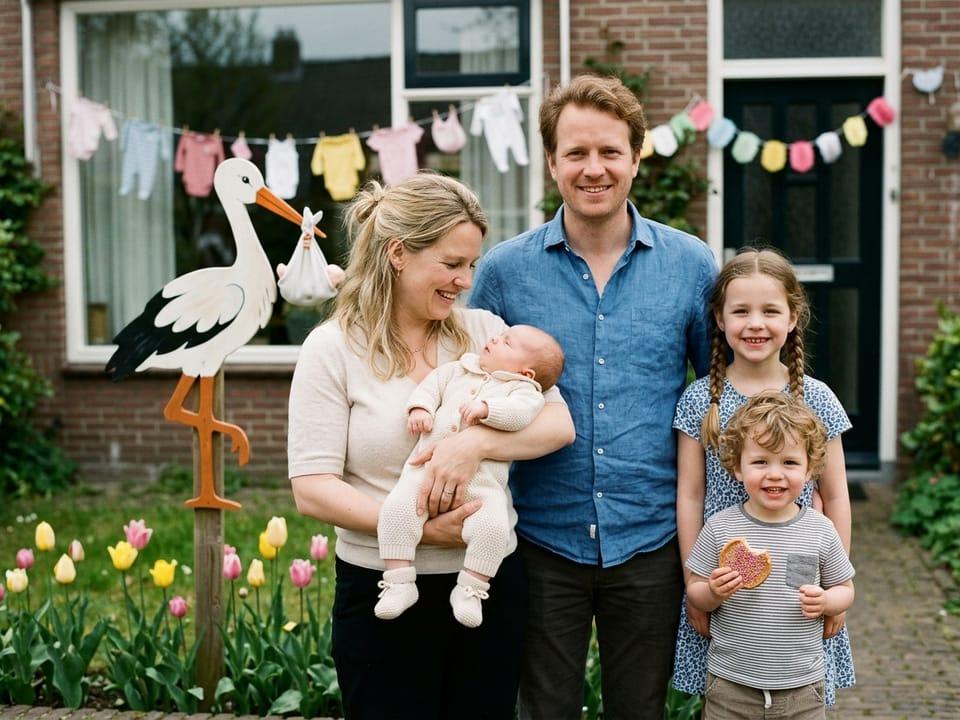
New baby celebration family photo (AI-generated image)

A newborn shoot booked during pregnancy is planned around the due date, so a baby who arrives early, late or in hospital usually means moving the date, not losing the shoot. What happens to your deposit depends on the terms you accepted. One Dutch photographer's terms, for example, allow a newborn session to be moved once free of charge when the health of mother or baby requires it, as long as a new date is agreed within eight days. Read that clause now, send a short message once the baby is here, and put recovery ahead of any "ideal age" for photos.

A date booked in pregnancy is always a guess

The due date is simply the day you reach 40 weeks of pregnancy, and Thuisarts.nl, the patient site of the Dutch College of General Practitioners, points out that most babies are not born on exactly that day. That's normal. Any shoot date you pick months ahead is therefore an estimate, and a good photographer treats it as one.

Photographers also work to different windows. Puur Kinderfotografie, a studio in Zaanstad, says a newborn shoot ideally takes place within the first 21 days, while the baby still sleeps a lot. Yvon's Fotografie, which photographs newborn lifestyle sessions at home from Doetinchem, schedules them from two weeks to two months after the birth. Which kind of session you booked tells you how much room you have when plans shift.

What the terms decide: deposit, moving and cancelling

Most of the answer sits in the booking terms (algemene voorwaarden). At Puur Kinderfotografie, your date is confirmed once you pay a 25% deposit. Yvon's Fotografie publishes its terms as a PDF dated 2022: a newborn session can be moved once without charge when circumstances such as the health of mother or baby make it necessary, a new appointment has to be made within eight days, and if it isn't, the booking lapses and current prices apply when you book again. The same terms charge 50% of the total for cancelling within four weeks of the shoot, 75% within two weeks, and the full amount with less than two weeks' notice.

The practical lesson is to ask for a move, not a cancellation, and to do it in writing. ACM ConsuWijzer, the consumer information service of the Dutch competition and consumer authority, says a company may charge cancellation costs when you have no reason to cancel for free, but those costs must be reasonable, and the company must be able to show it actually incurred them.

When you book, these are the questions worth having answered in writing:

  • Is the date provisional until the birth, and how soon after it should we contact you?
  • Can the session be moved for medical reasons, how often, and by when must the new date be set?
  • What happens to the deposit if we cancel, and when do cancellation fees rise?
  • If the baby is older than your usual window, does the session or the price change?
  • Do you photograph in hospital, and who arranges permission there?

Early, late, in hospital or after a C-section

An early baby may bring the shoot forward, or push it back if mother or baby has to stay in hospital. Photographing on a ward depends on the hospital's rules, so ask the nurses before inviting anyone in. A late baby simply moves the date later; if the photographer is fully booked that week, ask for the next free day inside their window.

A caesarean changes the mother's side of the plan more than the baby's. According to Thuisarts, you usually stay in hospital for two or three days, should avoid household chores for the first two weeks, shouldn't drive while you're still in pain or not fully alert, and need about six weeks before you can do everything again. A studio session in the first fortnight means someone else drives and she sits throughout. A session at home, or a later date, may suit much better.

Studio, home session or your own photos when plans change

A studio session is the least forgiving when recovery is slow: it involves a car trip with a newborn and a fixed slot. A photographer who comes to your home removes the travel, though travel costs may apply beyond a set distance. Your own phone has no deposit to lose and works on any day, including the first hours in hospital if photos are allowed there. Our guide to photographing the kraamtijd at home covers light and newborn safety.

Paying a professional still makes sense if you want posed newborn portraits within a short window, or a family portrait with both parents in it. If the birth got complicated, the photos you take yourselves in those first days are often the ones that matter. And if you do go ahead, our piece on what happens when the baby won't sleep at the shoot helps with the day itself.

The message to send after the birth

Keep it short and factual. Something like this works:

Hi [name], our baby was born on [date], [number] days before the due date we booked with. Mother and baby are [at home / still in hospital]. We'd like to move our newborn session under your rescheduling terms. Could you tell us your next available dates, and whether anything changes if the baby is older than [number] days by then?

Send it once you're settled, not from the delivery room. A day or two rarely matters to the photos, and it matters a great deal to you.

Health first, then the photos

There's no need to chase a particular number of days old. A baby photographed at four weeks, awake and looking around, is still a newborn photo of your family. If the new date is a while off, pokesta can create a newborn family portrait with AI from phone photos you already have, at $1 per photo with the first photo free. It is a made image, not a record of those days, but trying it with a photo from the hospital or your first week at home costs nothing and may help you decide whether to rebook: make one here.

References