
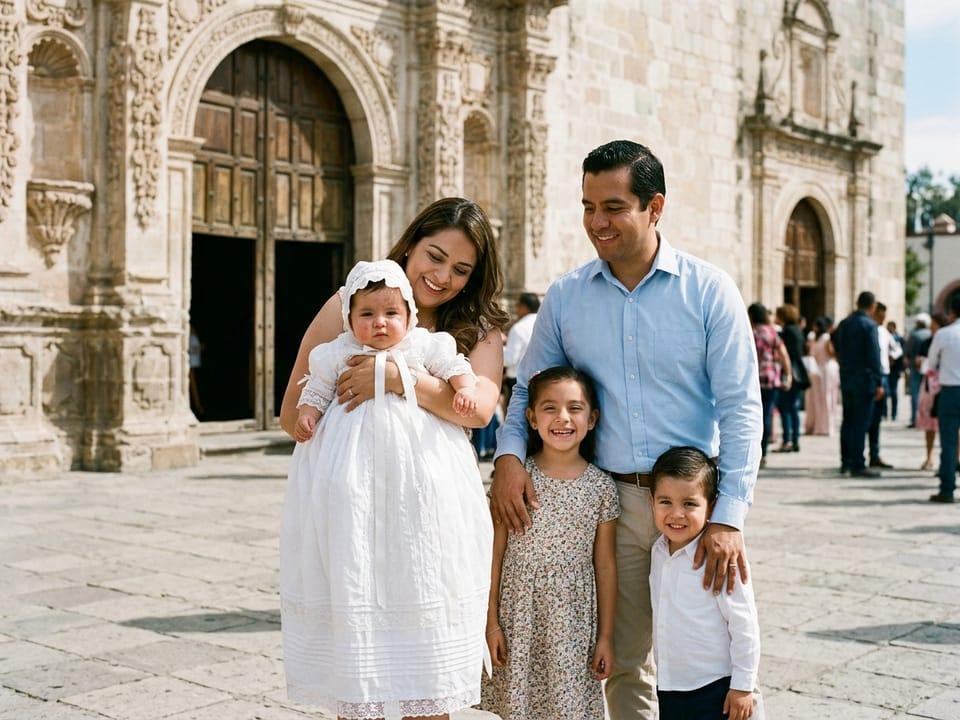
Whether you can take photos at a baptism in church is decided by the parish, and the answers run from "yes, with common sense" to "only our photographer" to "after the rite, please". Ask when you register, choose one person to photograph the rite, keep the flash off unless you're told otherwise, and learn the order of the ceremony so that person is in place for the water and the candle. Families typing ¿se puede tomar fotos en un bautizo? get the same answer whether the baptism is in Mexico, Spain, Peru or a Spanish-language parish in the US: ask the parroquia first.
The parish decides, and parishes disagree
There's no single rule. When The Evangelist, the newspaper of the Diocese of Albany in New York, asked local priests about cameras in 2018, one allowed photos at baptisms "as long as they're in good taste", another encouraged photos and video and asked people to use common sense, and a third said guests usually take a picture or two without distracting anyone. A fourth still allowed photos but was considering a policy, because guests "come between me and the godparents and parents, and come right up to the font."
Etiquette advice in Spain points the same way. A protocol expert interviewed by El Debate in 2026 said photos and video at a baptism should be limited and preferably left to one designated person, with phones silenced. Some parishes go further and allow only a photographer they already work with; our guide to First Communion photos in Spain describes a Madrid parish that does this for First Communions. A family baptizing in Texas may also meet different rules from the ones at the home parish in Puebla or Arequipa, so don't assume the last baptism you attended sets the pattern.
Some dioceses put their rules in writing. The Diocese of Orlando in Florida has a photography and video policy, updated in May 2017, for photographers and videographers at diocesan liturgies with the bishop. They stay out of the sanctuary, the area around the altar, and away from it; they treat the front pew as an invisible line not to be crossed; they move only while the congregation is standing, and discreetly; and they don't use flash. Photographers hired for diocesan celebrations must also comply with the Safe Environment Policy, take safe environment training and agree to be fingerprinted. That policy isn't written for an ordinary parish baptism, but it shows what a church tends to expect from whoever holds the camera.
Ask early, in person or by phone. In Mexico, pre-baptism talks (pláticas prebautismales) are a good moment; at the Basílica de Guadalupe in Mexico City they're compulsory. Take these questions with you:
- May family members take photos during the rite, or only before and after, and is flash ever allowed?
- Where may the person taking photos stand, and is the area around the altar off-limits?
- May we bring our own photographer, and must they register or speak to the priest first?
- May we take a posed photo at the font once the rite is over?
Ask, too, whether other families will be baptized in the same ceremony, because that decides how long you'll have at the font.
The rite in order, and the moments worth a frame
The Catechism of the Catholic Church walks through the celebration step by step, and knowing the order lets your photographer be ready instead of chasing. On the threshold of the celebration, the child is marked with the sign of the cross. The Word of God is proclaimed. Then come one or more prayers of exorcism, with an anointing with the oil of catechumens or a laying on of hands, and the blessing of the baptismal water. The parents and godparents renounce evil and profess the faith on the child's behalf.
The baptism itself follows: in the Latin Church, water is poured three times over the head (or the child is immersed three times) as the priest or deacon says the Trinitarian formula. The child is then anointed with sacred chrism, clothed in a white garment that signifies having "put on Christ", and given a candle lit from the Easter candle. The Catechism notes that infants are brought to the altar for the Our Father, and the rite ends with a solemn blessing in which the mother's blessing has a special place.
For photos, that leaves a few clear moments: the sign of the cross on the child's forehead, the water, the chrism, the white garment, the lighting of the candle from the Easter candle, and the family together at the end. The pouring of water is over in seconds, so use burst mode and don't check the screen until it's done. During the readings and prayers, lower the phone and take part.