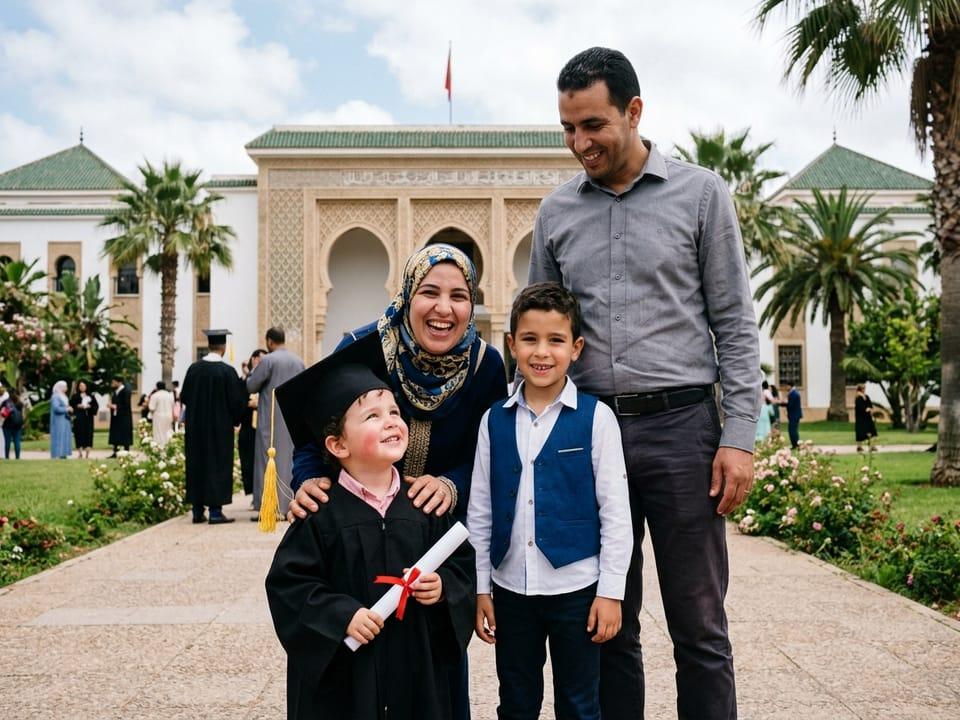
Tears are part of kindergarten graduations; EFI Casablanca described its own Grande Section ceremony as full of smiles "and sometimes tears." A child who cries on stage can still end the day with a good family photo. Practise with the gown and cap at home, protect the nap on the day, and tell your child exactly where you'll be sitting. Then plan the photos for before and after the ceremony, not for the stage.
Why the stage feels so big at five
For a five-year-old, the end-of-year show packs several hard things into one hour. The hall is unfamiliar and full of strangers, the lights are bright, parents are suddenly far away in the audience, and the gown and cap feel strange. EFI Casablanca's ceremony, for example, was on 22 June 2026, and June heat adds to it. Climate normals for 1991 to 2020 give Marrakech an average daily high of 33.6°C in June; on the coast, Rabat averages 25.6°C. An indoor hall full of families warms up quickly, and a gown over regular clothes makes it worse.
Timing matters too. If the ceremony is in the late afternoon or evening, it falls at the hour when young children are tired and hungry. None of this means your child will fall apart. It means a wobble is normal and worth planning for.
A week of practice at home
Bring the gown and cap home as soon as the school hands them out, or borrow them for a few days. Let your child wear them around the house: to watch cartoons, to eat a snack, to walk across the salon. A cap that's been on a few times is much less likely to be pulled off on stage. If the ceremony is in a hall your child doesn't know and the school agrees, stop by the entrance at pick-up a few days before, so the place isn't completely new.
Then play graduation. One person calls the child's name, the child walks across the room, shakes hands and takes a rolled-up sheet of paper while the rest of the family claps. Do it two or three times, with grandparents if they're around, and add the song if the class has been rehearsing one. Talk through the day in order, too: where you'll arrive, where they'll wait with the teacher, where you'll sit and when you'll be together again. The children's health site KidsHealth suggests explaining when you'll come back in terms a young child understands (its example is "after lunch"; on graduation day it might be "after the song"), and keeping goodbyes loving, brief and firm.
On the day: nap, snack, and a seat they can find
KidsHealth also advises timing separations after naps and meals, when children are less tired and hungry. Give your child a proper nap after lunch and a snack before you leave, and bring water. Dress them in light, breathable clothes under the gown, and pack a fan, a small towel and a spare T-shirt, so your child looks fresh again for the photos afterwards.
Agree on a signal. Tell your child which side of the hall you'll sit on and that you'll wave with both hands when they come on stage. Arrive early enough to take seats they can actually see from the stage. Hand them over to the teacher with a short goodbye; coming back for a second goodbye usually makes it harder.
If your child refuses to go on, don't force it. Ask the teacher beforehand what happens if a child won't go up: some may let them stand at the side, walk on with a classmate or sit with a parent. Schools differ, so ask yours rather than assuming.
The stage photo is the school's; the family photo is yours
From the audience, a phone zoomed in on a stage in mixed light gives blurry, grainy pictures, and a child in tears is hardly the picture you'll frame. If the school has a photographer at the front of the stage, let them handle that part; whether to buy their package is covered in kindergarten graduation costs and the school's photos.
Your job is the twenty minutes before and after. Before the ceremony, the gown is clean and your child is fresh: take a few shots at the school gate or in a shady corner of the playground, kneeling to your child's eye level and using burst mode. After the ceremony, offer a snack and water first, then a quick photo with the diploma and the family. If your child cried, wait until they've calmed down; a red-eyed photo five minutes later is often a happy one. If they still don't want photos, stop. You'll get better pictures at home that evening, still in the gown, than from a child who's had enough.
What about paying for photos elsewhere? A photographer you hire yourself may not be allowed inside, so check with the school first. A studio session in the gown on another day can suit a child who froze in front of the audience, since there's no crowd and no time pressure, but only if your child keeps the gown. For most families, the school's stage photos plus your own before-and-after shots are enough.
If the day doesn't go to plan
Sometimes the gown goes back to the school, the photos come out blurry, or the child spends the ceremony on a parent's lap. pokesta can make a graduation portrait with AI from phone photos you already have: your child in a small gown and cap, with the family beside them. It's a created image, not a record of the ceremony. The cost is $1 per photo and the first photo is free, so try it with a recent picture of your child before paying for a separate studio session: create a graduation portrait, or see what other families have made in graduation posts.
References