
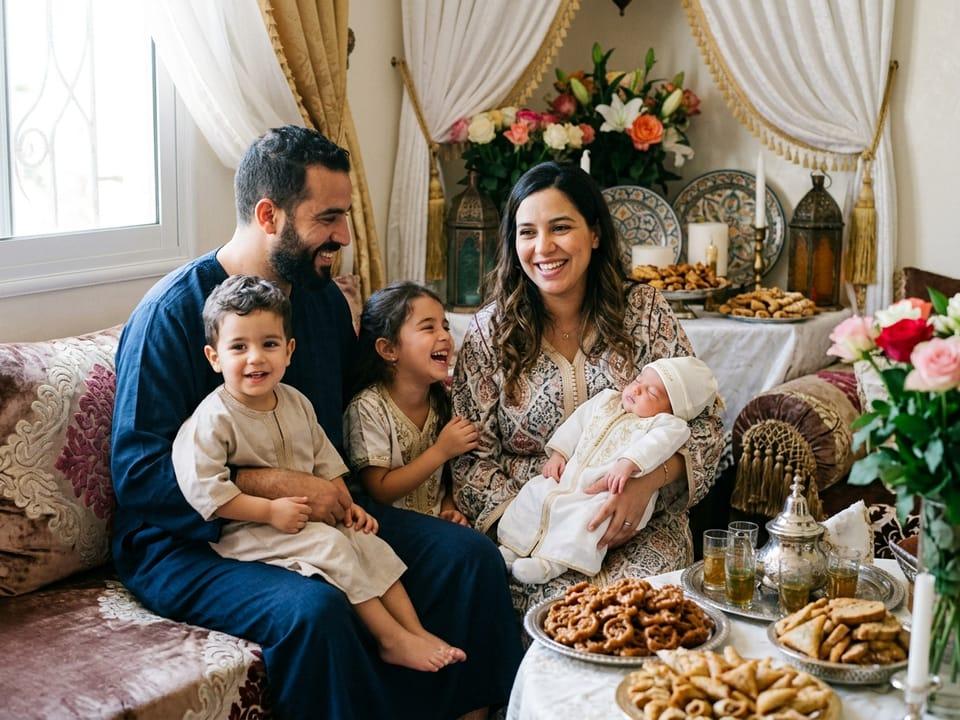
When a baby's seventh day falls in Ramadan, families usually choose one of three shapes: give the name on day seven and move the party until after Eid, celebrate with a family-only ftour, or invite guests for the evening after ftour. The mother doesn't fast while she has bleeding after the birth, so the real strain falls on the people slaughtering, cooking and hosting on an empty stomach. In 2027 Ramadan is expected to run from about 8 February to 8 March, so babies born from early February to early March will bring this question with them.
What Ramadan changes, and what it doesn't
The seventh day is counted as usual for the Sbou (sbouâ or sbou3), the naming celebration. Jurists differ on whether the day of birth itself is included, depending on the time of birth, so settle the date with the family first. Scholars recommend the aqiqa on the seventh day, or on the fourteenth or twenty-first, and many allow it later when the family is able, but the schools of law don't all agree on how far it can move. Whether to move your own aqiqa is a question for the imam or scholar your family trusts.
For the mother, things are clearer. Women with lochia, the bleeding after childbirth, do not fast during it, and breastfeeding women are usually not expected to fast either; missed days are made up later. She can eat and drink through a long evening. For everyone else, a Sbou in Ramadan means preparing a feast while fasting, with the meal ready at the sunset call to prayer.
One note on the clock. Morocco returned to GMT on 20 September 2026 under a decree that repealed the 2018 rule, under which the country kept GMT+1 most of the year and went back to GMT for Ramadan. Plan the evening from this year's prayer timetable, not last year's habits.
Three ways to hold it, compared
Name on day seven, party after Eid. The baby is named on the right day with only the household present, along with the aqiqa if your imam advises keeping it on the day, and the guest meal waits for Eid al-Fitr, expected around 9 or 10 March 2027. Nobody cooks for a crowd while fasting, and mother and baby get quiet weeks. The drawback is that the gathering may come a month after the birth, and some older relatives may feel the seventh day deserved more.
Family ftour on day seven. Parents, grandparents and brothers and sisters break the fast together, and the name is announced at the table. The household would cook that meal anyway, so it grows rather than starting from scratch. It suits families who want the day itself without a crowd.
Guests after ftour. Relatives eat at home and come later for tea, sweets and blessings. The seventh day stays a real gathering, but the evening runs late, and a week-old baby gets passed around the room just when they would normally be settling.
| Name on day 7, party after Eid | Family ftour | Guests after ftour | |
|---|---|---|---|
| Mother and baby | Quietest | A short evening | A long, late evening |
| Guests | Come once, after Eid | Household only | Travel after their own ftour |
| Cooking while fasting | Little | Some | A lot |
| Photos | Family frame on day 7, big group later | The table and the family | Group shot in lamplight |