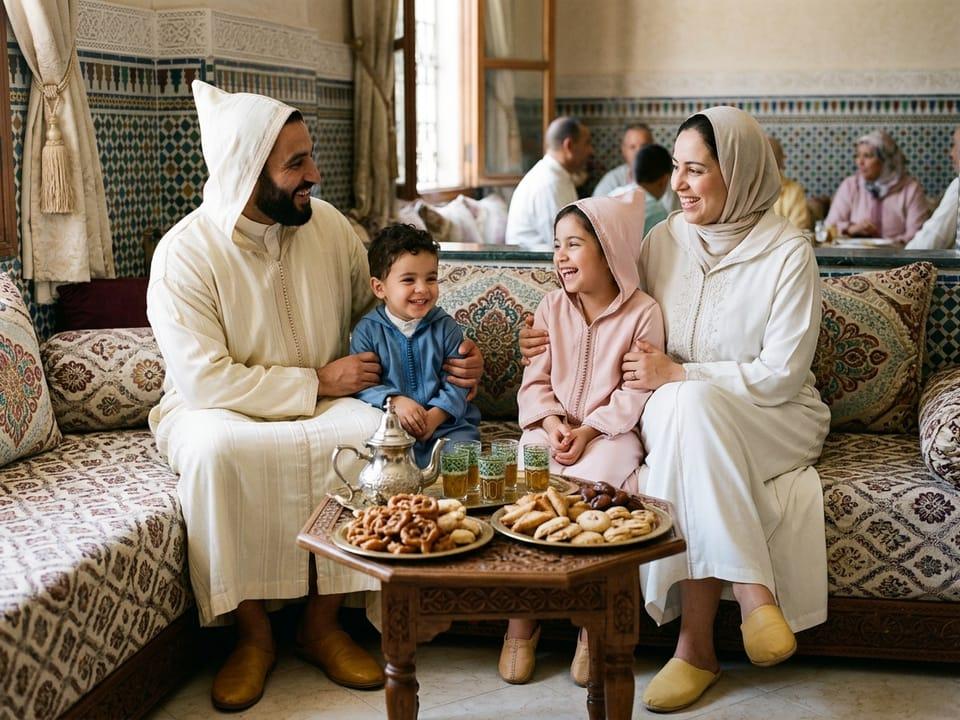
The best time for the Eid family photo in Morocco is the half hour after everyone gets home from Eid prayer and before breakfast is served. The prayer begins about twenty minutes after sunrise, so the window opens not long into the morning. After breakfast come honey, pastries and the round of family visits, and with them sticky fingers and a household that is rarely all in one room again that day.
Eid morning runs in a fixed order
The day really starts the evening before, when the Ministry of Habous and Islamic Affairs announces whether the new moon was sighted after the 29th day of Ramadan. Until then nobody knows whether tomorrow is Eid. In the morning, families head to the prayer in mosques or in the musalla, the open-air prayer ground, about twenty minutes after sunrise. It has two units with extra takbirs and no call to prayer before it, and a sermon follows.
Breakfast comes next: msemen, baghrir with honey, chebakia, sellou, feqqas, kaab el ghzal and ghriba, with boiled eggs, dates and mint tea poured high for the foam. Then the visits begin. Younger people call on their elders first, and married couples split the day between their two families. Children are given money and gifts, and parents take plenty of photos of them in their new clothes. For the first few hours shops are shut and streets go quiet; even taxis are hard to find.
One more thing to check the night before is the clock. Morocco suspends GMT+1 during Ramadan and returns to it afterwards; in 2026 the clocks went forward at 2:00 a.m. on Sunday 22 March, the night after Eid. If the switch lands on the Eid weekend again, set any second-day appointments by the new time.
Claim the 30 minutes between prayer and breakfast
At that moment everyone is dressed, the clothes are still clean and the light is low and soft. Say it out loud the night before, "photo first, then breakfast," so nobody pours the tea early. Choose the spot and set up the tripod that evening, so the photo takes five minutes rather than twenty, and charge the phone and clear some storage at the same time. If small children stayed home while others went to prayer, dress them last, just before the others walk back in.
Shoot in the order that attention runs out: the full family first, two or three rounds; then the children on their own; then each set of grandparents with the grandchildren. Ten minutes in total is plenty.
Window light and a tea tray are all the set you need
Seat the family on the salon banquette with a window to one side, not behind them. The morning sun is low, so if it falls straight onto faces, draw a thin curtain to soften it. Switch off the yellow ceiling lights and let the window do the work, so skin tones don't take on a yellow cast. The one prop worth adding is the mint tea tray, with the teapot and glasses on a low table at the front of the frame. It says Eid without putting honey within a toddler's reach. Leave the pastries in the kitchen until you've finished.
When the clothes get stained or a child runs out of patience
Pale djellabas and new kaftans pick up honey and tea within minutes. Keep wet wipes and a cloth napkin by the table, and tuck a napkin into each small child's collar at breakfast. If a stain arrives before the photo, blot rather than rub, turn that side away from the camera, or cover it with a jabador waistcoat. Pack one plain spare top per small child for the visits, so the good outfit doesn't have to survive the whole day.
Children woken early for Eid tire by mid-morning. If one dissolves into tears mid-photo, let them sit on a parent's lap and keep shooting; a crying toddler on a grandmother's knee is still the family photo. If a child is unwell, drop the heavy outfit and shorten the visits rather than push through.
The second chance comes at the grandparents' house
The visits bring a second chance. At the grandparents' home the wider family gathers, and the elders are seated and dressed for guests. Ask the host before you set up, take one group photo early in the visit while clothes are still presentable, and check with everyone before anything goes online, since some women in the family may not want their faces shared. Who should hold the camera, and when a hired photographer is worth it, is covered in Eid Family Photo: Hire a Photographer, Book a Studio, or Use a Self-Timer?. For colors and outfits, see What to Wear for Eid in Morocco.
If the morning slips away, build the photo from what you have
Sometimes the half hour is lost to a late announcement, a sick child or a relative who couldn't travel. pokesta can turn recent phone photos of each person into an Eid family portrait in djellabas and kaftans, for $1 per photo, and your first photo is free. It's a created image, not a record of that morning, but it can fill the gap in the album. Make one from a recent photo of your child and see whether it suits your family.
References