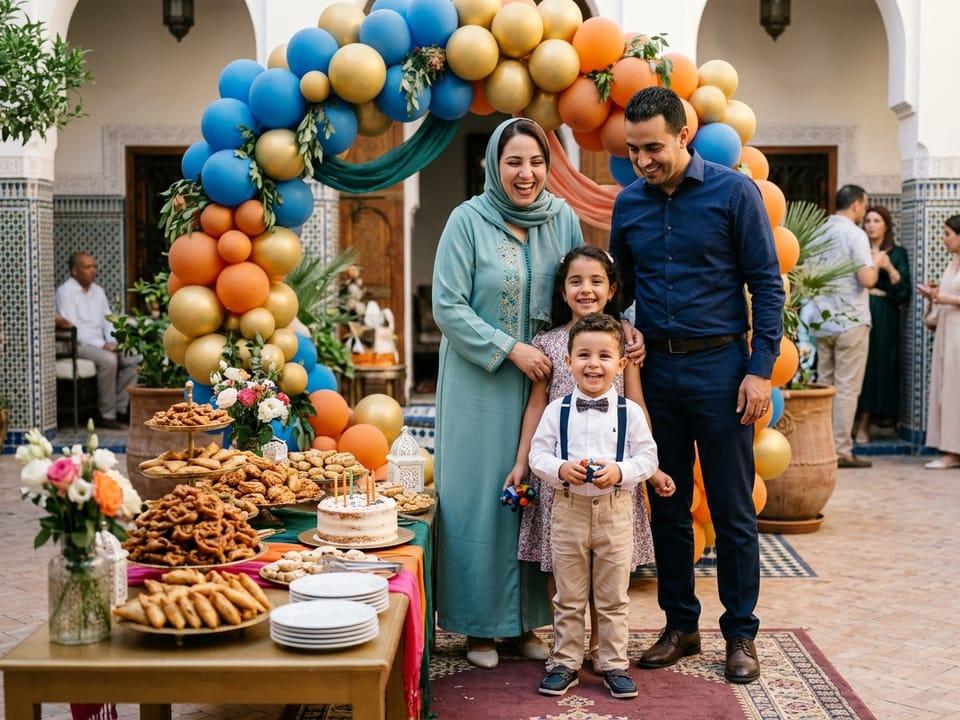
A one-year-old who cries through the birthday photos is usually tired, hungry, or uneasy about the people around them, and all three can be planned around. Fear of strangers is common from about six months to three years, and the WHO recommends 11 to 14 hours of sleep a day for children aged one to two, naps included. So book the shoot just after a nap and before a meal, and take the family photos before the guests arrive.
Tired, hungry, or too many new faces
On a busy birthday the nap is the first thing to go, and an early night before helps. A baby who slept badly or missed a nap runs out of patience fast, and a studio session or a party can easily run past the point where they're still enjoying themselves. Hunger works the same way: a baby who was fed two hours ago and is now staring at a cake they're not allowed to touch will tell you about it.
New faces are the third cause, and at a Moroccan family party there are a lot of them. Aunts who haven't seen the baby since the sbou, the naming celebration a week after birth, plus cousins, neighbours, and now a photographer with a large black lens. The NHS describes separation anxiety and fear of strangers as normal at this age, easing as babies come to understand that people still exist when they're out of sight. Its advice applies directly to the party: let familiar people come first, introduce new ones gradually, and keep a comforting toy close.
Book after the nap, before the meal
Spend the week before the birthday writing down when your baby wakes from their main nap. Once you can see a pattern, the window to aim for runs from about half an hour after waking to an hour or so later. Book the studio slot or set the party's cake time inside that window, not the other way round. If nap times wander from day to day, go by the last three days and be ready to move the cake half an hour either way on the morning itself.
Feed a small snack just before, so they're not hungry, but keep the real meal for after the photos; a full stomach can bring on drowsiness, and food finds its way onto party clothes. When you book a studio, tell them your baby's nap time and ask whether a session can pause for a feed or a cuddle without the clock running out. Bring the favourite toy, a muslin and a spare top.
A few more things are worth mentioning when you book: how strong the stranger wariness is, the song or game that brings a smile, and how many people are coming along. If your baby settles best in a parent's arms, ask for the first few frames to be taken that way; it gives the photographer a plan instead of a surprise.
Family first, guests after
At a home party, take the portraits that matter before anyone else arrives: the baby with parents, with brothers and sisters, and with grandparents if they live with you. Light the candles for a practice run if you want a cake picture without an audience. A one-year-old won't mind seeing them lit twice, and a parent can do the blowing.
When guests come, ask them gently not to pick the baby up straight away. Let the baby watch from a parent's arms until they decide the room is safe. For the big group photo, sit them on the lap of the person they know best rather than alone in the middle. If you've hired a photographer, ask them to arrive half an hour early, sit on the floor and play before they start shooting. Our page on birthday party photographer costs covers how long to book them for.
When the crying doesn't stop
Set a limit before you start: if the crying lasts more than a few minutes, stop. Feed, cuddle, walk around the garden. A baby with a damp face held close in a parent's arms still makes a tender first-birthday picture, so keep shooting gently once they settle in your hold.
Don't work too hard for a smile, either. Loud rattles and a crowd of faces pulling silly expressions can wind up a baby who is already tense; a quiet minute sometimes works better.
The cake picture can wait. A smash cake at home the next morning in window light, with only the household watching, is often easier than the same moment in front of thirty guests. Take one prop away at a time: hat first, then shoes, then the fancy collar. If your baby is not just upset but feverish or off food, that's a different problem, and rescheduling a sick baby's shoot covers it.
For a wary baby, fewer new faces beat better equipment
|
Photo studio |
Photographer at home |
Your own phone |
| Timing |
Fixed slot; book it after the nap |
You set the time |
Whenever the baby is ready |
| Strangers |
New room, new person |
New person, familiar room |
Only family |
| If they cry |
Pause if the studio allows |
Pause, then try again |
Stop and try tomorrow |
| Result |
Controlled light, posed set |
Real home, real family |
Uneven quality |
| Best for |
A planned portrait |
A party with many relatives |
A calm cake at home |
A studio is worth it for a posed portrait with proper light, and a photographer is worth it when the whole extended family gathers once and every adult wants to be in the picture. For a baby who is wary of strangers, though, the home with the fewest new faces can give the most relaxed photos.
A backup portrait that doesn't depend on the day
If the day went to tears, or the grandparents couldn't come, pokesta can create a first-birthday family portrait with AI from phone photos you already have: $1 per photo, with the first photo free. It's a generated image, not a record of the party, but it can give you the calm, everyone-together picture the day didn't. Start with a photo of your baby from this week.
Plan the photos around the nap, not the guest list, and the birthday baby has a fair chance of smiling in at least one of them.
References