
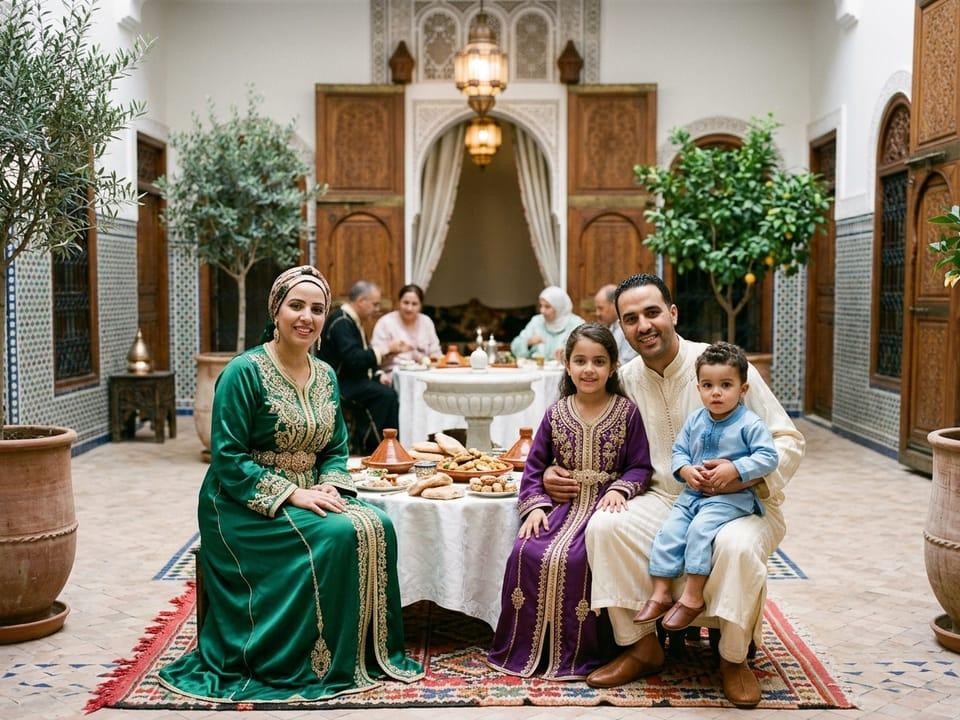
There are two good moments for an Eid el Kbir family photo: the short window after the family comes back from the Eid prayer and before the sacrifice begins, when everyone is still in clean djellabas and kaftans, and the second day, once the work is done, if the family dresses up again for visits to relatives. Decide as a family, before the day, whether the youngest children will watch the sacrifice, and keep the slaughter out of every picture you plan to share. In 2027 Eid al-Adha is expected on Sunday 16 May, to be confirmed by the Ministry of Habous and Islamic Affairs once the crescent of Dhu al-Hijja is sighted.
The first day runs from prayer to boulfaf
Customs vary from region to region and from one household to the next, but the outline of the first day is familiar across Morocco. People wake early, dress in their best traditional clothes, the djellaba and balgha slippers for many men, and go to the Eid prayer at the mosque or the open-air msalla. Morocco World News describes breakfasts of msemen, baghrir and m'hamessa, a salty soup, followed by the main event: the sacrifice of the sheep, usually carried out by the head of the family, a father, grandfather or older brother, sometimes with help from a professional butcher.
After that, the household turns into a kitchen. The first day's lunch centres on the liver and other organs, above all boulfaf, skewers of grilled liver wrapped in caul fat, with mint tea and bread. In the 2022 account, dinner is couscous with vegetables, meat and dried fruit. The holiday table also brings slow-cooked dishes such as mrouzia, and strips of gueddid, preserved meat, are hung to dry on rooftops and balconies. The days fill up with visits to parents, in-laws and neighbours, and children collect crisp banknotes from visiting elders.
Take the photo after prayer, or on the second day
The first window is short, perhaps twenty minutes between coming home and the start of the sacrifice. Set it up the evening before: choose the spot, usually the grandparents' courtyard or the salon, put a small tripod where it needs to stand, and agree who sits and who stands. Morning light in a courtyard is soft and even, and nobody's clothes are marked yet. Take the group photo first, then the small groups, then let the men who will do the work change into old clothes or an apron.
The second window is the next day, or the afternoon of the first day once everything has been cleaned. If the family puts on fresh clothes for the visits, take the photo when you arrive at the grandparents' house, before the tea and the trays of sellou and ghriba come out. Sweets and grease from the grill leave marks on pale kaftans that show in every photo.
Whichever window you use, look at the background before you shoot. Turn the family away from the rooftop or the corner where the sacrifice took place, and check for hides, buckets, knives and smoke from the grill. Before posting anything online, ask the people in the picture; not every relative wants their face shared, and images of the slaughter don't belong on a family album page.