Eid el Kbir With Someone Missing: Family Photos When a Parent or Sibling Can't Come Home

pokesta Editorial Team · Updated November 5, 2026

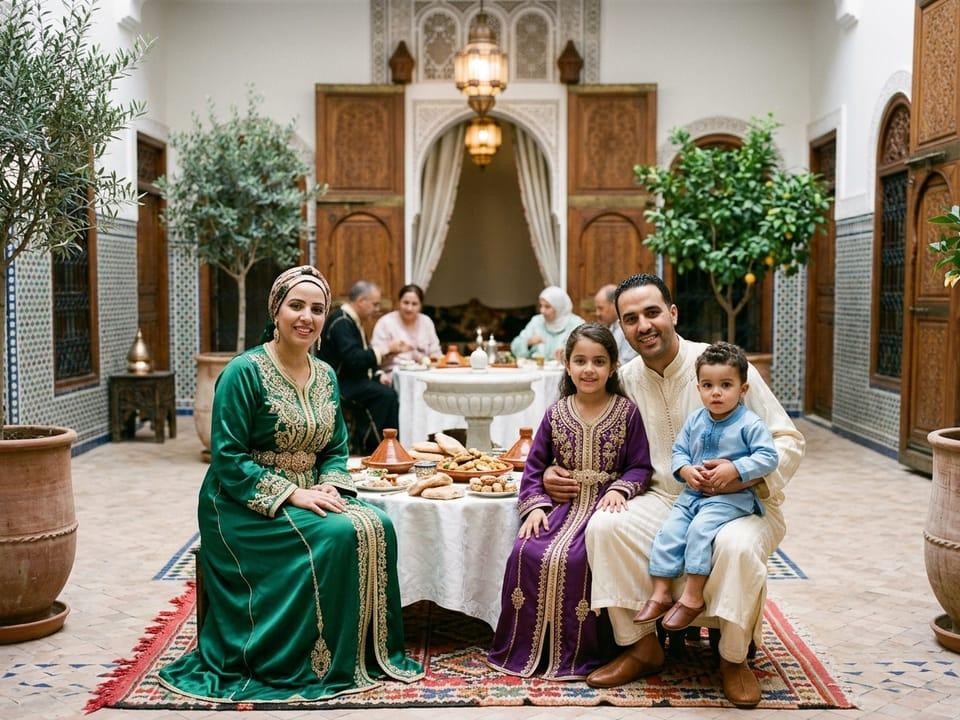
Eid al-Adha family photo (AI-generated image)

When someone can't make it home for Eid el Kbir, you can still end up with one picture of everyone. Take the family photo at the grandparents' house with a space left where the missing person would stand, and ask them to take a matching photo the same morning, in their own djellaba or kaftan, in similar light. Eid al-Adha 2027 is expected on Sunday 16 May, with Monday 17 May as the second holiday day, and the Ministry of Habous and Islamic Affairs confirms the date after sighting the crescent of Dhu al-Hijja, about ten days before.

A May Eid falls before the summer trips home

Eid el Kbir is the holiday Moroccan families travel for. Morocco World News describes loved ones reuniting, "often travelling long distances to ancestral homes," and a calendar packed with visits to parents, in-laws and neighbours. Government offices and private employers get two days off.

The trouble for families with relatives abroad is the calendar. Like every Islamic holiday, Eid al-Adha moves about eleven days earlier each year. In 2026 it fell on 27 May; in 2027 it is expected in mid-May, weeks before the European school holidays. The big season of trips home comes later. In 2025, the Fondation Mohammed V pour la Solidarité's Marhaba operation welcomed a record of more than 4.06 million Moroccans living abroad between 10 June and 15 September. In a family like that, one person may well spend the May Eid in Lyon, Madrid or Brussels and come home in July instead. Students and workers in other Moroccan cities can face the same choice.

Shoot the home photo so one more person can fit in

The home photo is easy to merge with another one later if you make three decisions before you press the shutter. First, leave the space at the end of a row or beside a standing adult, not in the middle of a seated row, where any gap looks like a missing tooth. Second, keep the camera at the chest height of a standing adult, about three metres back, and frame wide, with room on both sides. Third, note where the light comes from. In a grandparents' courtyard in the morning, put the family in open shade, with the bright side of the courtyard to one side, and remember which side it was.

Take a few versions: one with the gap, one closed up without it, and one full-length so you can see everyone's feet on the tiles. Keep the background simple. A tiled wall or a carved door works better than a doorway full of people coming and going.

Our guide to Moroccan Eid outfits helps you pick colours that hold together when the family is split across two cities. A white djellaba for the men and one colour family for the women's kaftans is easy to match from far away.

Ask the absent person for a matching photo that morning

Send the missing family member a short brief the week before. Ask them to dress as they would for the Eid prayer, in a djellaba, a kaftan or whatever they'll actually wear that day. Ask them to stand by a window with the light coming from the same side as at home, against a plain wall, and to have someone take the photo at chest height, full-length, holding the phone horizontally. Then ask them to send the original file as a document rather than as a chat photo, which most messaging apps compress.

Agree a time for the video call as well, and check the clock. Morocco returned to GMT on 20 September 2026, so the time difference with much of Europe is an hour larger than families got used to between 2018 and 2026. For the grandparents, the best moment is usually a calm one: after the prayer before the sacrifice begins, or in the afternoon over tea, not while the knives are out or the kitchen is at full speed. Put the phone on a stand at the table so the absent son or daughter sits with the family for a few minutes, instead of being passed from hand to hand. A photo of the grandmother holding that screen is worth taking too.

Studio, photographer or your own phone when someone is missing

A studio portrait in the days before Eid gives you clean light and new clothes, but it records only who is in town, and the date depends on the studio's bookings. A photographer at the house on Eid morning is worth paying for when a large family is gathered and nobody wants to miss the group photo by being behind the camera. If you plan to add the missing person later, tell the photographer beforehand so they leave the space and keep the light consistent. Your own phone on a small tripod with a timer is the most flexible, especially with young children who won't sit still for long. Whichever you choose, keep the sacrifice out of the frame; our guide to timing photos around prayer and the sacrifice covers the timing of the day.

Put everyone in one picture, then call them back

The two photos you've taken already hold everything needed for one family picture. pokesta can combine each person's own phone photos into an Eid family portrait with AI, in djellabas and kaftans in a courtyard setting: $1 per photo, and the first photo is free. It's a created image rather than a record of that morning, which is worth saying when you send it to the grandparents. Make your first one free while the photos from home are still fresh, and send it to the person who was missing.

References