
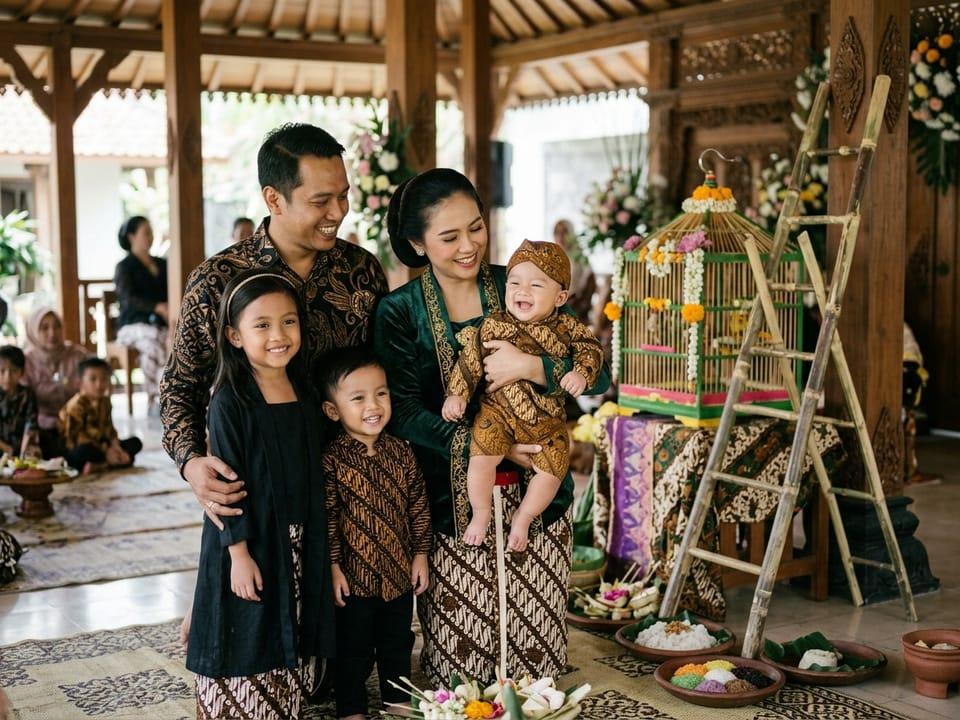
A vendor's tedak siten package can bundle three quite different things: the ritual equipment and offerings, someone to lead or MC the ceremony, and photo or video coverage. The quickest way to bring the total down is to ask for those three as separate lines, then decide item by item whether to rent, make or hire. Put your money into the parts your elders care about most, and book the photographer for the ritual itself rather than the whole morning.
What the ceremony actually needs
Tedak siten is held when the baby reaches seven lapan, 7 × 35 days, or 245 days. A lapan is the 35-day cycle in which each combination of the seven-day week and the five-day Javanese market week, the weton, comes round again. Orami describes the ceremony as usually taking place in the morning in the front yard, and lists the equipment, known as ubarampe.
The list is longer than most parents expect, but much of it is food. There is the kurungan, a bamboo cage like a chicken coop, decorated and stocked with items for the baby to choose from. There is a ladder, and sometimes a chair, made from sugarcane stalks. The food includes jadah in seven colors, colorful jenang ketan, a tumpeng robyong, porridge, fruit, jajanan pasar and a roast chicken. You also need coins and flowers to scatter for udik-udik, flower water of rose, jasmine, magnolia and kenanga for the bath, new clothes for the baby, and Javanese dress for the family. Orami's list also includes a live chicken released for guests to catch, which some families keep and some skip.
The ritual items come from custom; everything beyond them, such as tents, backdrops, balloon arches and printed banners, is decoration. An anthropology thesis from Universitas Gadjah Mada observed that tedak siten has grown more lavish, the items in the kurungan more varied, and that event organizers have become part of it. That is where packages grow.
Rent, make or hire: split the quote three ways
As of October 2026 we could not find a published, itemized price list that we could check and cite, so this article gives no rupiah figures. Ask at least two vendors for a quote broken into lines, and compare line against line.
Rent the things you will never use again. The kurungan is the obvious one; a relative who held a tedak siten recently may lend theirs, and decoration on it is optional. The sugarcane ladder has to be made from fresh stalks, so ask whether the vendor builds it or whether a relative can.
Make or buy the food the way you would for any selamatan. Jadah, jenang and jajanan pasar can come from a trusted market seller or a relative who knows how it should look, and the tumpeng can be ordered separately. The items inside the kurungan, such as a book, jewelry, rice or cotton, can come from home. Coins and flowers for udik-udik and the bath are easy to buy yourself, so check what the package charges for them.
Hire the people. An experienced elder or MC who knows the sequence keeps the ceremony short and calm, which matters with an eight-month-old. If an elder in the family can lead it, that line drops out.