
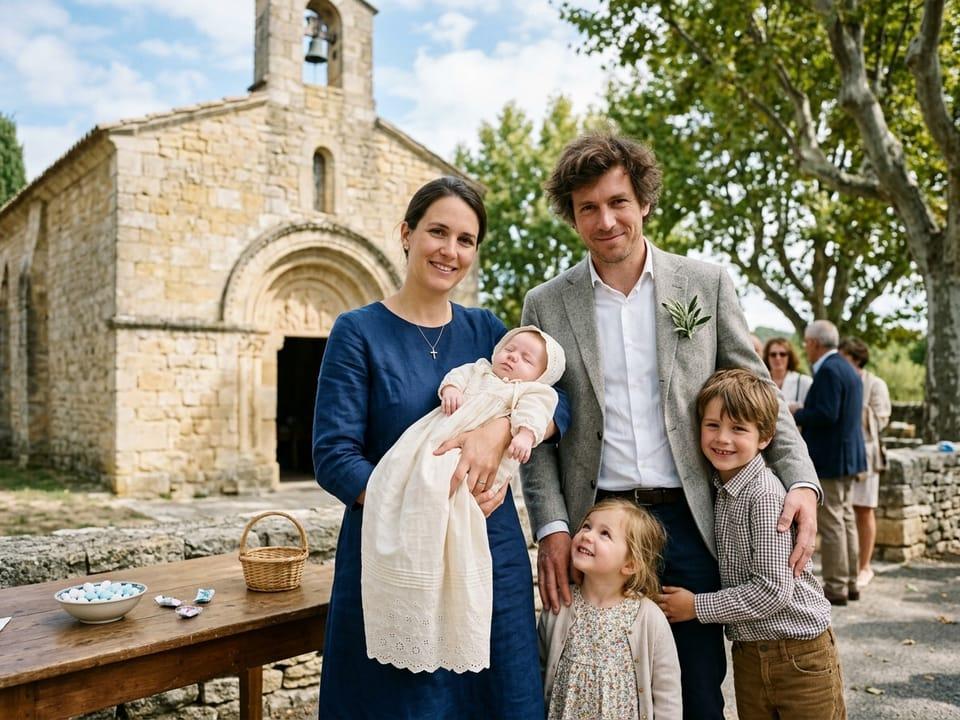
If Météo-France puts your département on orange or red heatwave (canicule) vigilance for the baptism, plan the day around the baby rather than the timetable. Dress the baby lightly and put the white garment on only when the rite calls for it, keep the baby in shade or a cool room, offer feeds often, move the reception indoors or into the evening, and take the photos inside the church and in open shade rather than in the midday glare. Santé publique France advises keeping young children out of the hottest hours and never leaving them alone in an overheated room or a car, even briefly.
Check the vigilance map the evening before and that morning
Météo-France's vigilance map uses four colours. Green means no particular vigilance; yellow, be attentive; orange, be very vigilant, because dangerous phenomena are forecast; red, absolute vigilance for phenomena of exceptional intensity. The map is updated at least twice a day, at 6 am and 4 pm, so check it the evening before and again on the morning itself. Its heatwave advice at orange is blunt: everyone is at risk, even people in good health, and it adds a reminder to watch over children too.
Use the colour to decide, not to worry. On yellow, keep the plan and add shade, water and a cool room. On orange, shorten whatever happens outdoors and move the reception later or inside. On red, talk to the parish and the venue about simplifying the day or moving it; postponing a baptism covers the order of calls and what happens to deposits.
Babies can't cool themselves, so dress light and add the white garment late
Santé publique France lists infants among the people most at risk in hot weather. The body's defences against heat, sweating and widening blood vessels, work less well in very young children, and a baby cannot move away from the heat on its own. Its advice for babies and children is concrete: keep them somewhere cool, offer baths during the day, let babies wear just a nappy indoors, especially while they sleep, dress children in loose, light, pale clothes with a hat, give drinks often and carry enough water on journeys, and see a doctor quickly if a child has a fever or starts behaving differently. Breastfeeding keeps a baby hydrated, but the mother needs to drink enough herself.
The rite itself helps. France's liturgy service recommends putting the white garment on after the anointing with chrism rather than at the start of the celebration, and choosing something roomy and easy to slip over whatever the child is wearing. So the baby can arrive in a thin cotton bodysuit and wear white only for the part of the rite where it belongs, while heavy lace stays in the bag. Ask at the preparation meeting how your parish does it; our guide to baptism in France walks through the whole rite.