Ramadan Mini Session Prices in Egypt: What a Short Slot on a Fanous Set Buys You

pokesta Editorial Team · Updated November 4, 2026

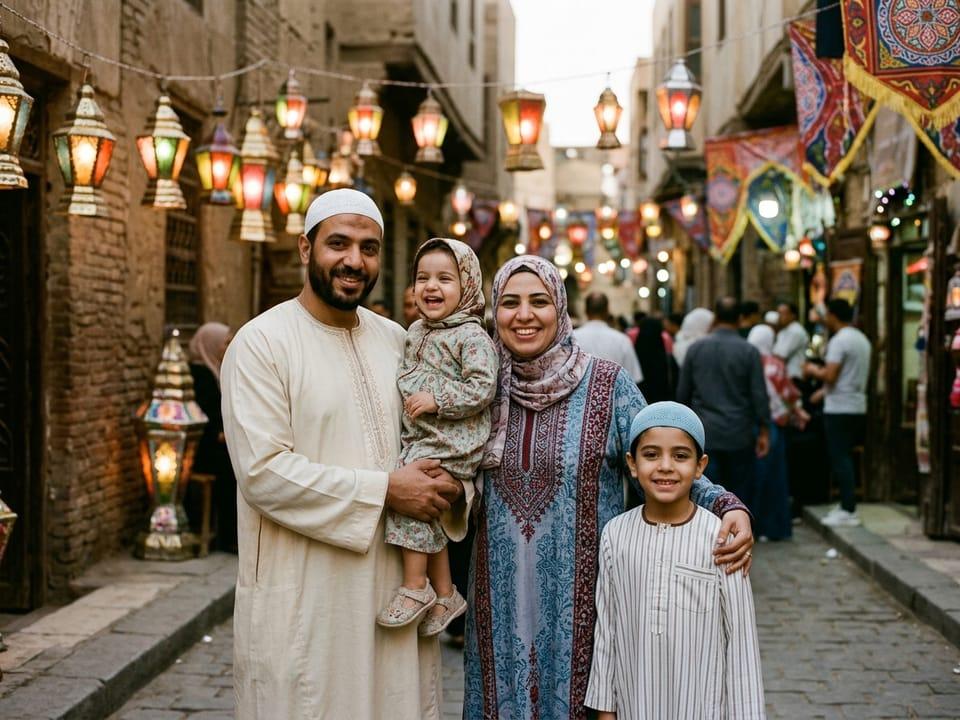
Ramadan Nights family photo (AI-generated image)

A Ramadan mini session buys a short slot on a set the studio builds once and photographs many families on, plus a small number of edited photos. Extra people, extra images and costumes are what push the price up. Whether it's worth paying comes down to one question: could you build that set at home? Fanous lanterns are made in Cairo workshops and sold in the city's streets and markets, and printed khayamiya fabric is hung all over Egypt during the month, so an iftar table at home is a real alternative.

Ramadan 2027 should start around 8 February

Ramadan begins when the new crescent is seen, so its date is never fixed far ahead. In Egypt, Dar al-Ifta sends seven committees to watch for the moon on the 29th of the lunar month, and the Grand Mufti announces the result. For 2027, astronomical projections reported by The National put the first day of Ramadan around 8 February, with Eid al-Fitr on 9 or 10 March, but it can move by a day.

That date shapes your booking. If you want the photos for greetings at the start of the month, or for grandparents to hang before the first iftar, the session has to happen in the weeks before Ramadan, and editing takes time on top of that. Ask the studio for a delivery date before you pay, not after.

What the short slot, the few photos and the shared set mean

Read a mini session offer for four things, each of which hides a question. The slot length tells you how long you have in front of the set; ask whether changing outfits or calming a child counts against it. The number of edited photos is the core of what you're buying; ask how many are included, what each extra one costs, and whether you can see the full set of frames before choosing. People included matters for families who want grandparents or cousins in: ask how many are covered and what an extra person or group adds. Costumes and props are the last part: ask whether a galabeya or a kaftan is provided for the children, whether there are lanterns they can hold, or whether you bring your own.

The shared set is both the selling point and the catch. The studio decorates once with lanterns, khayamiya fabric and cushions, then photographs family after family against it, which keeps the price down. It also means your photo will look much like the photos of every other family who booked that week. Short slots are hard on small children who need time to warm up, so if your child is slow with strangers, ask whether a longer slot costs much more.

Before you pay, get the offer in writing: slot length, number of edited photos, cost of extras, people covered, delivery date and what happens if your child is ill on the day.

Could you build the set at home?

This is the test that decides it. A Ramadan set is mostly three things: lanterns, fabric and a table. Fanous lanterns are made in workshops around Sayeda Zeinab and Khayamiya, from nickel or tinplate sheets with painted glass, and their prices vary with size, material and handiwork. For a small child, pick one with smooth edges and a battery light rather than a candle. The printed fabric, a mass-produced version of the hand-stitched khayamiya appliqué from Cairo's Street of the Tentmakers, makes an easy backdrop when hung on a wall or draped behind a sofa.

The table is your own iftar. Set the dates, juice and soup bowls before sunset, light the lanterns and take the family photo before the food comes out, so no one who has been fasting all day is kept waiting. Shoot near a window while there is still daylight, or turn on every lamp after dark. Keep the phone away during prayer, and ask before posting photos of relatives. For how Cairo looks after sunset in Ramadan, see Ramadan and the fanous in Cairo.

Studio set, a photographer at your iftar, or your own phone

Studio mini session Photographer at your iftar Your own phone at home
How the cost works Short slot plus edited photos; extras add up Hourly fee plus edits Lanterns and fabric you keep
Children's mood and health Short slot, new place Familiar home, real meal Retry any evening
Changing the date Ask the studio's policy Depends on the photographer Any night of the month
Finish Polished but shared set Real family moment, retouched Depends on light
Suits A tidy portrait for greetings Large family gatherings Everyday Ramadan memories

A professional is worth the money for a big family iftar with grandparents, where someone outside the family can arrange three generations, or for a formal portrait you plan to print large. The same thinking applies to the holiday that ends the month, covered in Eid al-Fitr family photos in Egypt.

See the lantern-lit portrait before you book a slot

If the appeal of the mini session is one tidy picture of everyone under lanterns, you can try that first. pokesta can make a Ramadan family portrait with AI from each person's phone photos, with the family at an iftar table or in a lantern-lit alley. It's a created image rather than a record of your evening, so it works best as a greeting, not as the family archive. It's $1 per photo, and the first photo is free, so try it with a recent picture of your children before you pay for a slot: make a Ramadan family photo.

References