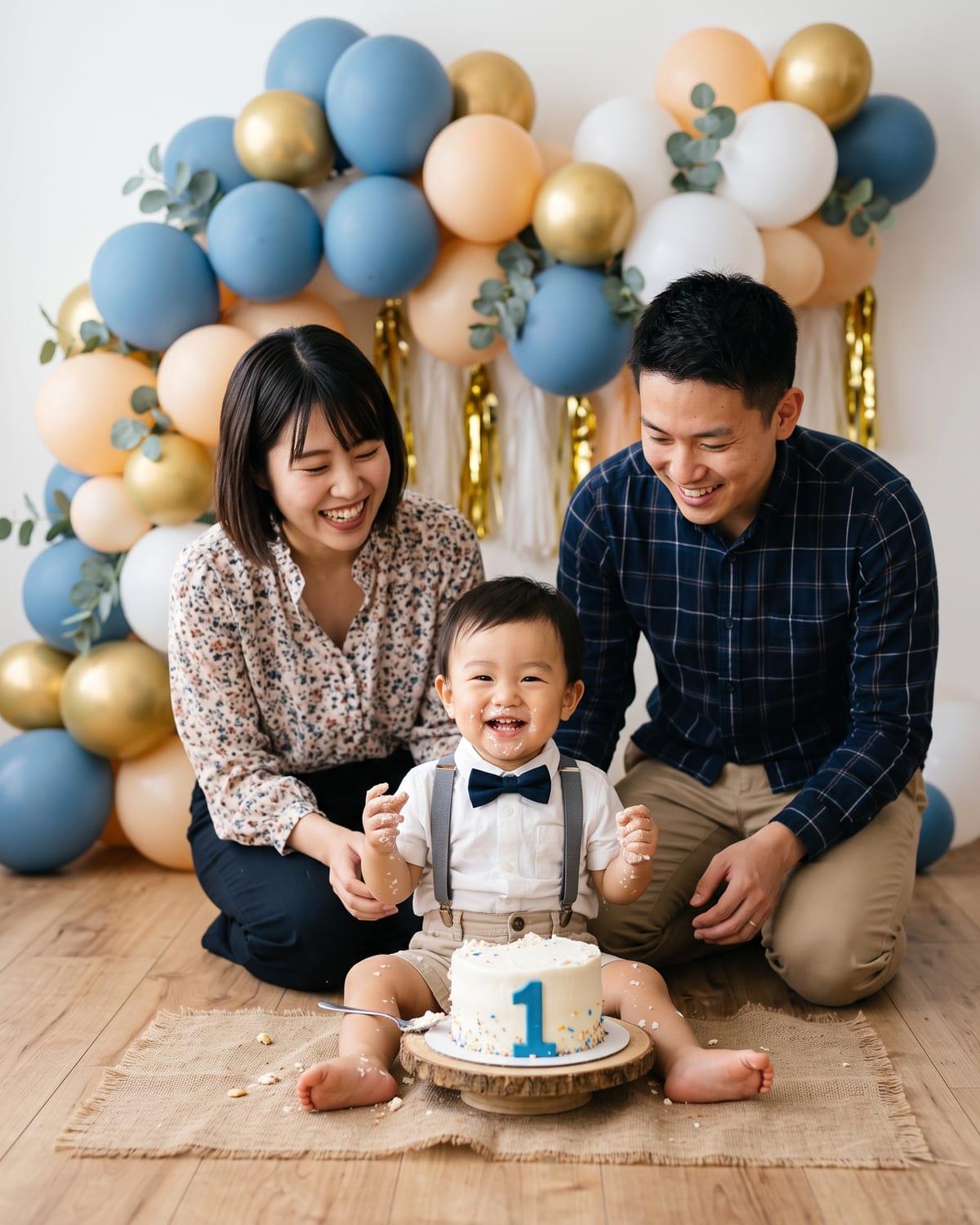
Scroll back through birthday photos taken at home and the same three problems keep turning up: faces too dark, lots of cake and not much else, and the parent who took the pictures missing from every one of them. None of these is the camera's fault. A phone and what you already have at home are enough to fix all three, as long as you plan a little around when and where you shoot.
Move the photos to before dinner
The biggest reason birthday photos disappoint is that they all get taken at the dinner table in the evening. By then the room is lit only by the ceiling light, which shines straight down and leaves shadows under everyone's eyes. The kids are hungry and cranky, and the adults are too busy with the food to pick up a camera.
It works much better to separate the photos from the celebration. On a weekend, take the "birthday portraits" first, in the decorated room, sometime between a bright morning and early afternoon. If the cake is ready, you can bring it out once for these shots, or skip the cake and just photograph the birthday child and the family. Then you can enjoy the evening without thinking about pictures at all.
If it's a weekday and evening is your only option, the lighting tips below will make up for it.
Light from a window, from the side or at an angle
In daytime, don't put the window behind your child
Window light is the easiest way to photograph people indoors. The one rule: don't seat your child with their back to the window. If you do, the phone sets its exposure for the bright window and the face turns dark.
Sit your child beside the window and shoot from a spot at a right angle to it. Soft light falls across one side of the face and gives the picture depth. If direct sun is coming in, draw a sheer curtain to soften it, and the shadows on the skin will be much gentler.
At night, add lamps so the light isn't only coming from above
For evening shots, keep the ceiling light on and place a floor or desk lamp in front of your child, slightly off to one side, to light the face. Aim the lamp at a white wall and let the bounced light do the work, and it gets softer still. Mixing warm and cool bulbs tends to make skin look unnatural, so match them if you can.
Keeping the candle moment from going dark
Blowing out the candles is the shot that says "birthday" most clearly. But if you switch off every light in the room, your phone compensates with a slow shutter and the shot comes out blurry.
It's better to leave some light on than to go fully dark. Turn off the dining room light and keep the kitchen light on, or leave just a lamp or some indirect lighting. At that level of dimness the candlelight still sets the mood, and faces still show up.
Use burst mode (hold down the shutter button, or switch on your phone's burst setting) and start shooting before they blow. The moment lasts a split second, and if you try to catch it one frame at a time you'll almost always miss. Recording a video and pulling out your favorite frame later is another reliable way to get it.
While the candles are lit, have at least one adult watching rather than photographing, keeping small children's hair and sleeves away from the flame. It's tempting to pull the cake closer to your child's face for a better picture, but keep the flame at a safe distance.
Where to put the cake, and how high to hold the camera
A cake at the far side of the table hides your child's face. Put it directly in front of them and slightly toward the camera, so that face and cake stack vertically in the frame.
Hold the camera at your child's eye level or a little above. Standing over them gets you a lovely view of the top of the cake, but your child's face looks small and the photo is mostly the top of their head. Sit or crouch down to their eye level and their expression comes through clearly.
Check the background once, too. Laundry, appliance cords and piles of mail stand out more in a photo than you'd expect. There's no need to tidy the whole room; just move whatever is inside the frame.
Photograph the in-between moments, not just the posed one
The shot of your child grinning behind the cake ends up looking almost the same every year. What's more fun to look back on a few years later is everything around it: small hands helping with the decorations, a profile while they tear open wrapping paper, a finger counting the candles. Shoot these from a little way off without making a production of it, and you'll get natural expressions.
With small children, the more you say "look over here," the stiffer their faces get. Keep the camera on them and talk about whatever they're absorbed in, and you'll get far better expressions.
Getting the person behind the camera into the family photo
The regret that lingers longest is having no picture of the whole family. When the same person takes the photos every year, that person hardly appears in any of them.
Prop up the phone and use the self-timer
The realistic way to get a whole-family shot is to set the phone somewhere steady and use the self-timer. No small phone tripod? Stack books on a shelf or chair to get the height right and lean the phone against something. Set the timer to 10 seconds, and turn on burst if your phone offers it with the timer. Take several and you'll get at least one where nobody's eyes are closed.
The basic arrangement is the birthday child in the middle, with the taller adults behind or at the ends. If everyone sits on the sofa and the adults lean in slightly beside the child, faces end up at similar heights and the group looks like a group.
Agree in advance on who's shooting when
When you're not using the timer, taking turns ("Dad until the presents are open, Mom from the candles on") evens things out. If grandparents or older siblings are there, handing the phone to an older child is another option. Those slightly crooked, kid's-eye-view shots often turn out to be the ones with the most character.
When the whole family can't be together
Some years the family can't all be in one place for the birthday, whether a parent is working away from home or the grandparents live far off. Taking a photo of the video call screen is easy, and it makes a record of that particular year.
If you'd also like a family photo with everyone together, services like pokesta use AI to generate a commemorative photo from individual photos of each family member. You can try it once for free after signing up, and after that it's $1 per photo. Since it works from everyday snapshots, that bright window-side photo from earlier will do fine as a source image.
Pick this year's photo with next year in mind
When you're done, choose the "photo of the year" together as a family so it doesn't get buried in your camera roll. Take one shot in the same place with the same composition every year, and lining them up shows exactly how much your child has grown. Settle on just one thing you can repeat next year, like the same spot on the sofa or the same stuffed animal.
Related articles: