
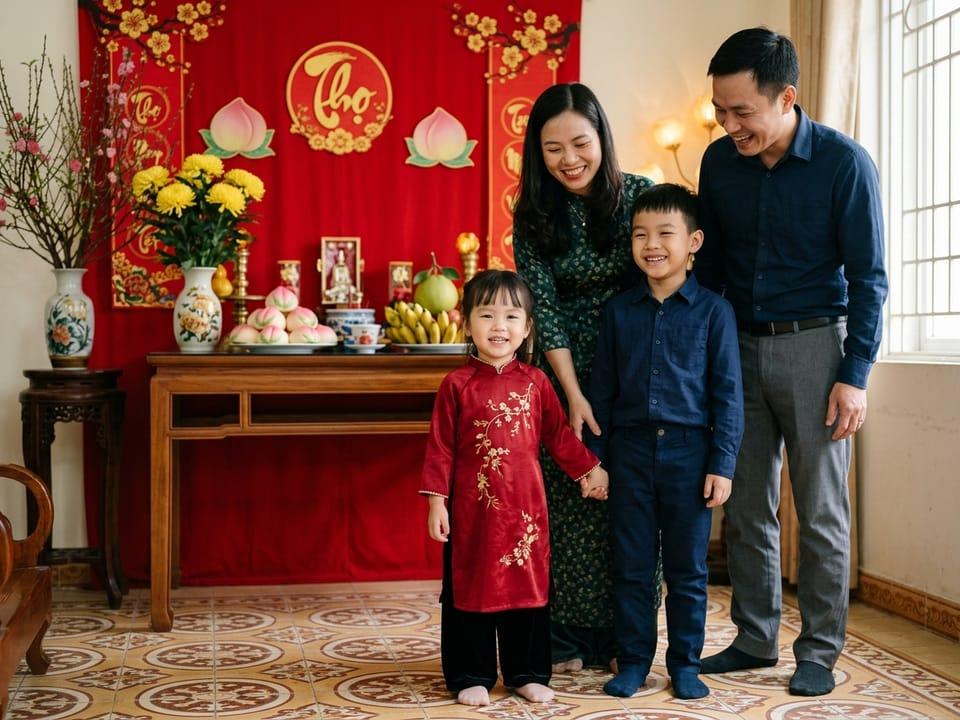
If the áo dài is a gift your grandparents will wear again at Tết and family occasions, have it tailored, or buy a good ready-made one and have it altered. If it only needs to last for the photos, rent. At a mừng thọ, the longevity celebration families hold for elders, usually from age 70, the honorees traditionally wear áo dài with a khăn đóng headpiece, and in some places the color is red or yellow depending on the age being celebrated. Start early, because a tailored áo dài is fitted to the body and usually takes several weeks.
Which birthday it is, and when the outfit has to be ready
The ceremony names follow the age. Seventy and 75 are a mừng thọ, 80 and 85 a mừng thượng thọ, and 90, 95 and 100 or older a mừng thượng thượng thọ. Under Vietnam's Law on the Elderly, the commune or ward, the local Elderly Association and the family organise a celebration at each of those ages, on Vietnam Elderly Day (6 June), the International Day of Older Persons (1 October), Tết, or the person's birthday. Many families hold theirs in the days after Tết, up to the full moon of the first lunar month, which means ordering in the run-up to Tết, when many families are having new clothes made.
Cloth even features in the state's gift. The minimum gift for a 100-year-old, set by a 2018 Finance Ministry circular, is five metres of silk plus 700,000 đồng in cash. An áo dài from the children and grandchildren fits the same idea.
Tailor, buy or rent: what each one is really paying for
With a tailored áo dài you are paying for the fabric, the cutting and the fittings. You choose silk, brocade (gấm) or something heavier, decide whether the Thọ character (寿, "longevity") is embroidered or woven into the pattern, and the fit is made for a body that may have changed a lot in recent years. It takes the longest of the three, but a well-made one comes out again every Tết.
A ready-made áo dài is quicker and lets you see the color in daylight before you pay. Standard sizes may not suit a body that has changed with age, so check the shoulders, upper arms and hips on your grandparent rather than on the hanger, and budget for an alteration. Look closely at the Thọ character: printed motifs can look flat up close and glare under a flash.
Renting covers one day. It makes sense when the outfit is only for a studio shoot, or when nobody is sure the elder will wear an áo dài again. Ask about sizes for older bodies, the deposit, how long you can keep it and whether the headpiece is included.
Prices swing widely with fabric, embroidery, shop and season, so ask two or three shops for a written quote that includes the headpiece and any alterations, and check against each shop's own listings in the week you order. The fairest comparison is cost per wear: a tailored set brought out at several Tết celebrations may cost less per wear than renting every time.